

Japan has one of the world’s fastest-aging populations, but maintaining independence into very old age remains a growing public health challenge...
Read More

August 23, 2026,
 Astronomy/Space, Biology/Biotechnology
Japan has one of the world’s fastest-aging populations, but maintaining independence into very old age remains a growing public health challenge...
Read More
August 23, 2026,
Astronomy/Space
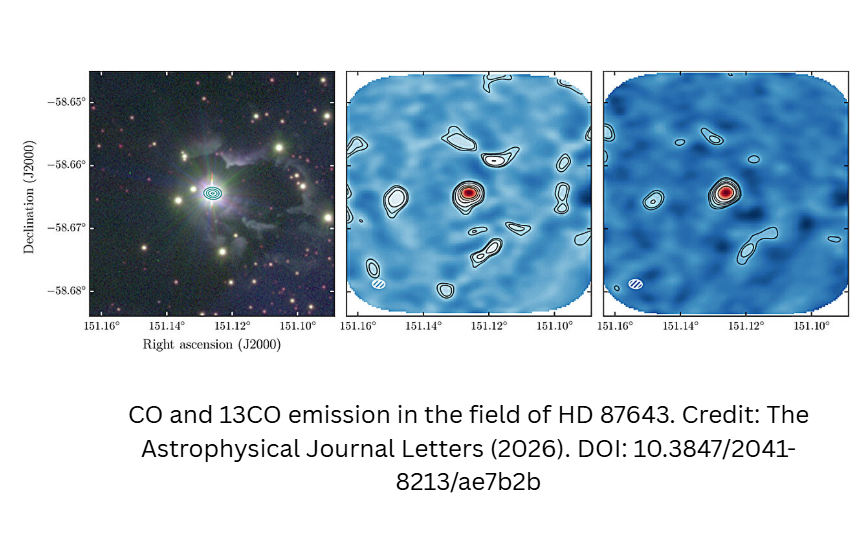
Astronomers have discovered a chemically rich collection of sulfur-bearing molecules surrounding the rare massive star HD 87643. The observations include the first detection of sulfur monoxide and sulfur dioxide around a B[e] supergiant. The paper was published in The Astrophysical Journal Letters on July 1.
Rare and old
B[e] supergiants, or sgB[e], are rare, evolved massive stars that have moved past their main hydrogen-burning phase. They are notable for distinctive emission lines—hence the “[e]” in their name—including rare “forbidden” lines produced by the surrounding gas and dust, along with an infrared glow far more intense than that of ordinary B-type stars.
As these stars approach the final stages of their lives, they shed enormous amounts of material, building up mes...
Read More
August 22, 2026,
Astronomy/Space

During a coronal mass ejection (CME), the sun hurls billions of tons of magnetized plasma into space. These eruptions are among the most powerful events in the solar system, and when they are aimed toward Earth, they can seriously threaten the satellites and power grids we depend on. For now, it remains notoriously difficult to predict how these eruptions evolve over time—and, in turn, whether they might be heading toward us.
Taking observations from an extensive network of spacecraft across the solar system, a team led by Adrienn Luspay-Kuti at Johns Hopkins University h...
Read More
August 21, 2026,
Astronomy/Space
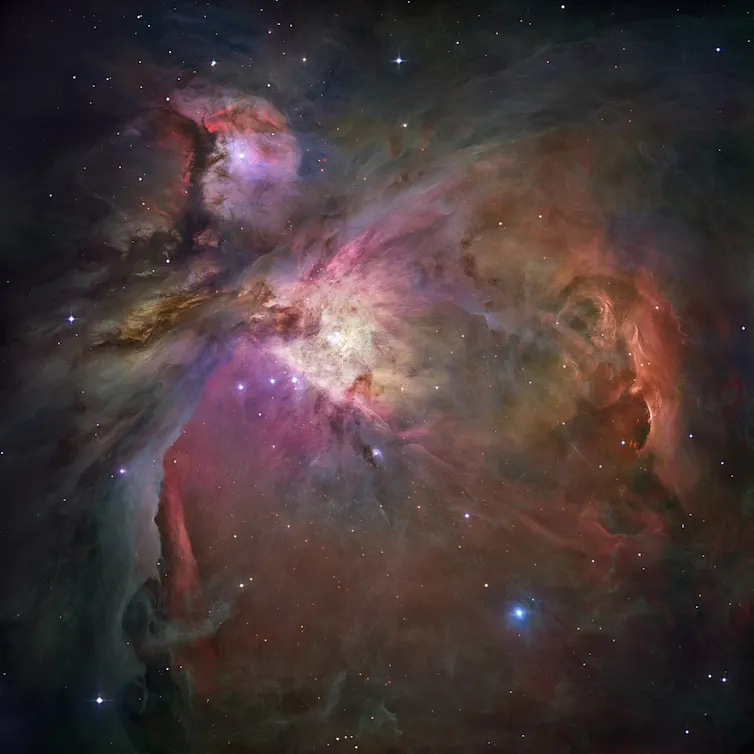
You may have heard the phrase “we are made of star-stuff.” This statement by the astronomer Carl Sagan refers to the fact that elements heavier than hydrogen and helium were forged in the centers of the first stars. But how does this star-stuff evolve into the chemistry of rocks, plants and people?
As an astrochemist and radio astronomer, I study the places in the universe where stars are born as interstellar laboratories. I’m interested in how simple ingredients come together to form bigger and bigger molecules, including those that are building blocks of life...
Read More
Recent Comments