



- A missing piece in the cell death and inflammation signaling pathway puzzle has been revealed
- Quantum computer boldly goes where no quantum computer has gone before: Space
- Black hole jets reach far beyond galaxies’ visible edges, potentially deciding their fate
- Kidney disease, heart failure or death risk climbs to 55% 10 years after type 2 diabetes diagnosis
Category Astronomy/Space
Switchbacks: Solar Jets may hold the Key for Understanding Complete Magnetic Field Reversals
December 9, 2024,
 Astronomy/Space
MAUVE: An Ultraviolet Astrophysics Probe Mission Concept
December 8, 2024,
Astronomy/Space
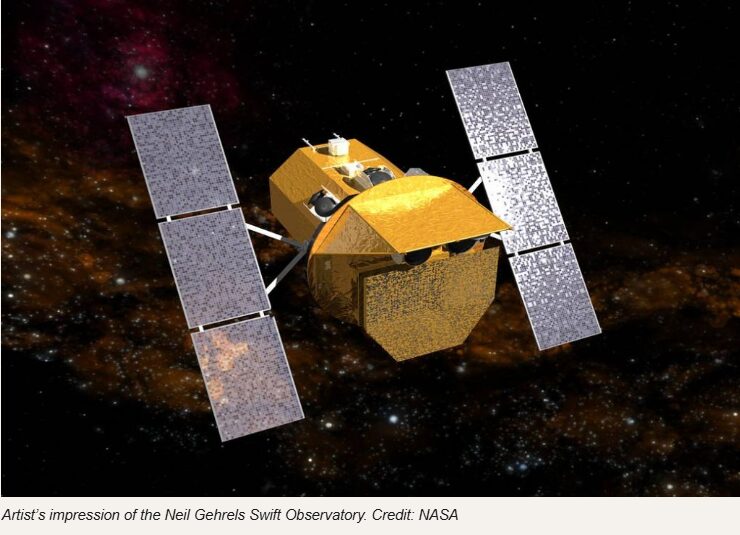
For the past 30 years, NASA’s Great Observatories—the Hubble, Spitzer, Compton, and Chandra space telescopes—have revealed some amazing things about the universe. In addition to some of the deepest views of the universe provided by the Hubble Deep Fields campaign, these telescopes have provided insight into the unseen parts of the cosmos—i.e., in the infrared, gamma-ray, and ultraviolet spectrums.
With the success of these observatories and the James Webb Space Telescope (JWST), NASA is contemplating future missions that would reveal even more of the “unseen universe.”
This includes the UltraViolet Explorer (UVEX), a space telescope NASA plans to launch in 2030 as its next Astrophysics Medium-Class Explorer mission...
Read MoreNew evidence of Organic Material identified on Ceres, the Inner Solar System’s most Water-rich Object after Earth
December 6, 2024,
Astronomy/Space
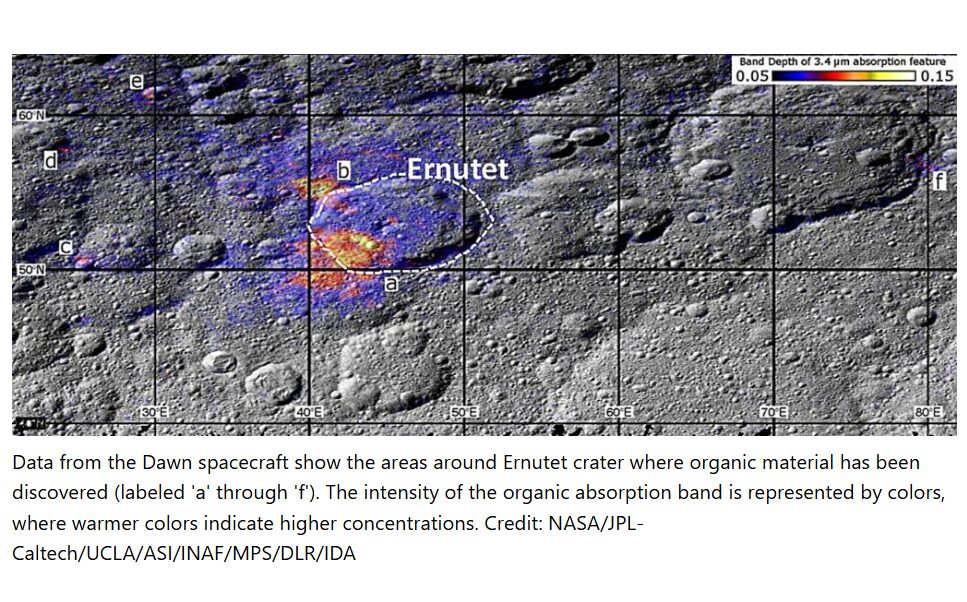
Six years ago, NASA’s Dawn mission communicated with Earth for the last time, ending its exploration of Ceres and Vesta, the two largest bodies in the asteroid belt. Since then, Ceres —a water-rich dwarf planet showing signs of geological activity— has been at the center of intense debates about its origin and evolution.
Now, a study led by IAA-CSIC, using Dawn data and an innovative methodology, has identified 11 new regions suggesting the existence of an internal reservoir of organic materials in the dwarf planet. The results, published in The Planetary Science Journal, provide critical insights into the potential nature of this celestial body.
In 2017, the Dawn spacecraft detected organic compounds near the Ernutet crater in Ceres’ northern hemisphere, sparking discussion...
Read MoreNew Planet in Kepler-51 System discovered using James Webb Space Telescope, JWST
December 5, 2024,
Astronomy/Space
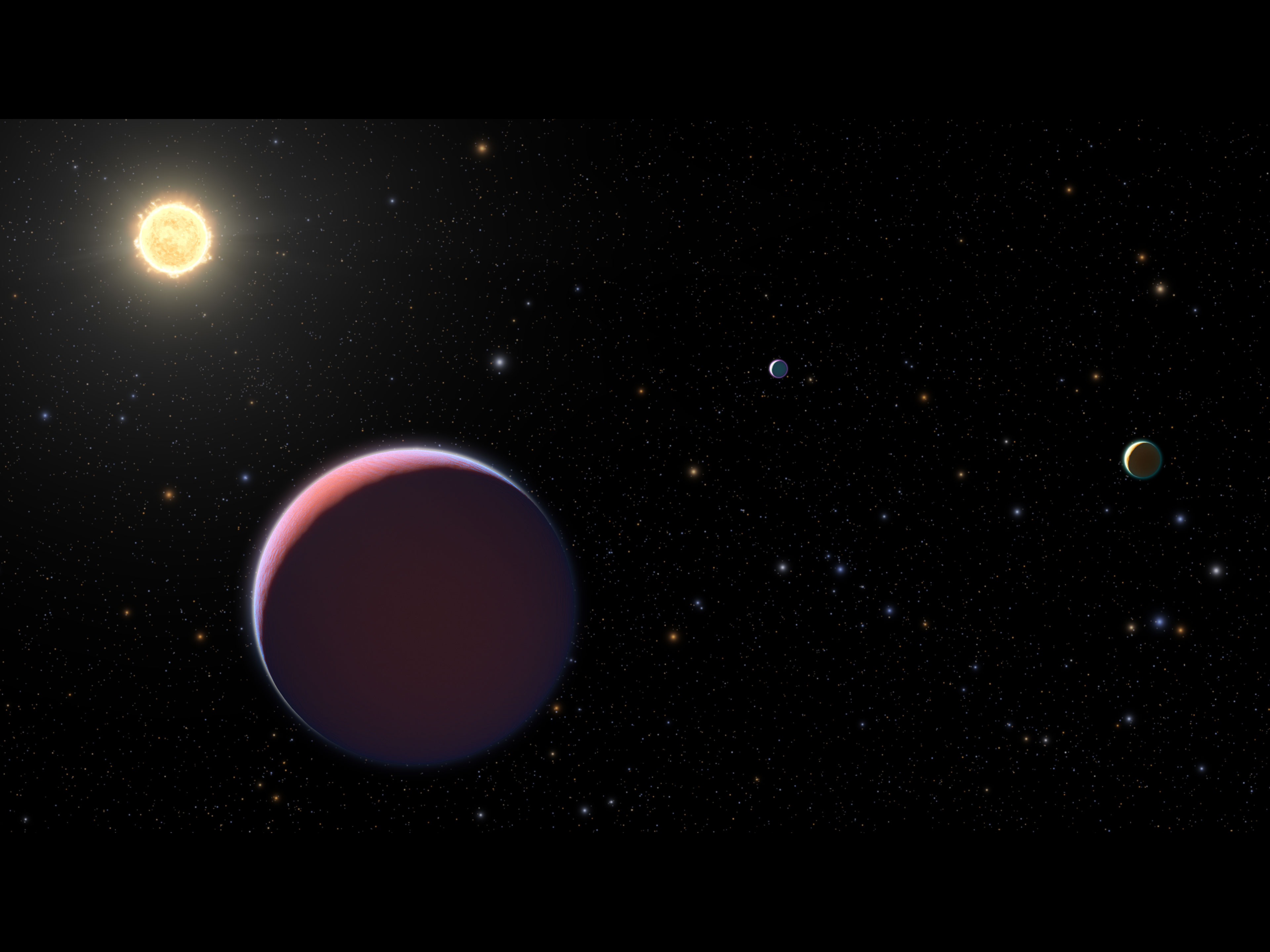
The unusual system of three ‘super puff’ planets has at least one more planet, revealed by its gravitational tug on other planets. An unusual planetary system with three known ultra-low density “super-puff” planets has at least one more planet, according to new research led by researchers from Penn State and Osaka University...
Read More
Recent Comments