


- Machine learning detects bacterial invasion and DNA damage in human cells
- Earth and Mars: Built from different cosmic recipes
- A molecular switch syncs fat burning to the body clock, our diet and the temperature around us
- Ions help electrons hop through porous material with potential for brain-inspired computing
Category Astronomy/Space
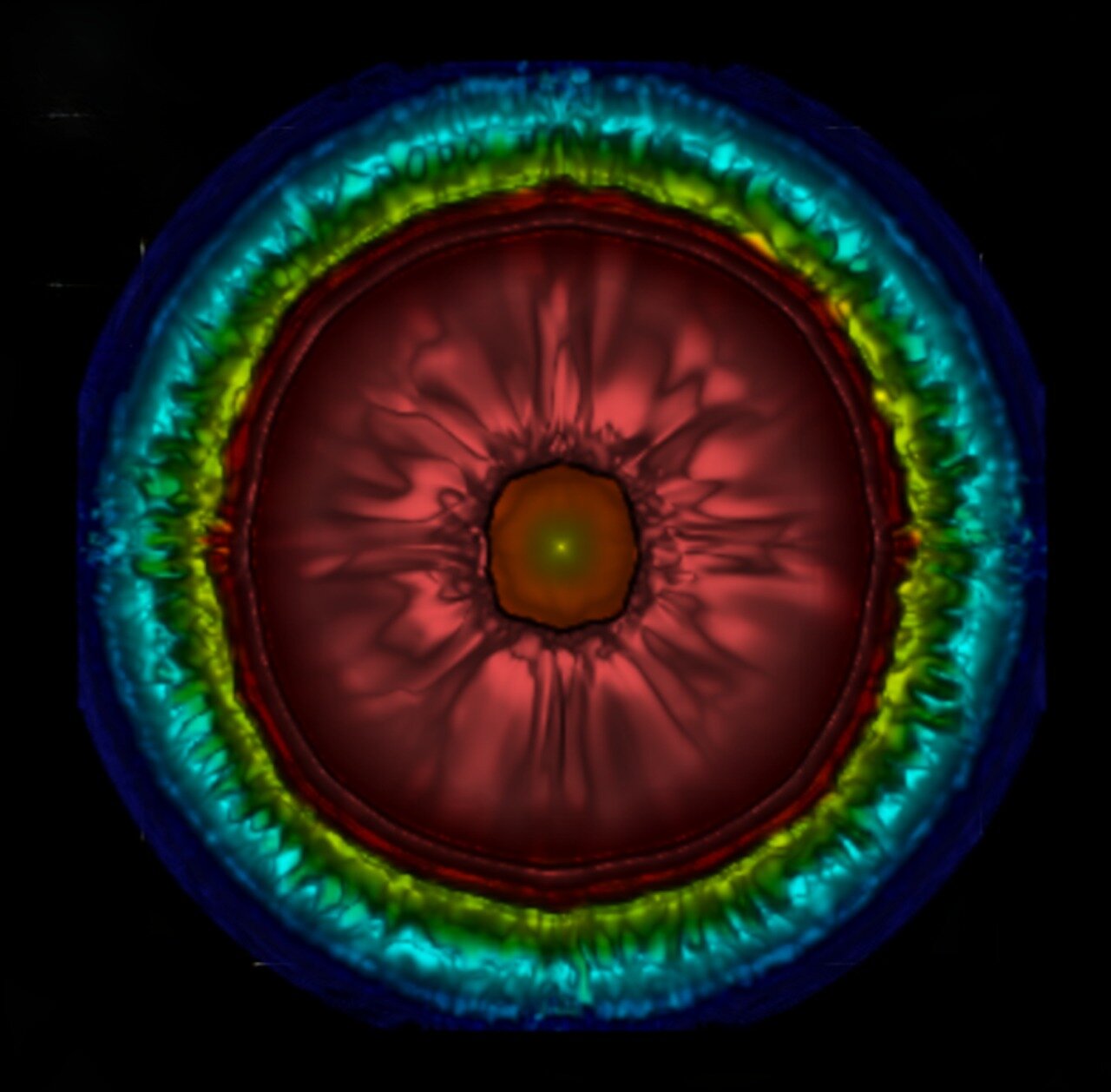
World’s first 3D Simulations reveal the Physics of Exotic Supernovae
September 18, 2023,
 Astronomy/Space
NASA Webb Snaps Supersonic Outflow of Young Star
September 18, 2023,
Astronomy/Space
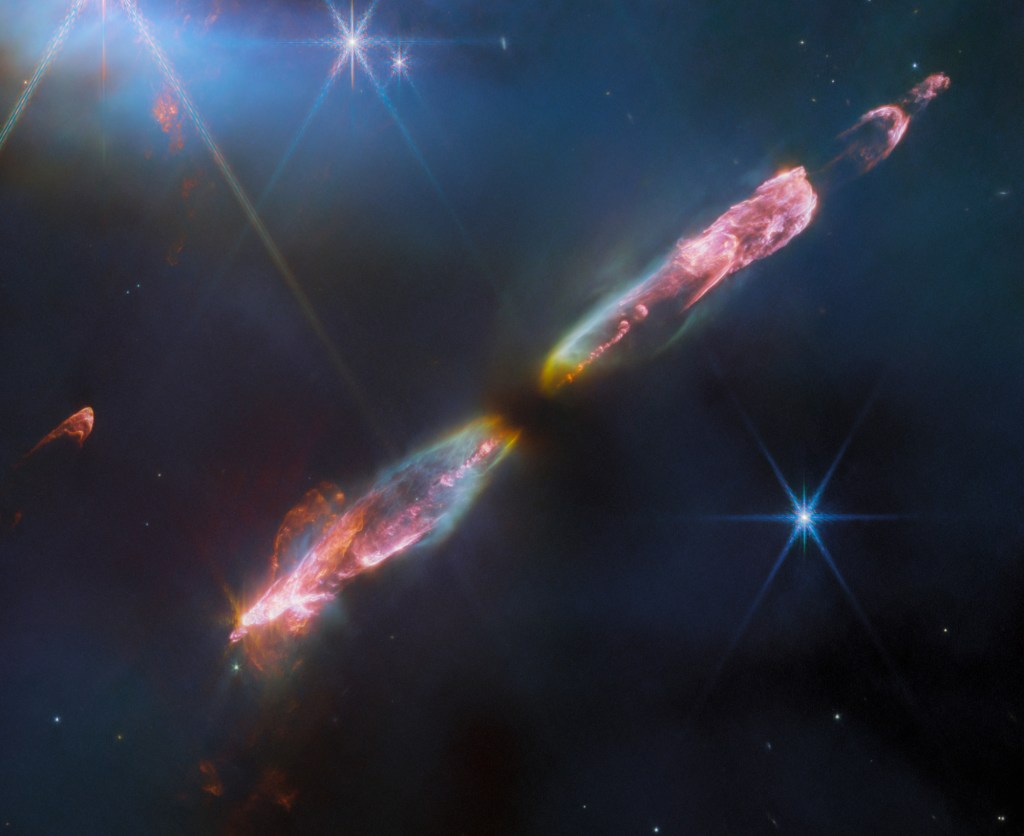
Herbig-Haro (HH) objects are luminous regions surrounding newborn stars, formed when stellar winds or jets of gas spewing from these newborn stars form shock waves colliding with nearby gas and dust at high speeds. This image of HH 211 from NASA’s James Webb Space Telescope reveals an outflow from a Class 0 protostar, an infantile analog of our Sun when it was no more than a few tens of thousands of years old and with a mass only 8% of the present-day Sun (it will eventually grow into a star like the Sun).
Infrared imaging is powerful in studying newborn stars and their outflows, because such stars are invariably still embedded within the gas from the molecular cloud in which they formed...
Read MoreMatter comprises of 31% of the Total amount of Matter and Energy in the Universe
September 15, 2023,
Astronomy/Space
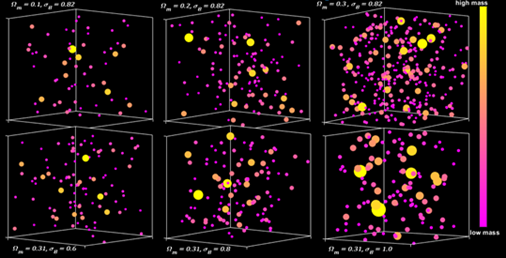
A research team relies on measuring the number of galaxy members to determine the mass of galaxy clusters. One of the most interesting and important questions in cosmology is, “How much matter exists in the universe?” An international team, including scientists at Chiba University, has now succeeded in measuring the total amount of matter for the second time. Reporting in The Astrophysical Journal, the team determined that matter makes up 31% of the total amount of matter and energy in the universe, with the remainder consisting of dark energy.
“Cosmologists believe that only about 20% of the total matter is made of regular or ‘baryonic’ matter, which includes stars, galaxies, atoms, and life,” explains first author Dr...
Read MoreThe Universe Caught Suppressing Cosmic Structure Growth
September 14, 2023,
Astronomy/Space

As the universe evolves, scientists expect large cosmic structures to grow at a certain rate: dense regions such as galaxy clusters would grow denser, while the void of space would grow emptier.
But University of Michigan researchers have discovered that the rate at which these large structures grow is slower than predicted by Einstein’s Theory of General Relativity.
They also showed that as dark energy accelerates the universe’s global expansion, the suppression of the cosmic structure growth that the researchers see in their data is even more prominent than what the theory pr...
Read More
Recent Comments