Category Astronomy/Space

A Helicopter is going to Titan. Could an Airplane be next?

A helicopter is going to Titan—could an airplane be next?
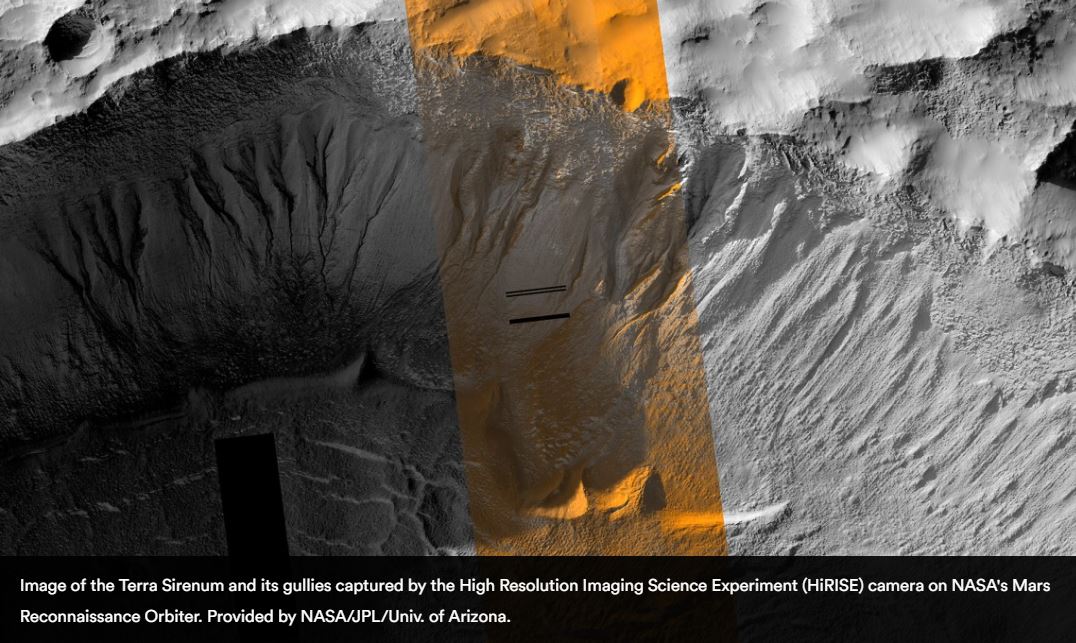
This colorized mosaic from NASA’s Cassini mission shows the most complete view yet of Titan’s northern land of lakes and seas. Credit: NASA / JPL-Caltech / Agenzia Spaziale Italiana / USGS

What are the hydrocarbon seas on Titan really like? While the upcoming Dragonfly helicopter mission to Saturn’s hazy and frigid moon should arrive by 2034 to explore Titan’s atmosphere, the need remains for a mission that could study the moon’s mysterious seas and lakes, filled with liquid hydrocarbons.

But how about an aircraft that could study both the seas and skies of Titan?

A new mission concept that received funding from NASA’s Innovative Advanced Concepts (NIAC) Program is called “TitanAir,” and features a flying boat, known as a laker...

Read More

Researchers Capture Early Stages of Star Formation from JWST data

Galaxy captured by the James Webb Space Telescope
Researchers are getting their first glimpses inside distant spiral galaxies to see how stars formed and how they change over time, thanks to the James Webb Space Telescope’s ability to pierce the veil of dust and gas clouds. (Photo: NASA/Space Telescope Science Institute)

A team of researchers has been able to see inside faraway spiral galaxies for the first time to study how they formed and how they change over time, thanks to the powerful capabilities of the James Webb Space Telescope.

“We’re studying 19 of our closest analogs to our own galaxy. In our own galaxy we can’t make a lot of these discoveries because we’re stuck inside it,” says Erik Rosolowsky, professor in the Department of Physics and co-author on a recent paper analyzing data from the James Webb telescope.

Unli...

Read More

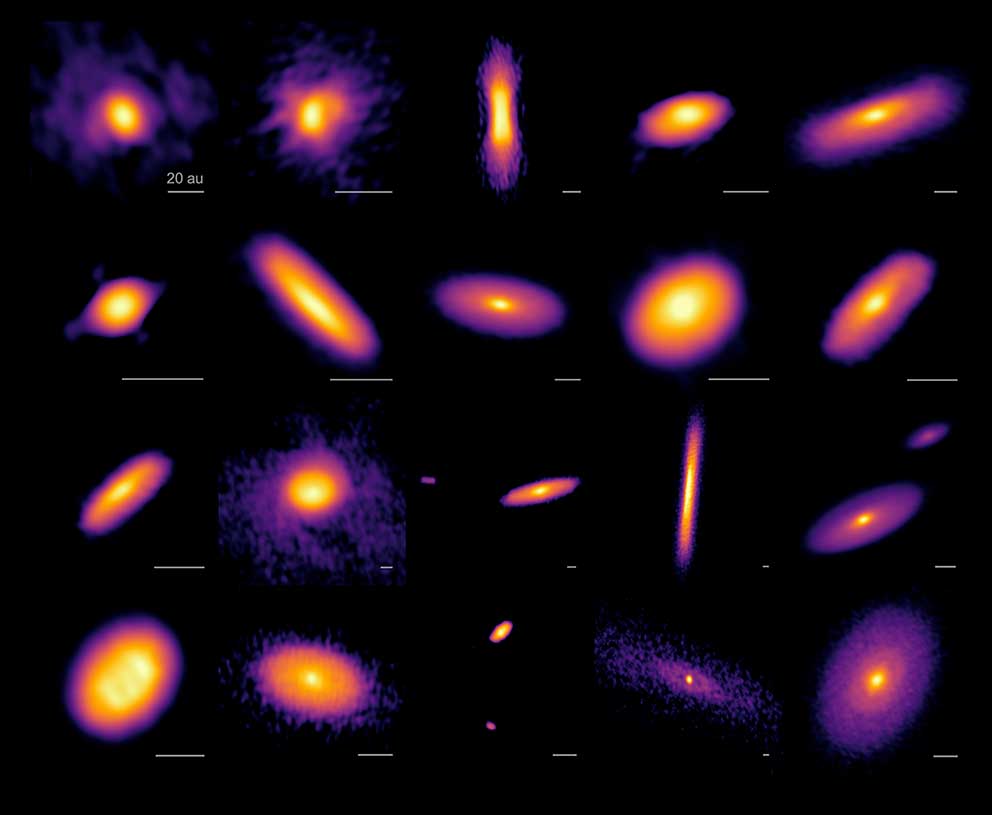
ALMA traces History of Water in Planet Formation back to the Interstellar Medium

Credit: ALMA (ESO/NAOJ/NRAO), B. Saxton (NRAO/AUI/NSF)

Scientists studying a nearby protostar have detected the presence of water in its circumstellar disk. The new observations made with the Atacama Large Millimeter/submillimeter Array (ALMA) mark the first detection of water being inherited into a protoplanetary disk without significant changes to its composition. These results further suggest that the water in our Solar System formed billions of years before the Sun. The new observations are published today in Nature.

V883 Orionis is a protostar located roughly 1,305 light-years from Earth in the constellation Orion...

Read More

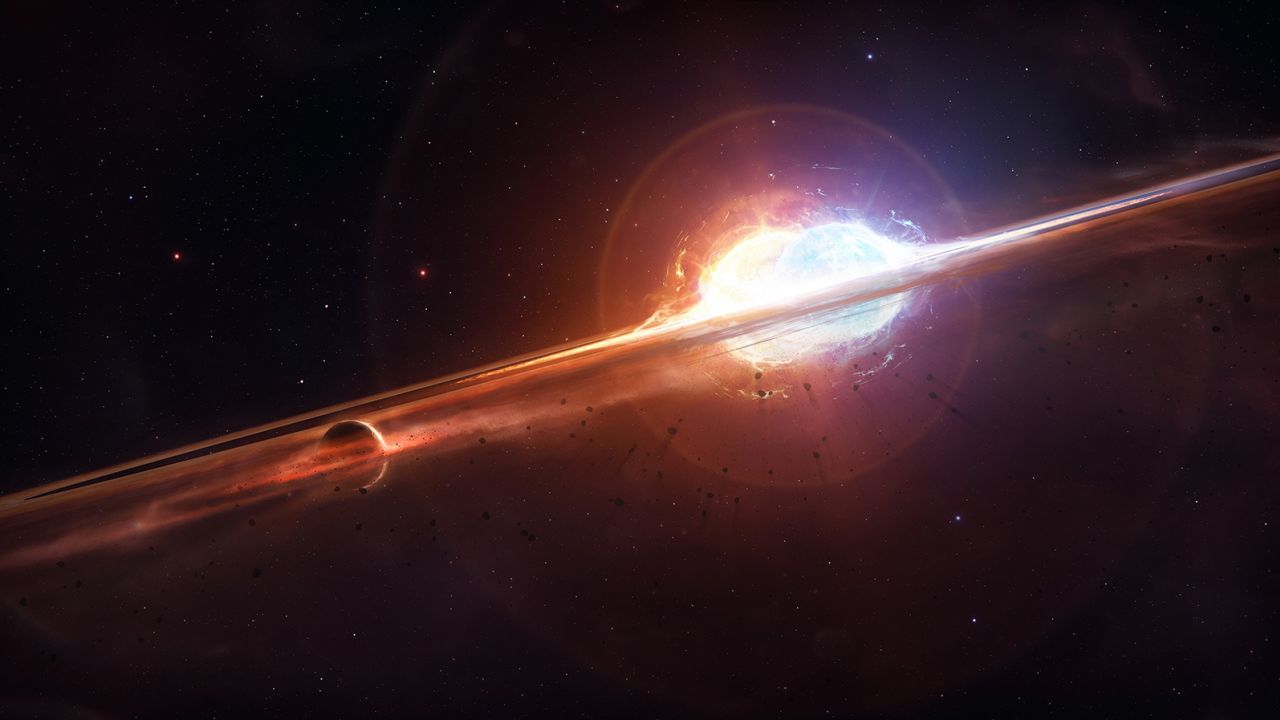
Stars can Eat their Planets, and Spit them Back Out Again

As tragic as it is, engulfment of a planetary object by its stellar parent is a common scenario throughout the universe. But it doesn’t have to end in doom. A team of astrophysicists have used computer simulations to discover that planets can not only survive when their star eats them, but they can also drive its future evolution.

Models of the formation of planetary systems have shown that many planets often end up being consumed by their parent star. It’s simply a matter of orbital dynamics. Random interactions among newly forming planets and the protoplanetary disk that surrounds a young star can send planets on chaotic trajectories. Some of those trajectories end up driving the planet out of the system altogether, while other trajectories send them hurdling into the star.

An...

Read More