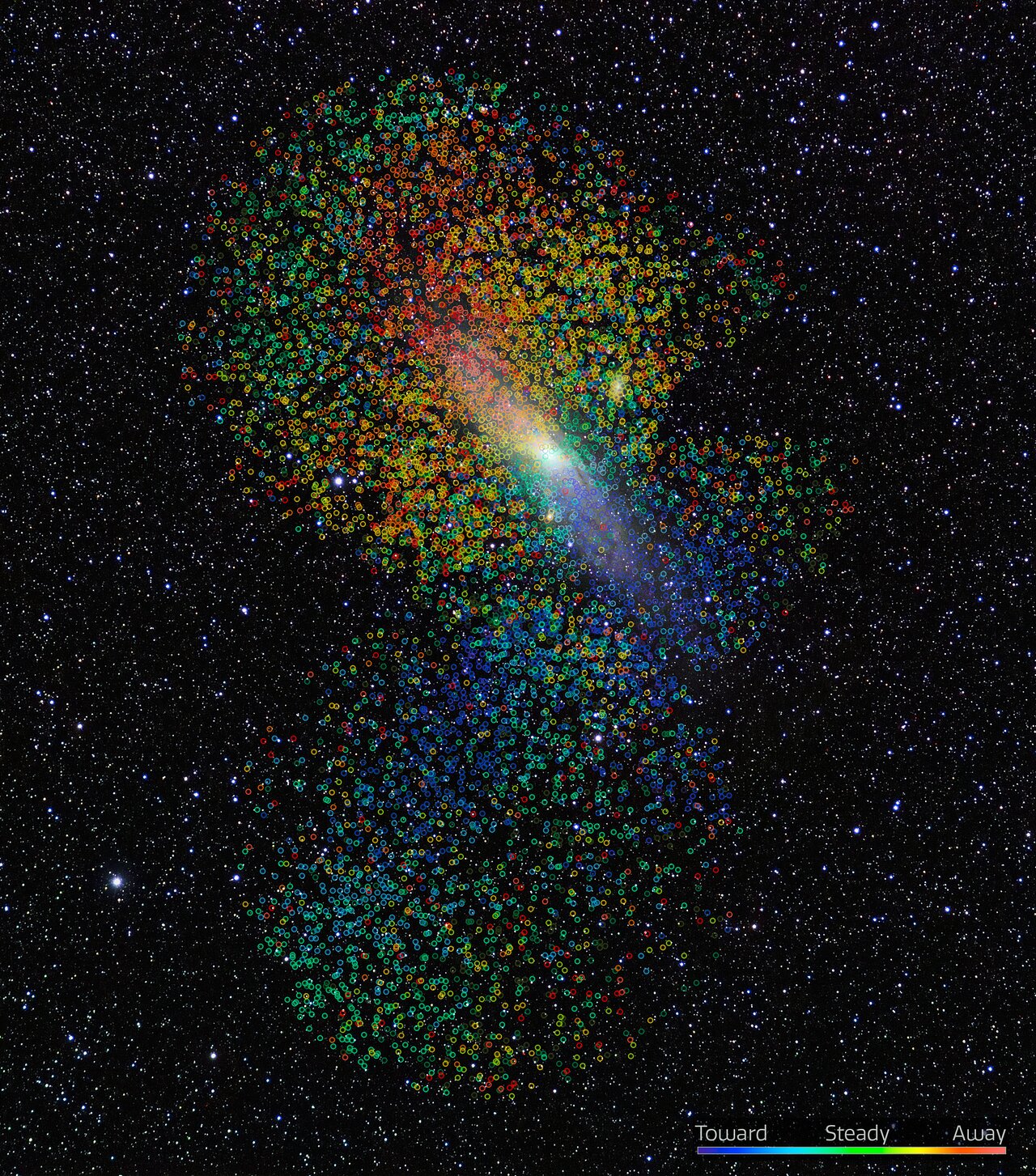
A team of researchers led by astronomers at NSF’s NOIRLab has uncovered striking new evidence for a mass migration of stars into the Andromeda Galaxy. Intricate patterns in the motions of stars reveal an immigration history very similar to that of the Milky Way. The new results were obtained with the DOE’s Dark Energy Spectroscopic Instrument on the Nicholas U. Mayall 4-meter Telescope at Kitt Peak National Observatory, a Program of NSF’s NOIRLab.
The Dark Energy Spectroscopic Instrument reveals compelling evidence of a mass migration of stars into Andromeda Galaxy. Intricate patterns in the motions of stars reveal an immigration history very similar to that of the Milky Way.
Over the course of billions of years, galaxies grow and evolve by forging new stars and merging with o...
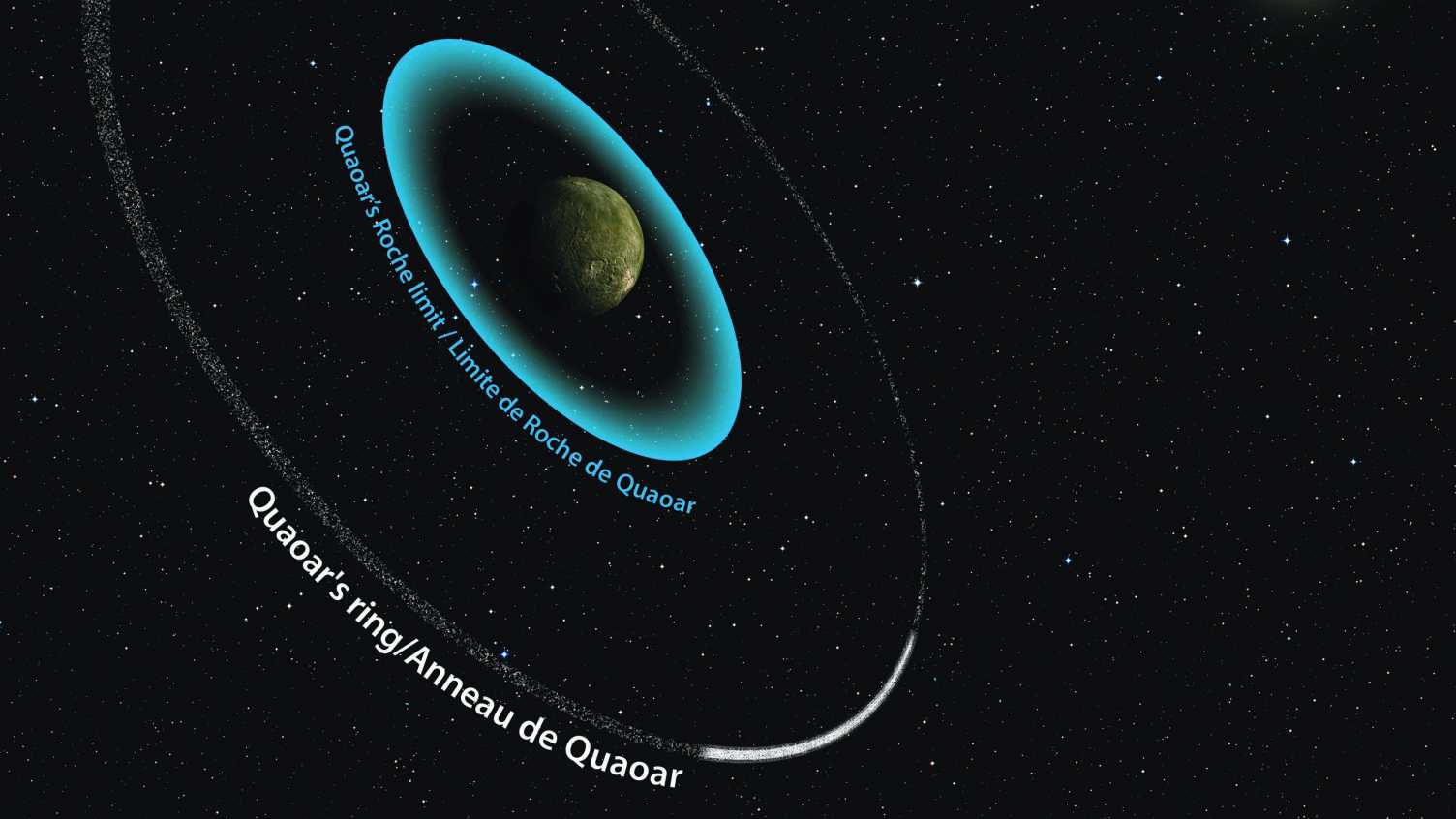
Scientists have discovered a new ring system around a dwarf planet on the edge of the Solar System. The ring system orbits much further out than is typical for other ring systems, calling into question current theories of how ring systems are formed.
The ring system is around a dwarf planet, named Quaoar, which is approximately half the size of Pluto and orbits the Sun beyond Neptune.
The discovery, published in Nature, was made by an international team of astronomers using HiPERCAM — an extremely sensitive high-speed camera developed by scientists at the University of Sheffield which is mounted on the world’s largest optical telescope, the 10.4 metre diameter Gran Telescopio Canarias (GTC) on La Palma.
The rings are too small and faint to see directl...
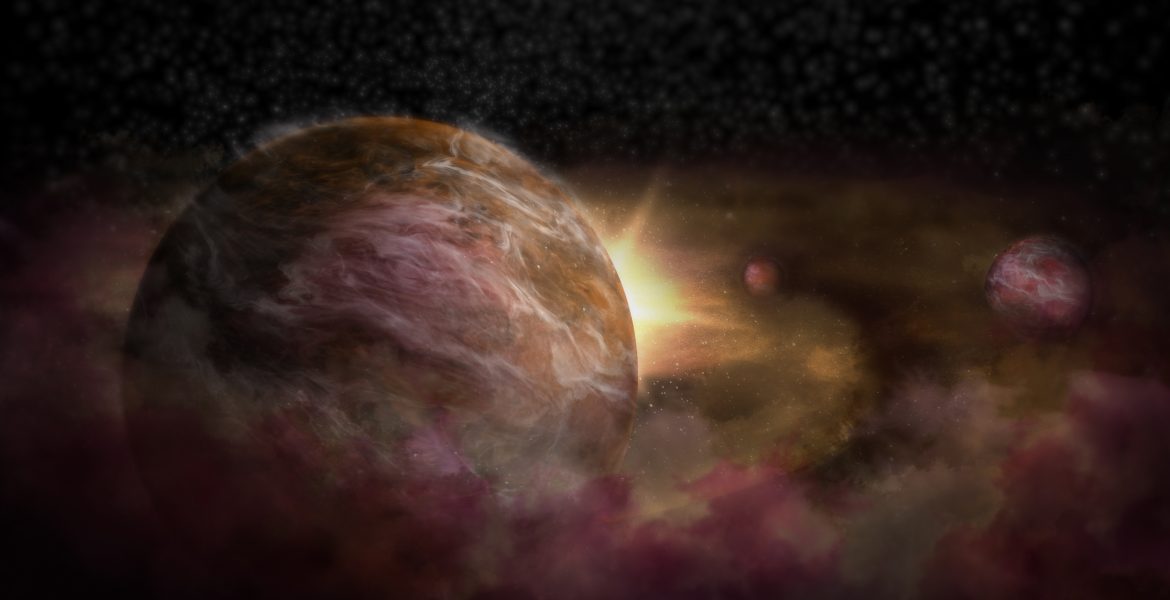
Three young planets in orbit around an infant star known as HD 163296 (Photo credit: NRAO/AUI/NSF; S. Dagnello)
New research from the University of Georgia reveals that artificial intelligence can be used to find planets outside of our solar system. The recent study demonstrated that machine learning can be used to find exoplanets, information that could reshape how scientists detect and identify new planets very far from Earth.
“One of the novel things about this is analyzing environments where planets are still forming,” said Jason Terry, doctoral student in the UGA Franklin College of Arts and Sciences department of physics and astronomy and lead author on the study...
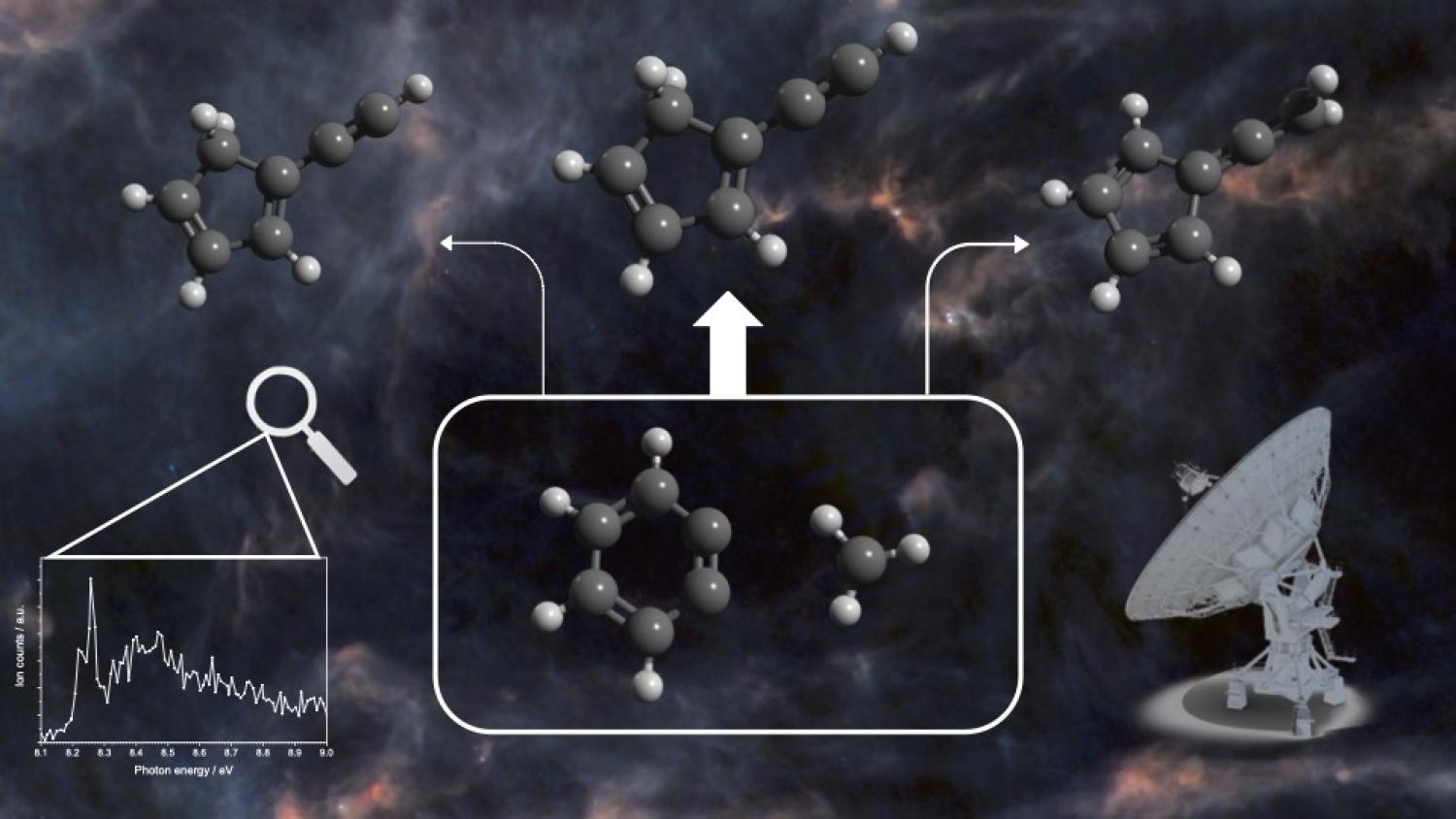
Graphic showing how hexagonally-shaped ortho-benzyne molecules can combine with methyl radicals to form a series of larger organic molecules, each containing a ring of five carbon atoms. (Credit: Henry Cardwell)
An international team of researchers has uncovered what might be a critical step in the chemical evolution of molecules in cosmic “stellar nurseries.” In these vast clouds of cold gas and dust in space, trillions of molecules swirl together over millions of years. The collapse of these interstellar clouds eventually gives rise to young stars and planets.
Like human bodies, stellar nurseries contain a lot of organic molecules, which are made up mostly of carbon and hydrogen atoms. The group’s results, published Feb...





Recent Comments