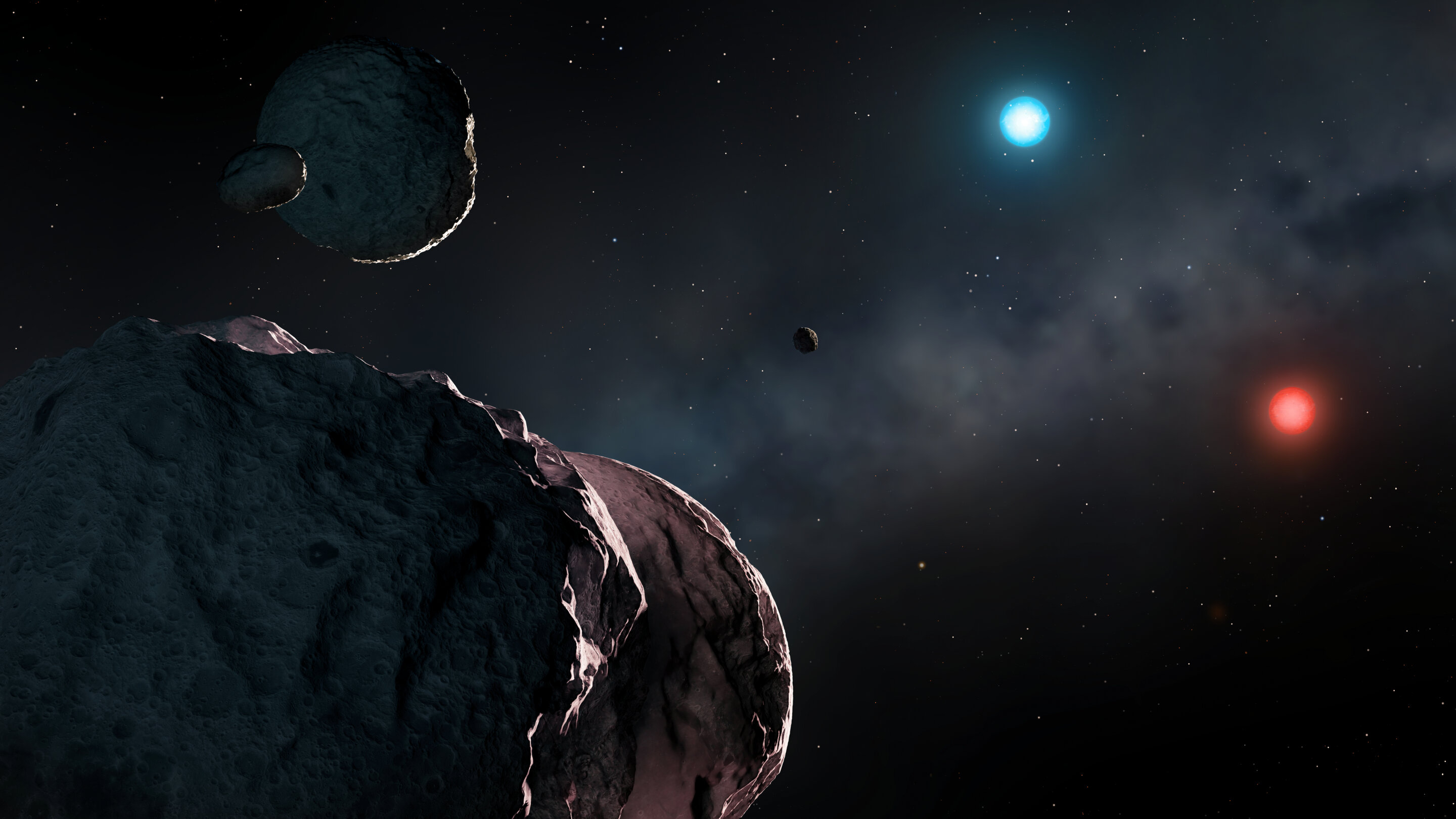
Artist’s impression of the old white dwarfs WDJ2147-4035 and WDJ1922+0233 surrounded by orbiting planetary debris, which will accrete onto the stars and pollute their atmospheres. WDJ2147-4035 is extremely red and dim, while WDJ1922+0233 is unusually blue. Credit: University of Warwick/Dr Mark Garlick. Credit: University of Warwick/Dr Mark Garlick
Astronomers led by the University of Warwick have identified the oldest star in our galaxy that is accreting debris from orbiting planetesimals, making it one of the oldest rocky and icy planetary systems discovered in the Milky Way.
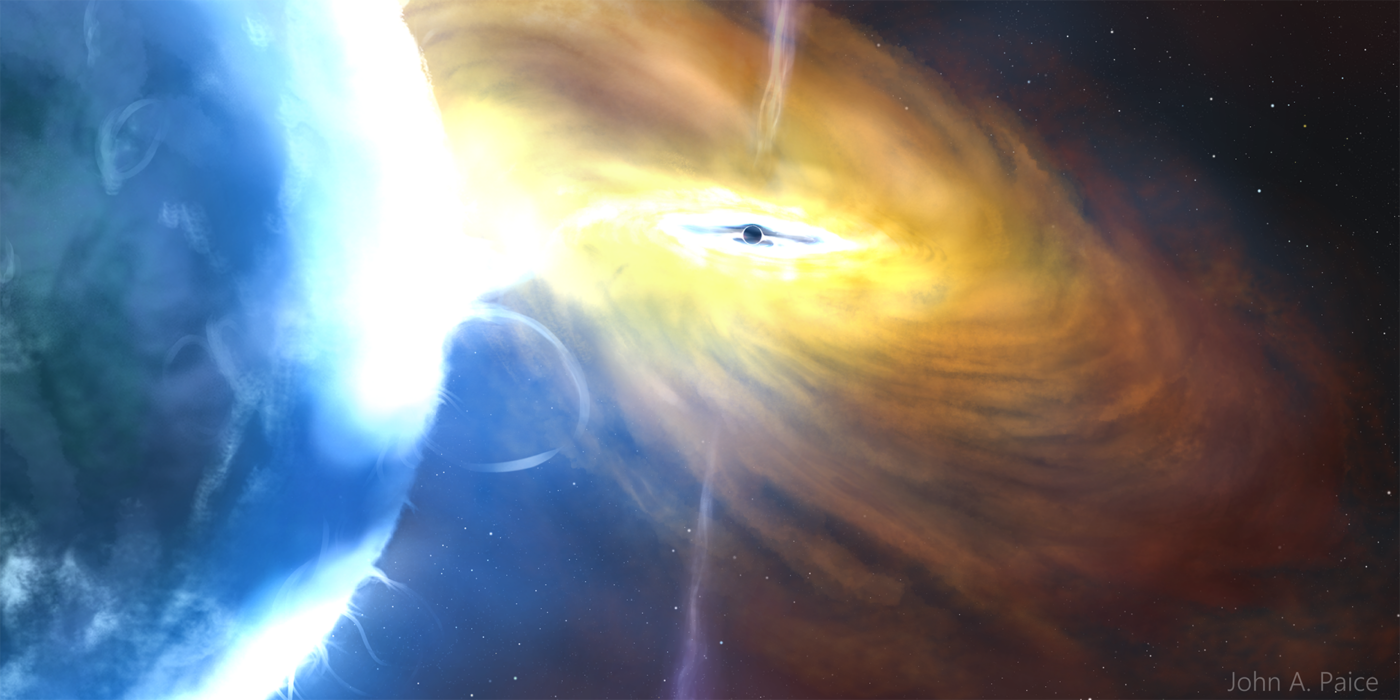
An artist’s impression of the Cygnus X-1 system, with the black hole appearing in the center and its companion star on the left. New measurements from Cygnus X-1, reported Nov. 3 in the journal Science, represent the first observations of a mass-accreting black hole from the Imaging X-Ray Polarimetry Explorer (IXPE) mission, an international collaboration between NASA and the Italian Space Agency. (Image: John Paice)
Researchers’ recent observations of a stellar-mass black hole called Cygnus X-1 reveal new details about the configuration of extremely hot matter in the region immediately surrounding the black hole.
Matter is heated to millions of degrees as it is pulled toward a black hole. This hot matter glows in X-rays...
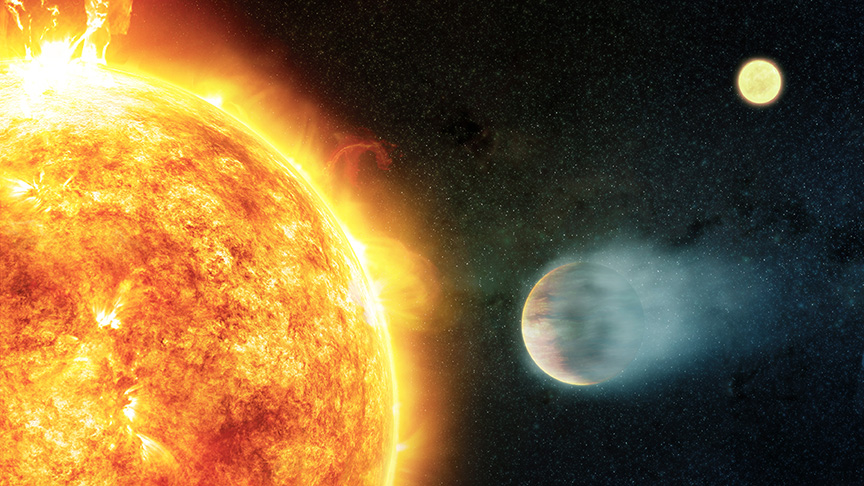
The team examined systems containing a star orbited by a hot Jupiter, accompanied by a star without such a planet.
Planets can force their host stars to act younger than their age, according to a new study of multiple systems using NASA’s Chandra X-ray Observatory. This may be the best evidence to date that some planets apparently slow down the aging process for their host stars.
While the anti-aging property of “hot Jupiters” (that is, gas giant exoplanets that orbit a star at Mercury’s distance or closer) has been seen before, this result is the first time it has been systematically documented, providing the strongest test yet of this exotic phenomenon.
“In medicine, you need a lot of patients enrolled in a study to know if the effects are real or some sort of outlier,” said Ni...
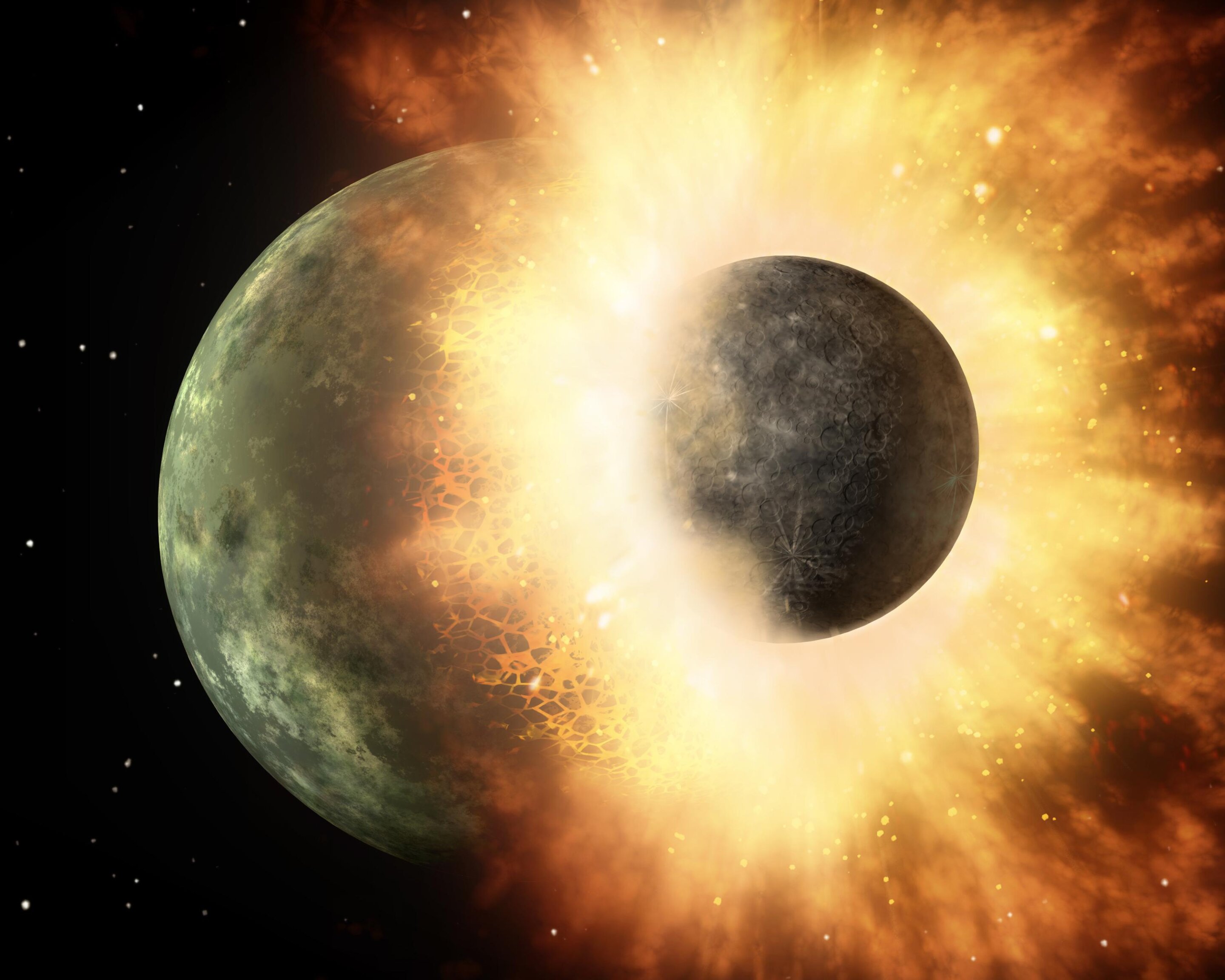
There are several theories about how Earth and its moon were formed, most involving a giant impact. Now scientists at the University of Leeds and the University of Chicago have analyzed the dynamics of fluids and electrically conducting fluids and concluded that Earth must have been magnetized either before the impact or as a result of it.
They claim this could help to narrow down the theories of the Earth-moon formation and inform future research into what really happened. Their work is published in Proceedings of the National Academy of Sciences.
Professor David Hughes, an applied mathematician in the School of Mathematics at the University of Leeds, said, “Our new idea is to point out that our theoretical understanding of the Earth’s magnetic field today can a...





Recent Comments