Category Astronomy/Space

Astronomers have Spotted the Farthest Galaxy ever

Harikane et al.

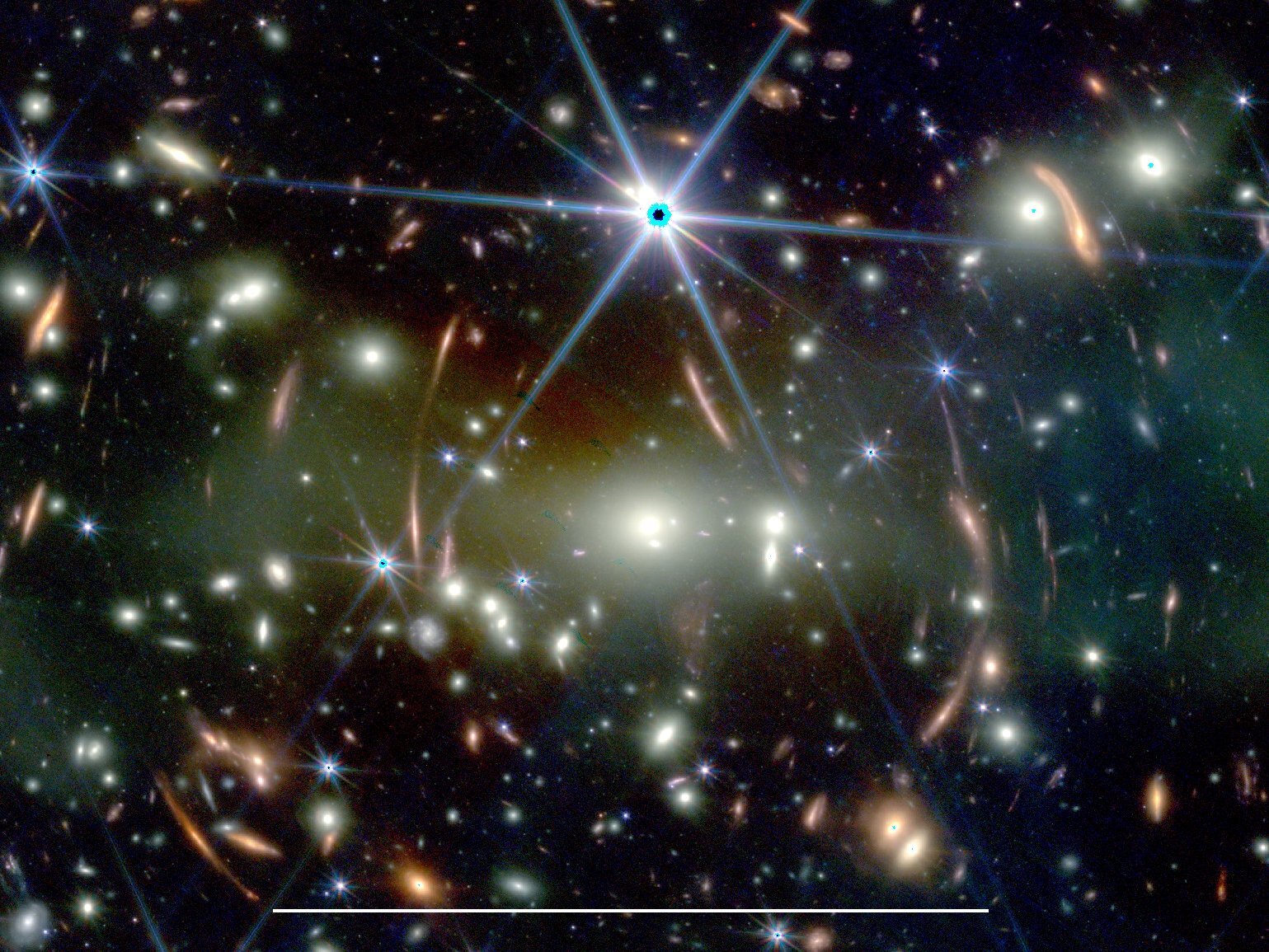
An international team of astronomers, including researchers at the Center for Astrophysics | Harvard & Smithsonian, has spotted the most distant astronomical object ever: a galaxy.

Named HD1, the galaxy candidate is some 13.5 billion light-years away and is described Thursday in the Astrophysical Journal. In an accompanying paper published in the Monthly Notices of the Royal Astronomical Society Letters, scientists have begun to speculate exactly what the galaxy is.

The team proposes two ideas: HD1 may be forming stars at an astounding rate and is possibly even home to Population III stars, the universe’s very first stars — which, until now, have never been observed...

Read More

Astronomers Detect ‘Galactic Space Laser’

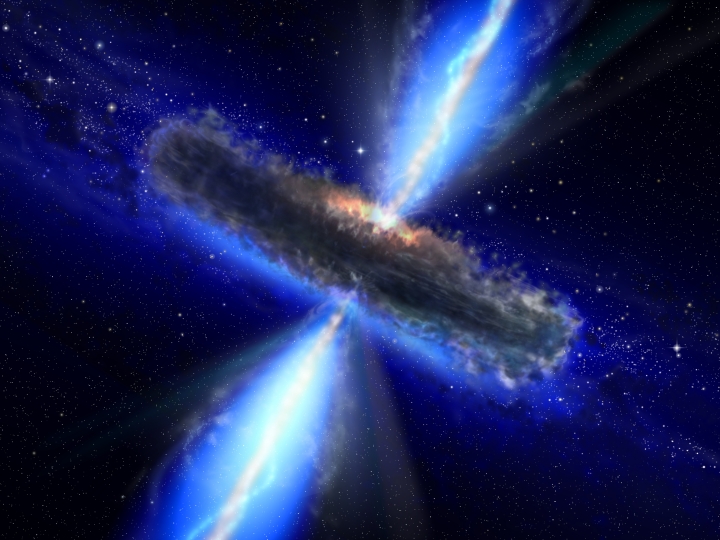
Artist’s impression of a hydroxyl maser. Inside a galaxy merger are hydroxyl molecules, composed of one atom of hydrogen and one atom of oxygen. When one molecule absorbs a photon at 18cm wavelength, it emits two photons of the same wavelength. When molecular gas is very dense, typically when two galaxies merge, this emission gets very bright and can be detected by radio telescopes such as the MeerKAT. © IDIA/LADUMA using data from NASA/StSci/SKAO/MolView

A powerful radio-wave laser, called a ‘megamaser’, has been observed by the MeerKAT telescope in South Africa. The record-breaking find is the most distant megamaser of its kind ever detected, at about five billion light years from Earth.

The light from the megamaser has travelled 58 thousand billion billion (58 followed by 21 z...

Read More

Citizen Scientists help Map Ridge Networks on Mars

Map of polygonal ridge networks (black dots) identified in mapping area (dashed black outline), covering approximately a fifth of Mars’ total surface area. The Mars Perseverance rover landing site is shown in purple. Background: Mars Orbiter Laser Altimeter Elevation Map. Credit: NASA/JPL/GSFC.

Over the last two decades, scientists have discovered unusual ridge networks on Mars using images from spacecraft orbiting the Red Planet. How and why the ridges formed and what clues they may provide about the history of Mars has remained unknown.

A team of scientists, led by Aditya Khuller of Arizona State University’s School of Earth and Space Exploration and Laura Kerber of NASA’s Jet Propulsion Laboratory, set out to learn more about these ridges by mapping a large area of Mars with th...

Read More

‘Ears’ for Rover Perseverance’s Exploration of Mars

Courtesy of NASA/Southwest Research Institute/JPL-Caltech/Malin Space Science Systems/Kevin M. Gill/Italian Space Agency/Italian National Institute for Astrophysics/Björn Jónsson/ULiège/Bertrand Bonfond/Vincent Hue NASA’s Juno spacecraft flew through the intense beam of electrons traveling from Ganymede, Jupiter’s largest moon, to its auroral footprint on the gas giant. SwRI scientists used the resulting data to connect the particle population traveling along the beam with associated auroral emissions to unveil the mysterious processes creating the shimmering lights.

For two decades, Roger Wiens has built instruments to give humans eyes and a nose on Mars — and now he’s helping add ears as well...

Read More