Category Astronomy/Space

Jupiter’s Moon has Splendid Dunes

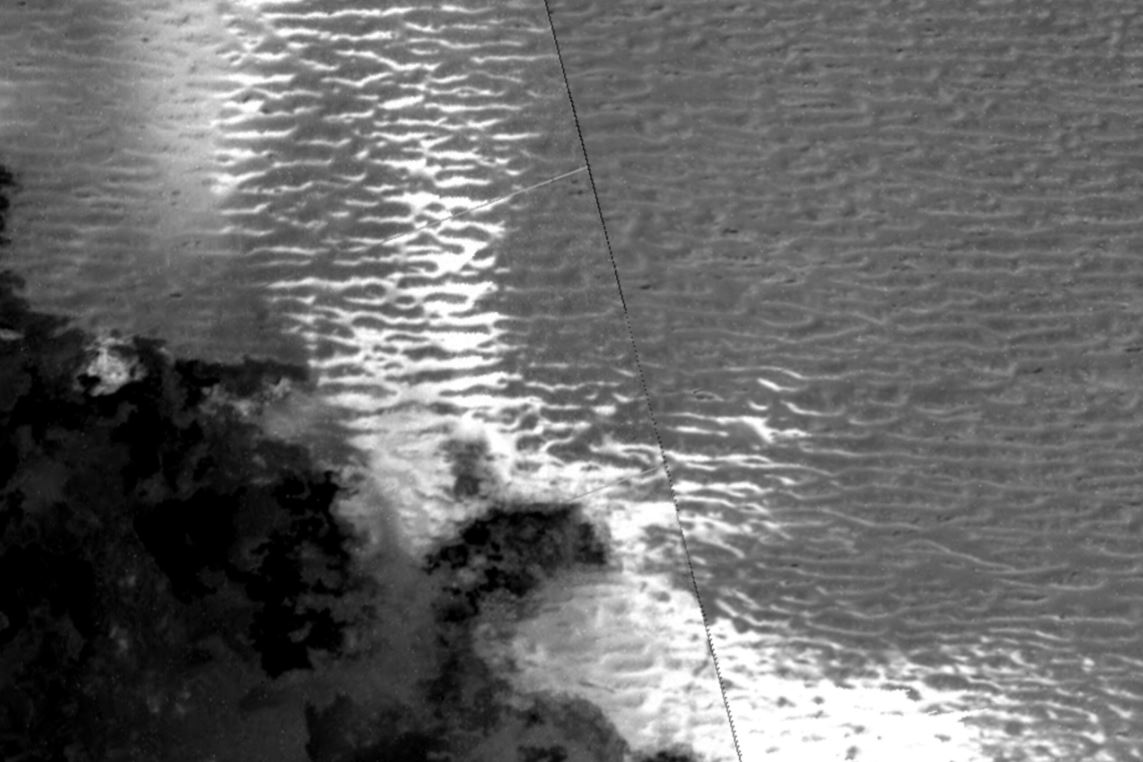
Potential dunes on Jupiter’s moon Io. An analysis indicates that the dark material (lower left) is recently emplaced lava flows, while the repeated, line-like features dominating the image are potential dunes. The bright, white areas may be newly emplaced grains as the lava flows vaporize adjacent frost. Credit: NASA/JPL-Caltech/Rutgers

New way dunes can form on varied celestial surfaces. Scientists have long wondered how Jupiter’s innermost moon, Io, has meandering ridges as grand as any that can be seen in movies like “Dune.” Now, a Rutgers research study has provided a new explanation of how dunes can form even on a surface as icy and roiling as Io’s.

The study, published in the journal Nature Communications, is based on a study of the physical processes controlling grain motion ...

Read More
Explanation for Formation of Abundant Features on Europa bodes well for search for Extraterrestrial Life

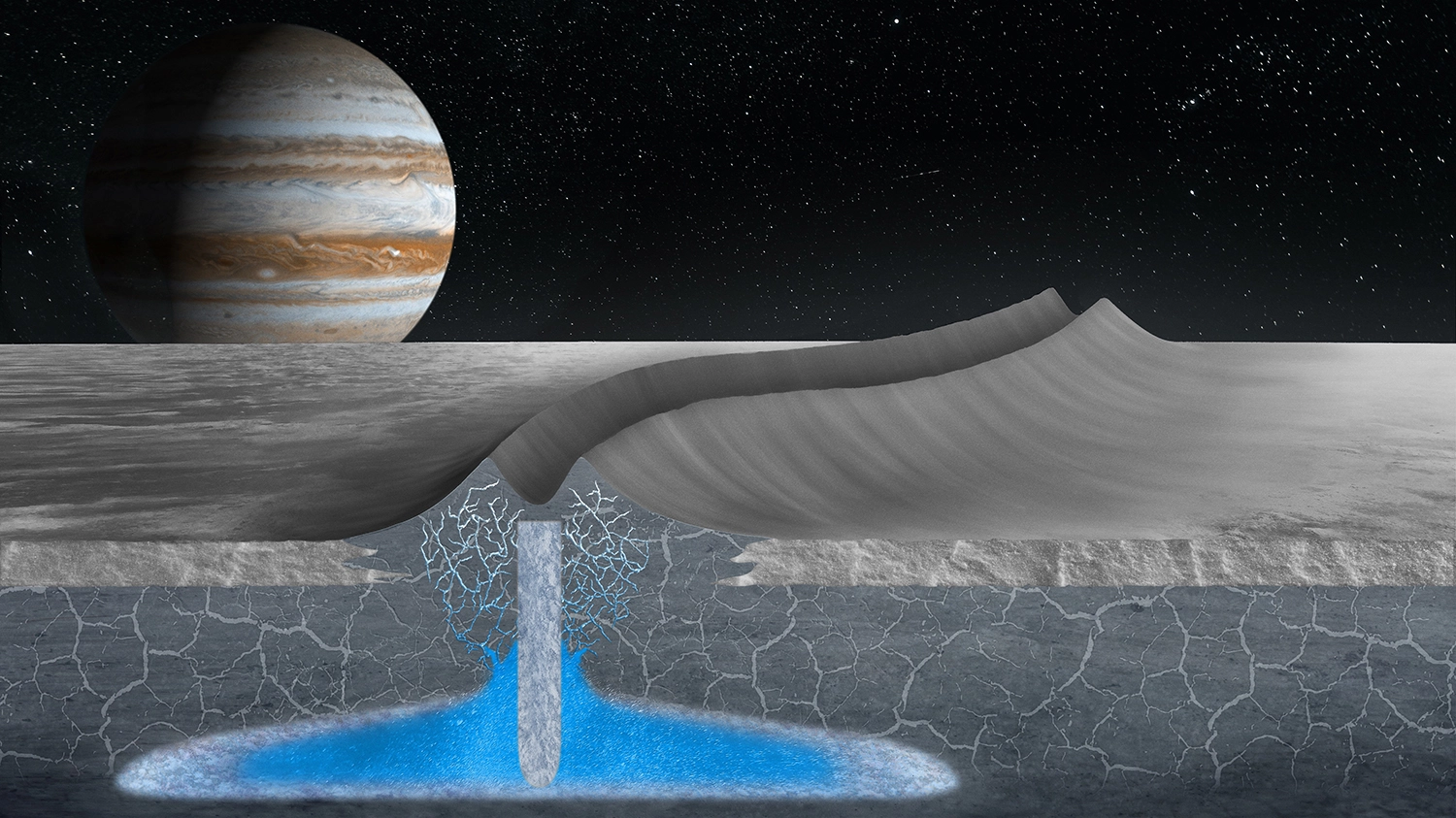
This artist’s conception shows how double ridges on the surface of Jupiter’s moon Europa may form over shallow, refreezing water pockets within the ice shell. This mechanism is based on the study of an analogous double ridge feature found on Earth’s Greenland Ice Sheet. (Image credit: Justice Blaine Wainwright)

Ice-penetrating radar data from Greenland suggests that shallow water pockets may be common within Europa’s ice shell, increasing the potential habitability of the Jovian moon’s ice shell.

Europa is a prime candidate for life in our solar system, and its deep saltwater ocean has captivated scientists for decades. But it’s enclosed by an icy shell that could be miles to tens of miles thick, making sampling it a daunting prospect...

Read More

Phase Transitions in the Early Universe and their Signals

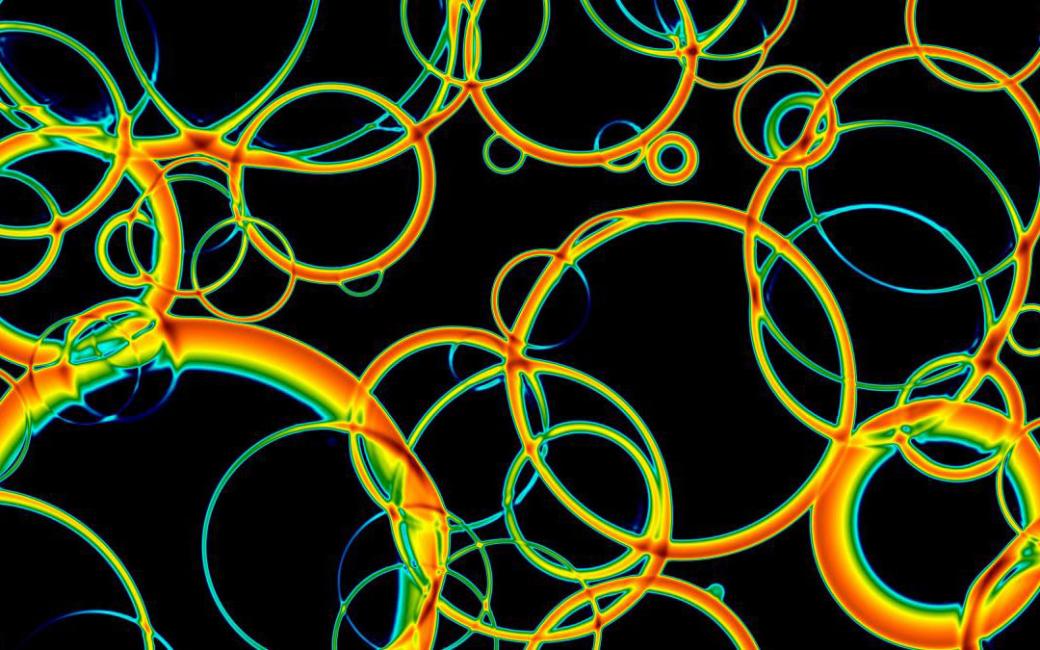
Colliding spherical pressure waves from a phase transition at around 10 picoseconds after the Big Bang would generate gravitational waves observable by LISA. (Image: David Weir)

The early universe may chirp about unknown physics. A University of Helsinki research team has demonstrated how an early universe phase transition will lead to gravitational wave signals potentially visible in the upcoming satellite missions. The research results were recently published in the journal Physical Review Letters.

Phase transitions, such as the boiling of water or the melting of a metal, are commonplace but fascinating phenomena that spur surprises decades after decades...

Read More

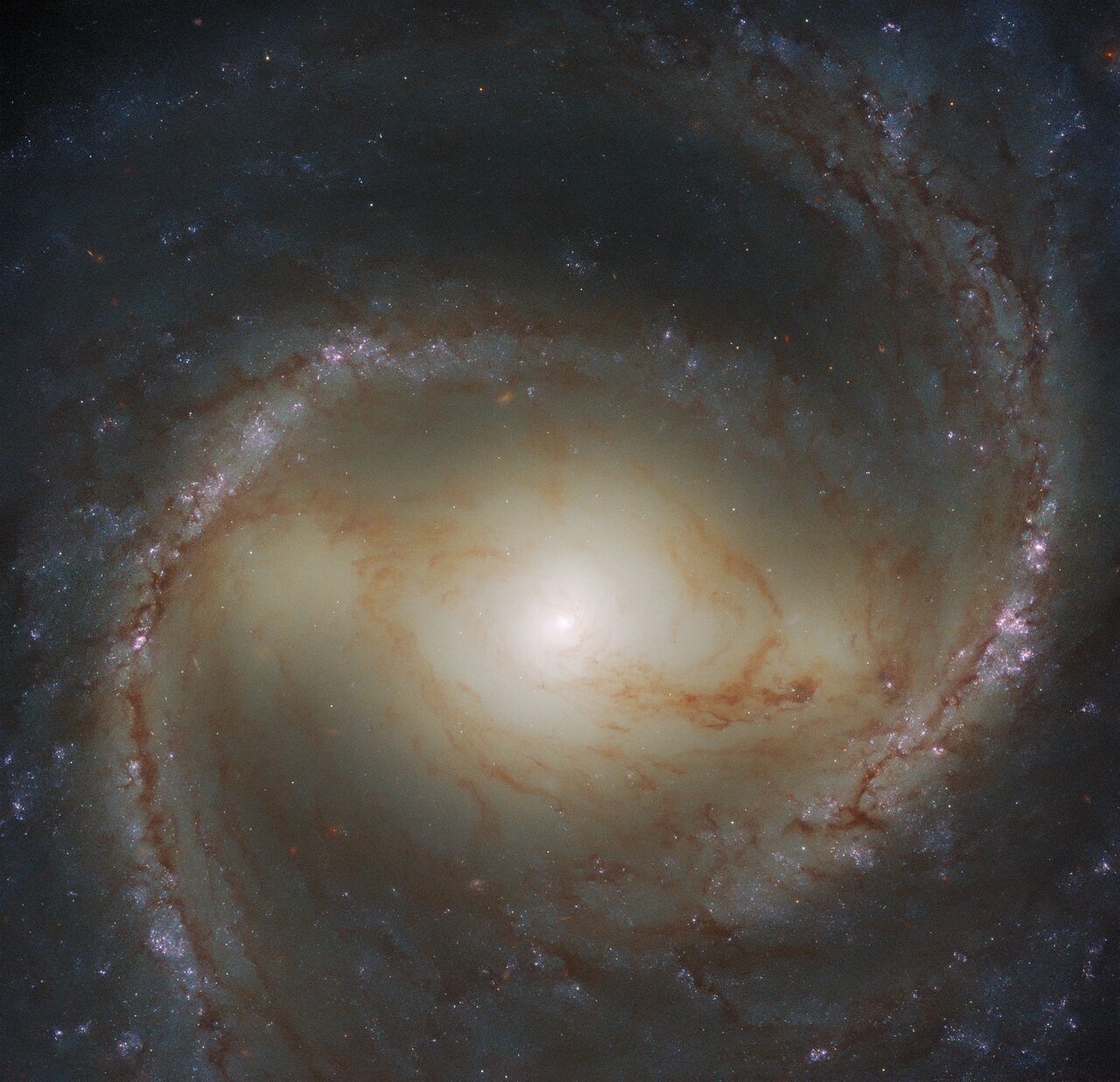
Hubble Snaps yet another Spiral Galaxy

Credit: ESA/Hubble & NASA, J. Lee and the PHANGS-HST Team

The spiral galaxy M91 fills the frame of this Wide Field Camera 3 observation from the NASA/ESA Hubble Space Telescope. M91 lies approximately 55 million light-years from Earth in the constellation Coma Berenices and—as is evident in this image—is a barred spiral galaxy. While M91’s prominent bar makes for a spectacular galactic portrait, it also hides an astronomical monstrosity. Like our own galaxy, M91 contains a supermassive black hole at its center. A 2009 study using archival Hubble data found that this central black hole weighs somewhere between 9.6 and 38 million times as much as the Sun.

While archival Hubble data allowed astronomers to weigh M91’s central black hole, more recent observations have had other scien...

Read More