Category Astronomy/Space

Small Stars Share Similar Dynamics to our Sun, Key to Planet Habitability

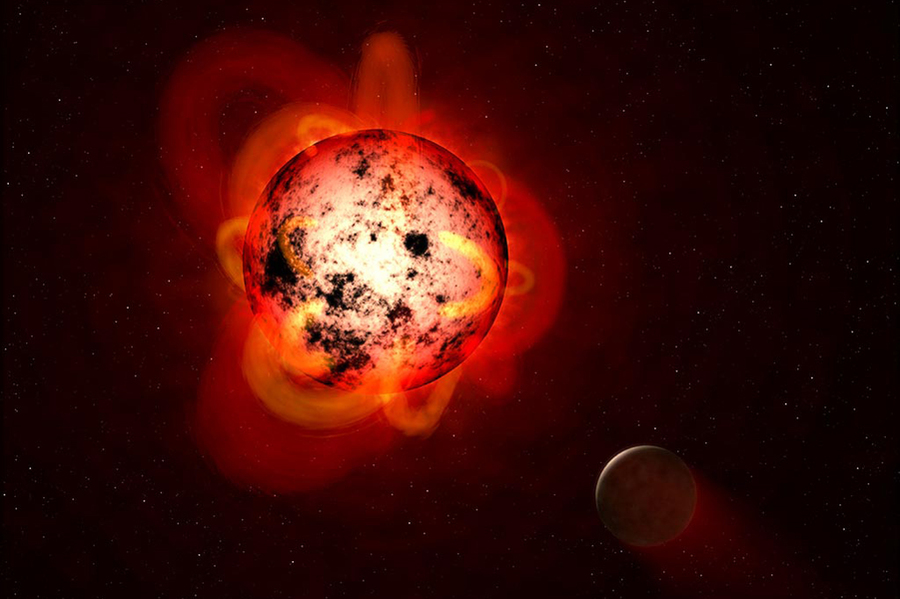
A graphic depicting stellar and planetary magnetic activity
Rice University scientists have shown that “cool” stars like the sun share dynamic surface behaviors that influence their energetic and magnetic environments. Stellar magnetic activity is key to whether a given star can host planets that support life. (Credit: NASA)

Stars scattered throughout the cosmos look different, but they may be more alike than once thought, according to Rice University researchers.

New modeling work by Rice scientists shows that “cool” stars like the sun share the dynamic surface behaviors that influence their energetic and magnetic environments. This stellar magnetic activity is key to whether a given star hosts planets that could support life.

The work by Rice postdoctoral researcher Alison Farrish and astrophysicists David Alexander and Christopher ...

Read More

New findings on the Evolution of Galaxies

Planets, Stars, Gravitational Waves, and the Formation of Galaxies

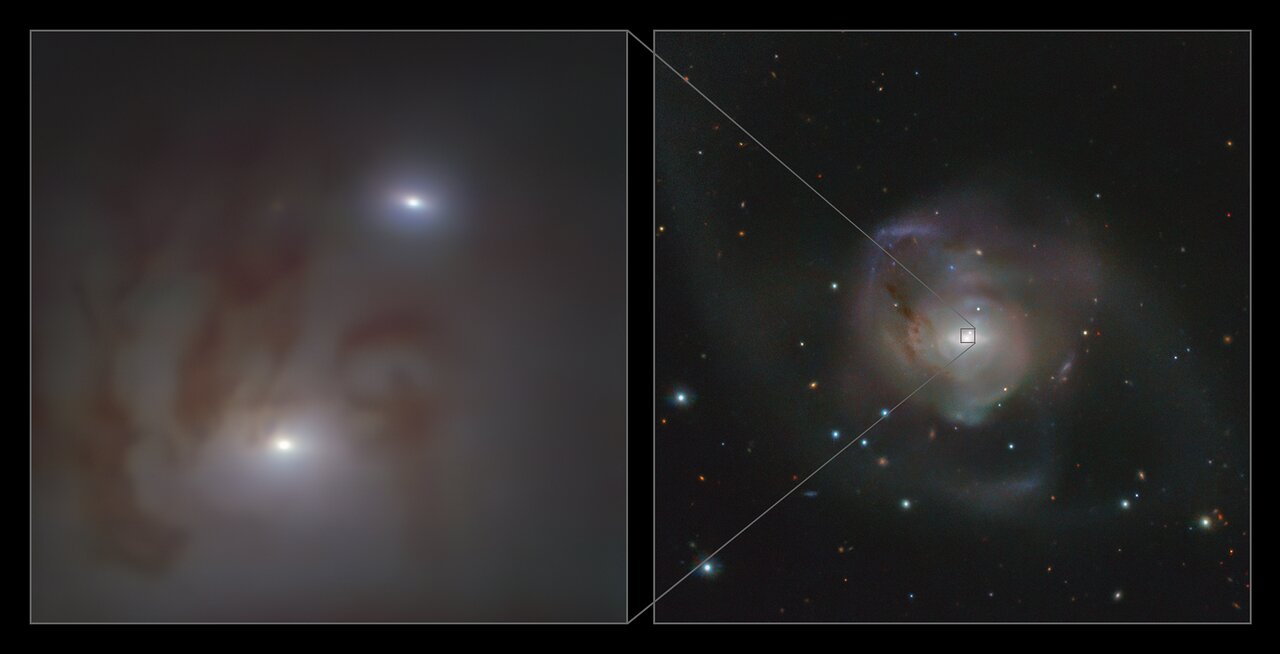
Research paper provides new insights into how central supermassive blackholes influence the evolution of their host galaxy. Galaxies eventually undergo a phase in which they lose most of their gas, which results in a change into their properties over the course of their evolution. Current models for galaxy evolution suggest this should eventually happen to all galaxies, including our own Milky Way; astronomers have now uncovered key insights into this process.

Emirati national Aisha Al Yazeedi, a research scientist at the NYU Abu Dhabi (NYUAD) Center for Astro, Particle, and Planetary Physics, has published her first research paper, featuring some key findings on the evolution of galaxies.

Commenting on the findings, Al Yazeedi said: “The evolution of galaxies is directly linked...

Read More

Solving Solar Puzzle could help save Earth from Planet-wide Blackouts

Artist's image of the internal structure of the Sun. NASA
Diagram showing the internal structure of the Sun based on existing theory that assumes circular convection cells near the solar surface. Dr Vasil’s new model suggests thinner, spinning ‘cigar-shaped’ convection cells driving the Sun’s magnetic dynamo. Image: NASA

Scientists in Australia and in the USA have solved a long-standing mystery about the Sun that could help astronomers predict space weather and help us prepare for potentially devastating geomagnetic storms if they were to hit Earth.

The Sun’s internal magnetic field is directly responsible for space weather — streams of high-energy particles from the Sun that can be triggered by solar flares, sunspots or coronal mass ejections that produce geomagnetic storms...

Read More

Ocean World: Rocky Exoplanet has just Half the Mass of Venus

A team of astronomers have used the European Southern Observatory’s Very Large Telescope (ESO’s VLT) in Chile to shed new light on planets around a nearby star, L98-59, that resemble those in the inner Solar System. Amongst the findings are a planet with half the mass of Venus — the lightest exoplanet ever to be measured using the radial velocity technique — an ocean world, and a possible planet in the habitable zone.

“The planet in the habitable zone may have an atmosphere that could protect and support life,” says María Rosa Zapatero Osorio, an astronomer at the Centre for Astrobiology in Madrid, Spain, and one of the authors of the study published today in Astronomy & Astrophysics.

The results are an important step in the quest to find life on Earth-sized planets outside the...

Read More