Category Astronomy/Space

Astronomers uncover Mysterious Origins of ‘Super-Earths’

Artists’s impression of one of more than 50 new exoplanets found by HARPS: the rocky super-Earth HD 85512 b

Study shows super-Earths are not leftovers of mini-Neptunes, challenging our understanding of planetary formation. Mini-Neptunes and super-Earths up to four times the size of our own are the most common exoplanets orbiting stars beyond our solar system. Until now, super-Earths were thought to be the rocky cores of mini-Neptunes whose gassy atmospheres were blown away. In a new study published in The Astrophysical Journal, astronomers from McGill University show that some of these exoplanets never had gaseous atmospheres to begin with, shedding new light on their mysterious origins.

From observations, we know about 30 to 50 percent of host stars have one or the other, and the...

Read More

Sun: Scientists detect Water Vapour Emanating from Mars

Scientists detect water vapour emanating from Mars
The ESA-Roscosmos ExoMars Trace Gas Orbiter studies water vapour and its components as it rises through the atmosphere and out into space. By looking specifically at the ratio of hydrogen to its heavier counterpart deuterium, the evolution of water loss over time can be traced. Credit: (C) ESA

Researchers said Wednesday they had observed water vapour escaping high up in the thin atmosphere of Mars, offering tantalising new clues as to whether the Red Planet could have once hosted life.

The traces of ancient valleys and river channels suggest liquid water once flowed across the surface of Mars. Today, the water is mostly locked up in the planet’s icecaps or buried underground.

But some of it is vaporising, in the form of hydrogen leaking from the atmosphere, according to the new r...

Read More

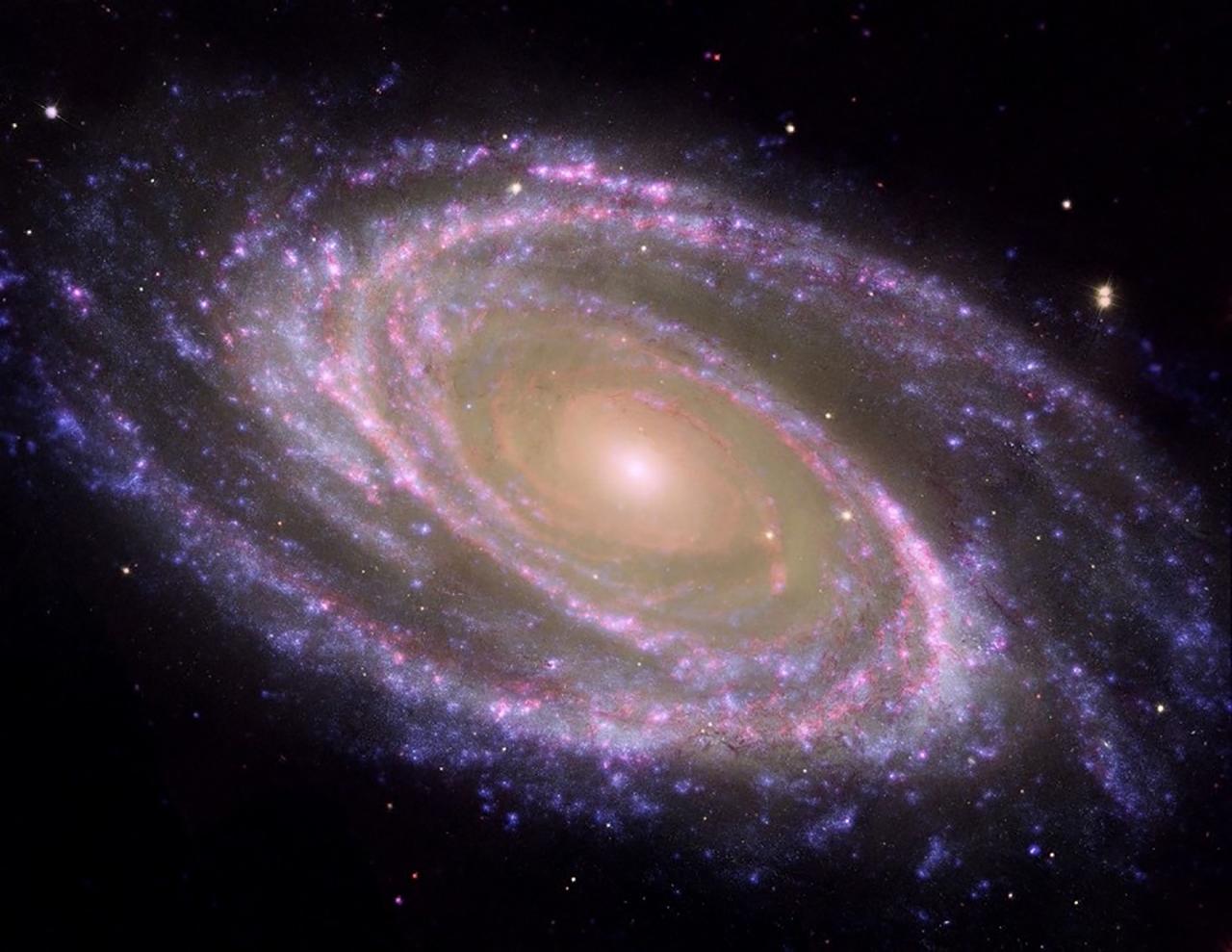
Rare Blast’s remains discovered in Milky Way’s Center

Astronomers may have found our galaxy’s first example of an unusual kind of stellar explosion. This discovery, made with NASA’s Chandra X-ray Observatory, adds to the understanding of how some stars shatter and seed the universe with elements critical for life on Earth.

This intriguing object, located near the center of the Milky Way, is a supernova remnant called SagittariusA East, or Sgr A East for short. Based on Chandra data, astronomers previously classified the object as the remains of a massive star that exploded as a supernova, one of many kinds of exploded stars that scientists have catalogued.

Using longer Chandra observations, a team of astronomers has now instead concluded that the object is left over from a different type of supernova...

Read More

Study of Supergiant star Betelgeuse unveils the cause of its Pulsations

Recent brightness variations of Betelgeuse. Stellar pulsation causes the star’s brightness to vary, but the large dip in brightness in early 2020 is unprecedented. A comparison of direct images of the surface of Betelgeuse between January 2019 and December 2019 show that large portions of the star faded in December 2019, which could indicate a dust cloud appearing in front of it. The images were taken by the European Southern Observatory’s (ESO’s) Very Large Telescope. (Credit: ESO/M. Montargès et al.) For brightness data, see the caption of Fig 2.

Recalibrated its mass, radius, and distance. Betelgeuse is normally one of the brightest, most recognizable stars of the winter sky, marking the left shoulder of the constellation Orion...

Read More