The high-pressure mineral Donwilhelmsite, recently discovered in the lunar meteorite Oued Awlitis 001 from Apollo missions, is important for understanding the inner structure of Earth. A team of European researchers discovered a new high-pressure mineral in the lunar meteorite Oued Awlitis 001, named donwilhelmsite [CaAl4Si2O11]...
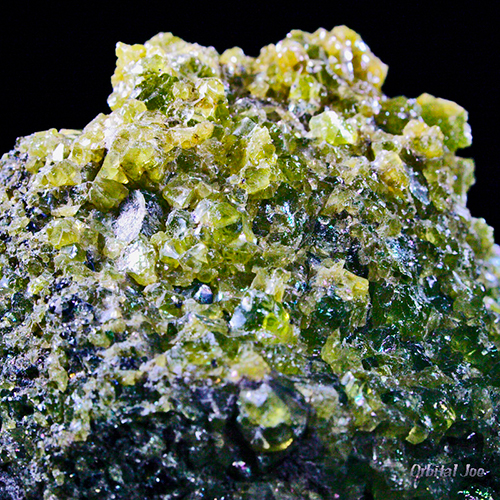
Olivine (greenish crystals) is thought to be one of the most abundant minerals in interior of the Earth and other planetary bodies.
Planetary scientists from Brown University have developed a new remote sensing method for studying olivine, a mineral that could help scientists understand the early evolution of the Moon, Mars and other planetary bodies.
“Olivine is understood to be a major component in the interiors of rocky planets,” said Christopher Kremer, a Ph.D. candidate at Brown University and lead author of a new paper describing the work. “It’s a primary constituent of Earth’s mantle, and it’s been detected on the surfaces of the Moon and Mars in volcanic deposits or in impact craters that bring up material from the subsurface.”
An additional planet between Saturn and Uranus was kicked out of the Solar System in its infancy. New work led by Carnegie’s Matt Clement reveals the likely original locations of Saturn and Jupiter. These findings refine our understanding of the forces that determined our Solar System’s unusual architecture, including the ejection of an additional planet between Saturn and Uranus, ensuring that only small, rocky planets, like Earth, formed inward of Jupiter.
In its youth, our Sun was surrounded by a rotating disk of gas and dust from which the planets were born...
Analysis of a Martian meteorite reveals evidence of water 4.4 billion years ago. Certain minerals from the Martian crust in the meteorite are oxidized, suggesting the presence of water during the impact that created the meteorite. The finding helps to fill some gaps in knowledge about the role of water in planet formation.
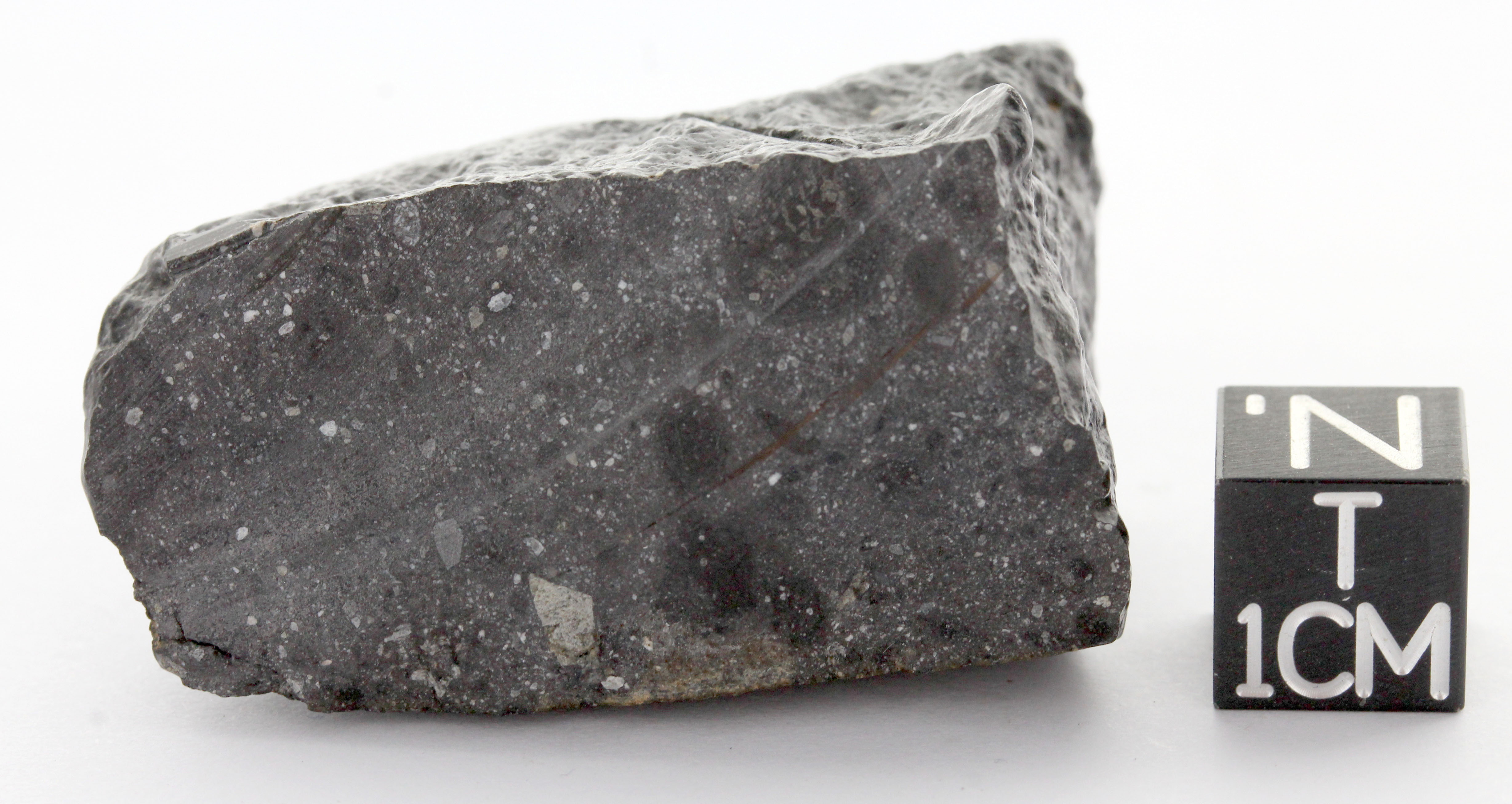
Several years ago, a pair of dark meteorites were discovered in the Sahara Desert. They were dubbed NWA 7034 and NWA 7533, where NWA stands for North West Africa and the number is the order in which meteorites are officially approved by the Meteoritical Society, an international planetary science organization...






Recent Comments