Category Astronomy/Space

ALMA spots most distant Dusty Galaxy Hidden in Plain Sight

Credit: NRAO/AUI/NSF, B. Saxton

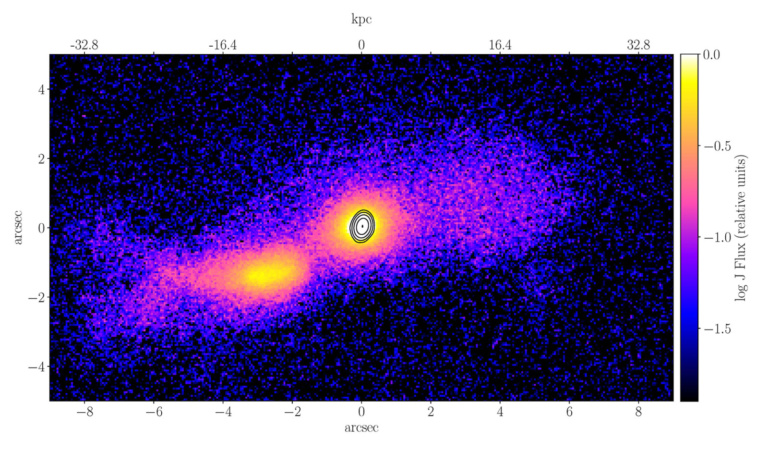
Astronomers using the Atacama Large Millimeter/submillimeter Array (ALMA) have spotted the light of a massive galaxy seen only 970 million years after the Big Bang. This galaxy, called MAMBO-9, is the most distant dusty star-forming galaxy that has ever been observed without the help of a gravitational lens.

Dusty star-forming galaxies are the most intense stellar nurseries in the universe. They form stars at a rate up to a few thousand times the mass of the Sun per year (the star-forming rate of our Milky Way is just three solar masses per year) and they contain massive amounts of gas and dust...

Read More

Stardust from Red Giants

Stardust in the area of the Pleiades. (Photograph: Keystone / Miguel Claro / Science Photo Library)

Some of the Earth’s building material was stardust from red giants. Astronomers can also explain why the Earth contains more of this stardust than the asteroids or the planet Mars, which are farther from the sun.

Around 4.5 billion years ago, an interstellar molecular cloud collapsed. At its centre, the Sun was formed; around that, a disc of gas and dust appeared, out of which the earth and the other planets would form. This thoroughly mixed interstellar material included exotic grains of dust: “Stardust that had formed around other suns,” explains Maria Schoenbaechler, a professor at the Institute of Geochemistry and Petrology at ETH Zurich...

Read More

How Planets may Form after Dust Sticks together

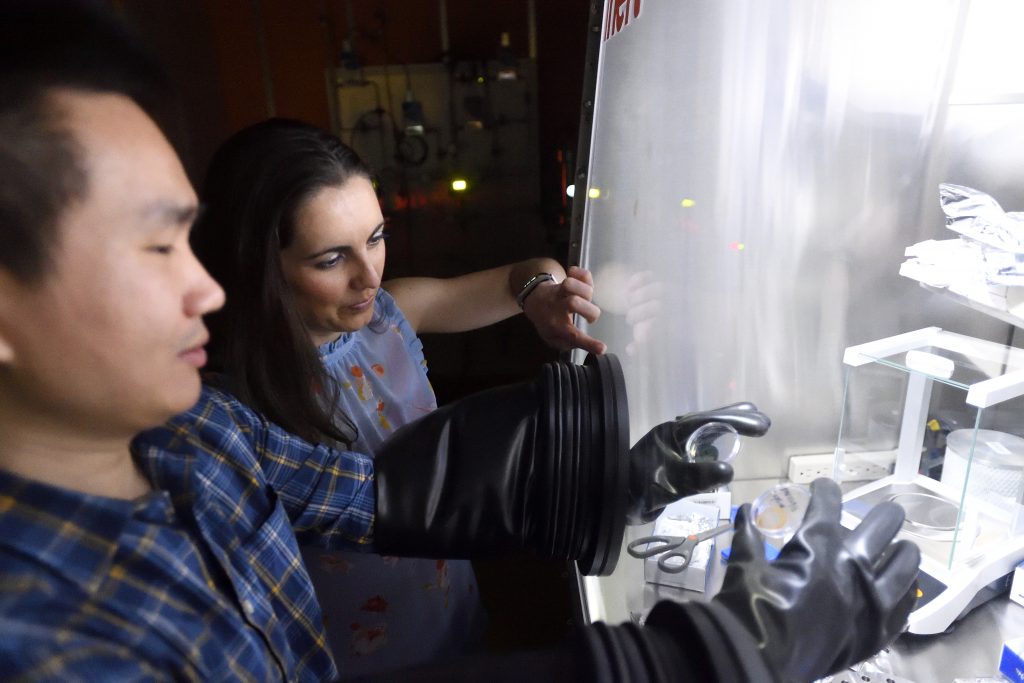
Aggregates in experiment and simulation.

Scientists may have figured out the origins of planets. Scientists may have figured out how dust particles can stick together to form planets, according to a Rutgers co-authored study that may also help to improve industrial processes.

In homes, adhesion on contact can cause fine particles to form dust bunnies. Similarly in outer space, adhesion causes dust particles to stick together. Large particles, however, can combine due to gravity – an essential process in forming asteroids and planets. But between these two extremes, how aggregates grow has largely been a mystery until now.

The study, published in the journal Nature Physics, found that particles under microgravity – similar to conditions believed to be in interplanetary space – d...

Read More

Explaining the ‘Tiger Stripes’ of Saturn’s moon Enceladus

NASA image of Enceladus.
Saturn’s tiny, frozen moon Enceladus is slashed by four straight, parallel fissures or “tiger stripes” from which water erupts. These features are unlike anything else in the solar system. Scientists at UC Davis, the Carnegie Institution and UC Berkeley now have an explanation for them. (NASA/JPL/Space Science Institute image).

Slashed across the south pole of Saturn’s moon Enceladus are four straight, parallel fissures or ‘tiger stripes’ from which water erupts. These fissures aren’t quite like anything else in the Solar System. Researchers now think they have a model to explain them.

Saturn’s tiny, frozen moon Enceladus is a strange place. Just 300 miles across, the moon is thought to have an outer shell of ice covering a global ocean 20 miles deep, encasing a rocky core...

Read More