



Category Astronomy/Space
Dark stars could help solve three pressing puzzles of the high-redshift universe
January 9, 2026,
 Astronomy/Space
Plasma rings around M dwarf stars offer new clues to planetary habitability
January 8, 2026,
Astronomy/Space

How does a star affect the makeup of its planets? And what does this mean for the habitability of distant worlds? Carnegie’s Luke Bouma is exploring a new way to probe this critical question—using naturally occurring space weather stations that orbit at least 10% of M dwarf stars during their early lives. He is presenting his work at the 247th American Astronomical Society meeting.
The paper is also published in The Astrophysical Journal Letters.
We know that most M dwarf stars—which are smaller, cooler, and dimmer than our ...
Read MoreSolar physicists discover long-hidden source of gamma rays unleashed by flares
January 8, 2026,
Astronomy/Space
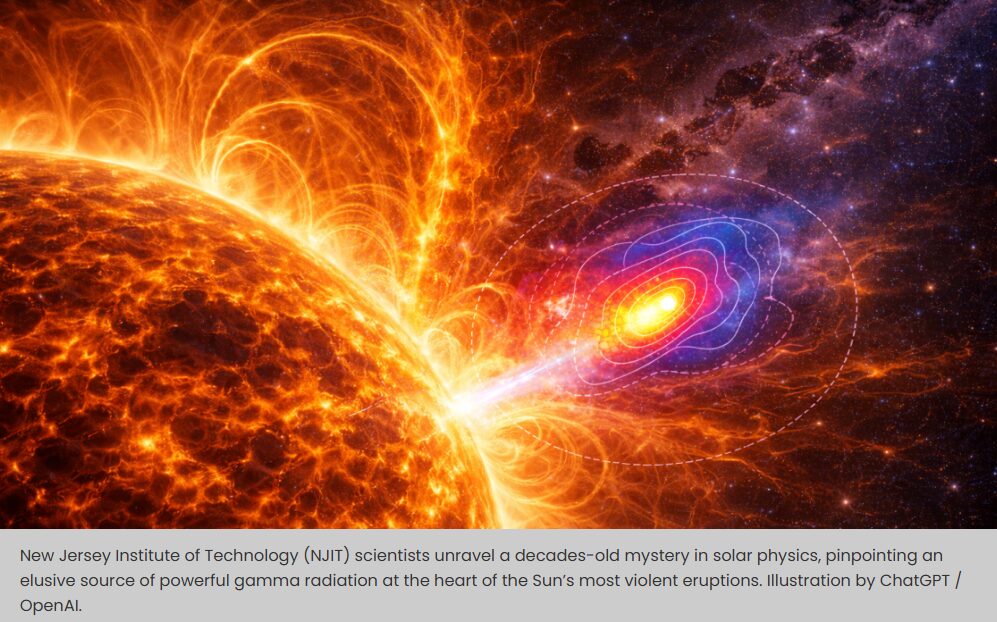
Solar physicists say they have found a key source of intense gamma rays unleashed when Earth’s nearest star produces its most violent eruptions.
In findings published in Nature Astronomy, scientists at NJIT’s Center for Solar-Terrestrial Research (NJIT-CSTR) have pinpointed a previously unknown class of high-energy particles in the sun’s upper atmosphere responsible for generating the long-puzzling radiation signals observed during major solar flare events for decades.
The signals were traced back to a localized region in the solar corona during a powerful X8...
Read MoreNew census of sun’s neighbors reveals best potential real estate for life
January 7, 2026,
Astronomy/Space
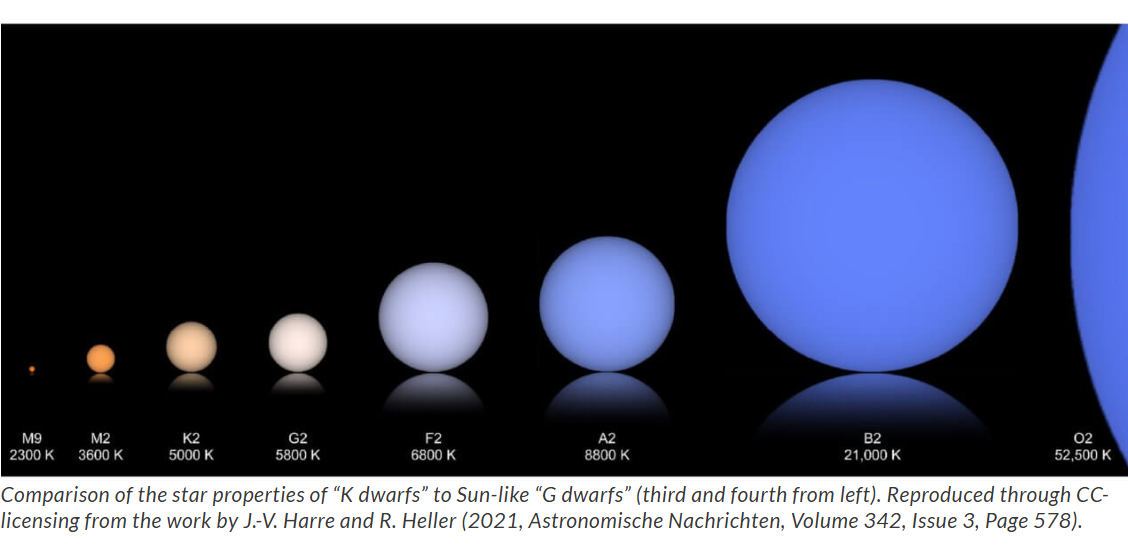
A new study led by a Georgia State University astronomy graduate student is a major step forward in the search for stars that could host Earth-like planets that may prove to be good havens for life to develop. Sebastián Carrazco-Gaxiola shared the results at the January 2026 meeting of the American Astronomical Society in Phoenix, Ariz.
“This survey marks the first comprehensive look at thousands of the sun’s lower-mass cousins,” Carrazco-Gaxiola said. “These stars, known as ‘K dwarfs,’ are commonly found throughout space, and they provide a long-term, stable environment for their planetary companions.”
Survey details and observational methods
Carrazco-Gaxiola’s survey focuses on over 2,000 stars that are closer than 130 light-years from Earth...

Recent Comments