Category Biology/Biotechnology

Memories could be lost if Two Key Brain Regions Fail to Sync together, study finds

Neurons brain cells

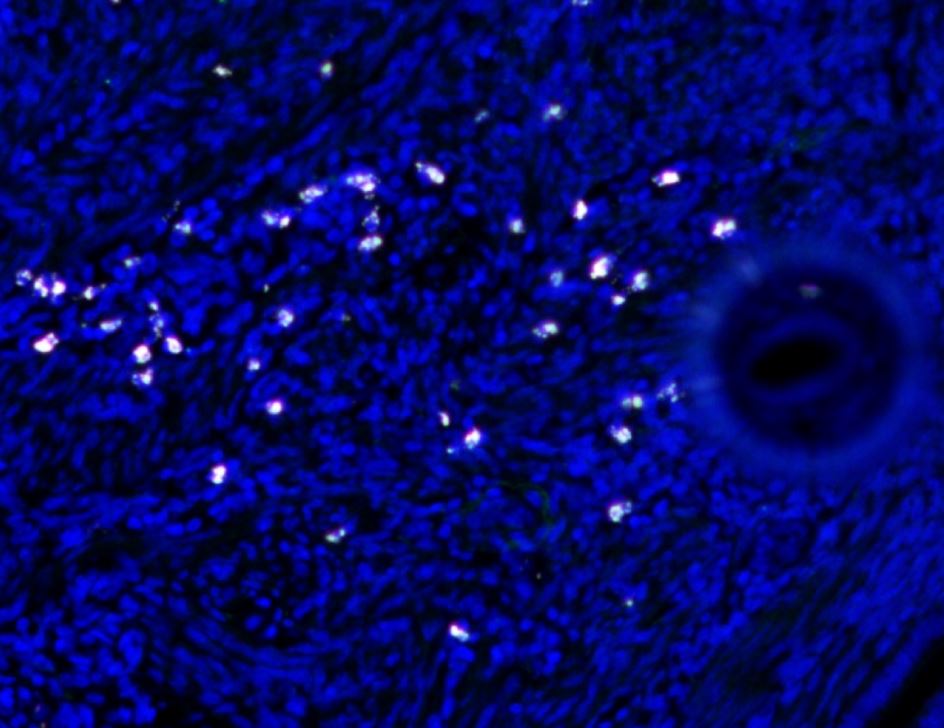
Learning, remembering something, and recalling memories is supported by multiple separate groups of neurons connected inside and across key regions in the brain. If these neural assemblies fail to sync together at the right time, the memories are lost, a new study led by the universities of Bristol and Heidelberg has found.

How do you keep track of what to do next? What happens in the brain when your mind goes blank? Short-term memory relies on two key brain regions: the hippocampus and the prefrontal cortex. The researchers set out to establish how these brain regions interact with one another as memories are formed, maintained and recalled at the level of specific groups of neurons. The study, published in Current Biology, also wanted to understand why memory sometimes fails.

Read More

Controlling the Degree of Twist in Nanostructured Particles for the First Time

For the first time, controlling the degree of twist in nanostructured particles
The graphic shows light waves approaching the twisted metal bowties and being turned by the bowtie shape. The ability to control the degree of twist in a curling, nanostructured material could be a useful new tool in chemistry and machine vision. Credit: Ella Maru Studio

Micron-sized “bow ties,” self-assembled from nanoparticles, form a variety of different curling shapes that can be precisely controlled, a research team led by the University of Michigan has shown.

The development opens the way for easily producing materials that interact with twisted light, providing new tools for machine vision and producing medicines.

While biology is full of twisted structures like DNA, known as chiral structures, the degree of twist is locked in—trying to change it breaks the structure...

Read More

Common Dry Cleaning Chemical linked to Parkinson’s

dry cleaning
Credit: Unsplash/CC0 Public Domain

A common and widely used chemical may be fueling the rise of the world’s fastest growing brain condition—Parkinson’s disease. For the past 100 years, trichloroethylene (TCE) has been used to decaffeinate coffee, degrease metal, and dry clean clothes. It contaminates the Marine Corps base Camp Lejeune, 15 toxic Superfund sites in Silicon Valley, and up to one-third of groundwater in the U.S. TCE causes cancer, is linked to miscarriages and congenital heart disease, and is associated with a 500% increased risk of Parkinson’s disease.

In a hypothesis paper in the Journal of Parkinson’s Disease, an international team of researchers—including University of Rochester Medical Center (URMC) neurologists Ray Dorsey, MD, Ruth Schneider, MD, and Karl Kiebur...

Read More

Molecular Component of Caffeine may play a Role in Gut Health

Molecular component of caffeine may play a role in gut health
Credit: Immunity (2023). DOI: 10.1016/j.immuni.2023.02.018

Brigham researchers studying how and why certain cell types proliferate in the gut found that xanthine, which is found in coffee, tea and chocolate, may play a role in Th17 differentiation. Insights may help investigators better understand gut health and the development of conditions such as inflammatory bowel disease.

The gut is home to a cast of microbes that influence health and disease. Some types of microorganisms are thought to contribute to the development of inflammatory conditions, such as inflammatory bowel disease (IBD), but the exact cascade of events that leads from microbes to immune cells to disease remains mysterious.

A new study by investigators from Brigham and Women’s Hospital explores exactly what lead...

Read More