Category Biology/Biotechnology

New Hydrogel Stem Cell Treatment Repairs Injured Brain Tissue in Mice

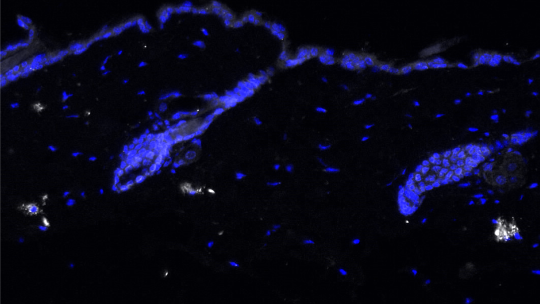
Mouse brain tissue
Mouse brain tissue 28 days after injection of hydrogel with myoglobin shows a higher volume of healthy grafted brain tissue, compared to injections of the hydrogel without myoglobin. Image: Supplied.

A new ‘hybrid’ hydrogel, which allows clinicians to safely deliver stem cells to the site of a brain injury in mice, has been developed by researchers from the University of Melbourne and the Australian National University.

A hydrogel is a water-based gel that can be used to deliver substances into the body and can be used to promote the effective growth of new cells.

Published in Nature Communications, the proof-of-concept breakthrough solves a major challenge faced by stem cell researchers since the 1980s – keeping stem cells alive for long enough to allow them to evolve into the c...

Read More

Digital Twin Opens Way to Effective Treatment of Inflammatory Diseases

A vision of how digital twins can be used to tailor drugs: (A) Patients with different immune diseases. (B) Computers construct (C) digital twins of each patient’s disease mechanisms. These interact in molecular programmes, controlled by (D) switch proteins, which are measured in blood or tissue to (E) find the dominant protein(s) at which to target therapy. Illustration: The research group.

Inflammatory diseases like rheumatoid arthritis have complex disease mechanisms that can differ from patient to patient with the same diagnosis. This means that currently available drugs have little effect on many patients. Using so-called digital twins, researchers at Karolinska Institutet have now obtained a deeper understanding of the “off and on” proteins that control these diseases...

Read More

Study finds Common Artificial Sweetener linked to Higher Rates of Heart Attack and Stroke

New Cleveland Clinic research showed that erythritol, a popular artificial sweetener, is associated with an increased risk of heart attack and stroke. Findings were published today in Nature Medicine.

Researchers studied more than 4,000 people in the U.S. and Europe and found those with higher blood erythritol levels were at elevated risk of experiencing a major adverse cardiac event such as heart attack, stroke or death. They also examined the effects of adding erythritol to either whole blood or isolated platelets. Results revealed that erythritol made platelets easier to activate and form a clot. Pre-clinical studies confirmed ingestion of erythritol heightened clot formation.

“Sweeteners like erythritol, have rapidly increased in popularity in recent years but there needs to...

Read More

Researchers use Artificial Intelligence to Predict Cardiovascular Disease

Researchers use artificial intelligence to predict cardiovascular disease
Study design, workflow, and bioinformatics. Overall research methodology includes, (1) clinical data analysis; (2) cohort building; (3) cardiovascular disease-based sample collection; (4) sample management and tracking; (5) RNA extraction, and high-throughput sequencing; (6) pipeline and bioinformatics application development for RNA-seq data processing, quality checking, gene-disease annotation, and phenotyping; and (7) implementation of artificial intelligence and machine learning techniques for predictive analysis. Credit: Genomics (2023). DOI: 10.1016/j.ygeno.2023.110584

Researchers may be able to predict cardiovascular disease — such as arterial fibrillation and heart failure — in patients by using artificial intelligence (AI) to examine the genes in their DNA, according to a new ...

Read More