The neural activity of these patients was measured while reading three forms of sentences: regular sentences; “Jabberwocky” sentences (based on Lewis Carroll’s “Jabberwocky” poem), which use correct grammar and syntax but contain nonsense words, making them meaningless; and lists of words or nonsense words. Image is in the public domain
When a person reads a sentence, two distinct networks in the brain are activated, working together to integrate the meanings of the individual words to obtain more complex, higher-order meaning, according to a study at UTHealth Houston.
The study, led by Oscar Woolnough, Ph.D., postdoctoral research fellow in the Vivian L...
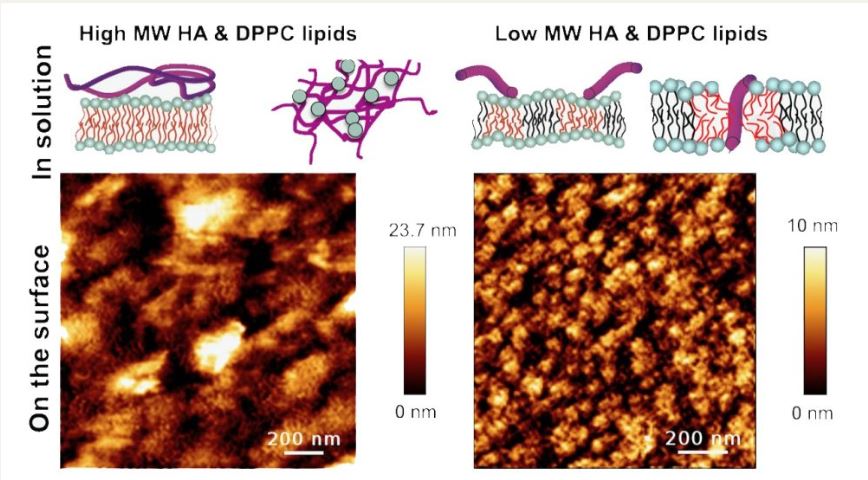
The complex interplay between phospholipid and hyaluronic acid self-assembly in solution, and the molecular weight of hyaluronic acid, determine surface affinity and the formation of a protective film on cartilage. Credit: Kangdi Sun, Tooba Shoaib, Mark W. Rutland, Changwoo Do, and Rosa M. Espinosa-Marzal
Neutron and light scattering, along with atomic force microscopy and quartz crystal microbalance, illuminate a mechanism explaining the ‘vicious circle’ of osteoarthritis.
The exact mechanism of cartilage breakdown in osteoarthritis is unknown, but damage from mechanical stress with insufficient self-repair is believed to be the main culprit...
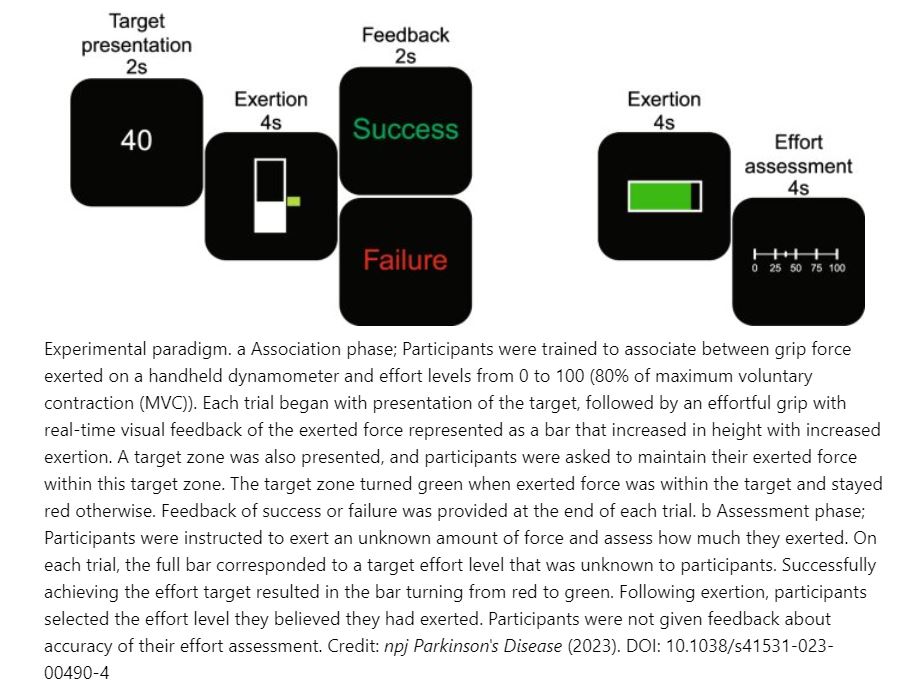
Experimental paradigm. a Association phase; Participants were trained to associate between grip force exerted on a handheld dynamometer and effort levels from 0 to 100 (80% of maximum voluntary contraction (MVC)). Each trial began with presentation of the target, followed by an effortful grip with real-time visual feedback of the exerted force represented as a bar that increased in height with increased exertion. A target zone was also presented, and participants were asked to maintain their exerted force within this target zone. The target zone turned green when exerted force was within the target and stayed red otherwise. Feedback of success or failure was provided at the end of each trial...Read More
Comparisons of microbial compositions between baseline and follow-up. (a) aPCoA of the Bray‒Curtis distance plot for baseline and follow-up after adjusting for hypertension, medication use, and alcohol and tea drinking. (b) α-Diversity differences between baseline and follow-up for stratified health statuses (HB, n = 21; HF, n = 15; LHB, n = 19; LHF, n = 27). (c) Composition of the gut microbiome at the phylum level between baseline and follow-up for stratified health statuses. (d) LEfSe between baseline and follow-up stratified by health status (two-sided Kruskal‒Wallis test between classes; P < 0.05, LDA > 2). Healthy baseline (HB, n = 21), healthy follow-up (HF, n = 15), less healthy baseline (LHB, n = 19) and less healthy follow-up (LHF, n = 27) samples were examined...Read More







Recent Comments