Category Biology/Biotechnology

Biologists reveal how Obesity Damages the Skeletal Muscle Metabolism

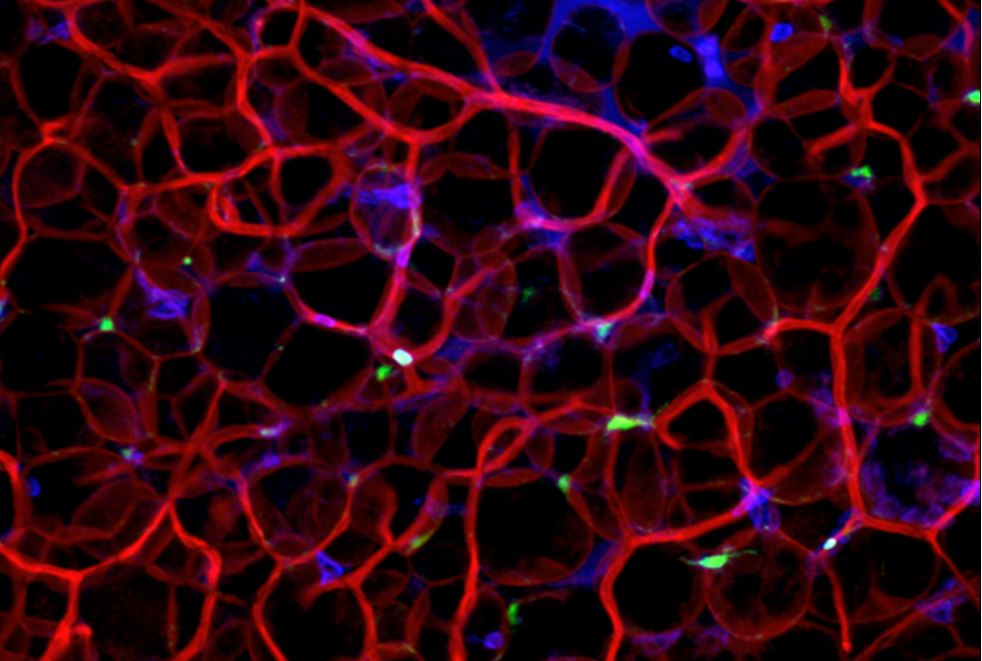
Roles of brain-derived neurotrophic factor (BDNF) in skeletal muscle metabolism. Credit: The University of Hong Kong

A decline in metabolism and endurance of skeletal muscle is commonly observed in obese patients, but the underlying mechanism is not well-understood. A research team led by Dr. Chi Bun Chan, Assistant Professor from School of Biological Sciences, Faculty of Science, the University of Hong Kong (HKU), uncovers a new mechanism to explain how obesity jeopardizes the functions of skeletal muscle and provides a potential treatment against the disease. The research findings have recently been published in the journal Autophagy.

Obesity is a metabolic disorder with increasing prevalence in modern society...

Read More

Quantum Brain Sensors could be crucial in Spotting Dementia after scientists find they can Track Brain Waves

Lead research author Aikaterini Gialopsou with magnetic shield where participant brain signal measurements are taken

New highly sensitive quantum sensors for the brain may in the future be able to identify brain diseases such as dementia, ALS and Parkinson’s, by spotting a slowing in the speed at which signals travel across the brain. The research findings from a paper led by University of Sussex quantum physicists are published in Scientific Reports journal.

The quantum scanners being developed by the scientists can detect the magnetic fields generated when neurons fire. Measuring moment-to-moment changes in the brain, they track the speed at which signals move across the brain...

Read More

Suffering from Psoriasis? Blame this Trio of Proteins

New study shows there may be a way to help even more psoriasis patients. About 7.5 million Americans suffer from psoriasis, an autoimmune disease that shows up as patches of red, inflamed skin and painful, scaly rashes. Although there are effective treatments for psoriasis, not everyone responds to these therapies — and for many, the relief is temporary.

“These therapies don’t reduce disease by 100 percent, and they don’t cure the disease” says La Jolla Institute for Immunology (LJI) Professor Michael Croft, Ph.D. “And if you take patients off those drugs, the disease almost always comes back.”

Now Croft and his team in LJI’s Center for Autoimmunity and Inflammation have discovered how a key protein called TWEAK damages skin cells in psoriasis patients...

Read More

Morning Exposure to Deep Red Light Improves Declining Eyesight

Just three minutes of exposure to deep red light once a week, when delivered in the morning, can significantly improve declining eyesight, finds a pioneering new study by UCL researchers.

Published in Scientific Reports, the study builds on the team’s previous work*, which showed daily three-minute exposure to longwave deep red light ‘switched on’ energy producing mitochondria cells in the human retina, helping boost naturally declining vision.

For this latest study, scientists wanted to establish what effect a single three-minute exposure would have, while also using much lower energy levels than their previous studies...

Read More