Category Biology/Biotechnology

Data from Smartwatches can help Predict Clinical Blood Test results

The image shows the heart rate monitor reading on a standard smart watch.

Long-term data gathered from wearables can quicky indicate illness and other abnormalities in a patient’s health. Smartwatches and other wearable devices may be used to sense illness, dehydration and even changes to the red blood cell count, according to biomedical engineers and genomics researchers at Duke University and the Stanford University School of Medicine.

The researchers say that, with the help of machine learning, wearable device data on heart rate, body temperature and daily activities may be used to predict health measurements that are typically observed during a clinical blood test. The study appears in Nature Medicine on May 24, 2021.

During a doctor’s office visit, a medical worker usually m...

Read More

Fat around the Heart Linked to Increased Risk of Heart Failure

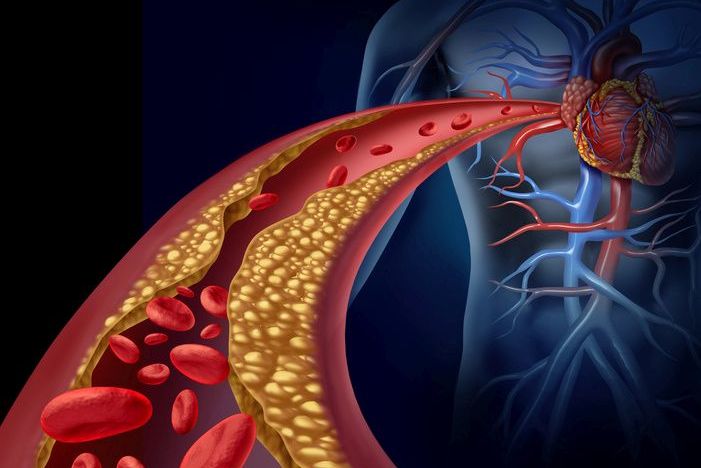
Having excess pericardial fat — fat aro-und the heart — increases the risk of developing heart failure, especially in women, according to new Mount Sinai research.

Women with high amounts of pericardial fat are twice as likely to develop heart failure, while men are 50 percent more likely, according to the study, published in the May 24 online issue of the Journal of the American College of Cardiology. It is the largest study to identify the link between pericardial fat and heart failure, which could potentially lead to early intervention and heart disease prevention.

“For nearly two decades we have known that obesity, based on simple measurement of height and weight, can double one’s risk of heart failure, but now, we have gone a step further by using imaging technology to show...

Read More

Bile Acids Trigger Satiety in the Brain

Scientists have discovered a new role for bile acids: they curb appetite by entering the brain. Their findings provide new insights into the signals and mechanisms by which satiety is controlled and may have implications for treating obesity.

Our brain is usually well protected from uncontrolled influx of molecules from the periphery thanks to the blood-brain barrier, a physical seal of cells lining the blood vessel walls. The hypothalamus, however, is a notable exception to this rule. Characterized by “leaky” blood vessels, this region, located at the base of the brain, is exposed to a variety of circulating bioactive molecules. This anatomical feature also determines its function as a rheostat involved in the coordination of energy sensing and feeding behavior.

Several hormone...

Read More

A New Form of Carbon Opens Door to Nanosized Wires

Rakennekuvan yläosassa näkyvät hiiliatomien säännönmukaisesti muodostamat neli-, kuusi- ja kahdeksankulmiot. Alaosa on atomivoimamikroskooppikuva keinotekoisesti valmistetusta materiaalista. Kuva: Marburgin yliopisto, Aalto-yliopisto
Structure of the new network. The upper part schematically shows how the carbon atoms link as squares, hexagons, & octagons. The lower part is an image of the network, obtained with high resolution microscopy. Credit: University Marburg & Aalto University

New type of atomically thin carbon material. Researchers at the University of Marburg in Germany and Aalto University in Finland have now discovered a new carbon network, which is atomically thin like graphene, but is made up of squares, hexagons, and octagons forming an ordered lattice. They confirmed the unique structure of the network using high-resolution scanning probe microscopy and interestingly found that its electronic properties are very different from those of graphene.

In contrast to graphene and other forms of carbon, ...

Read More