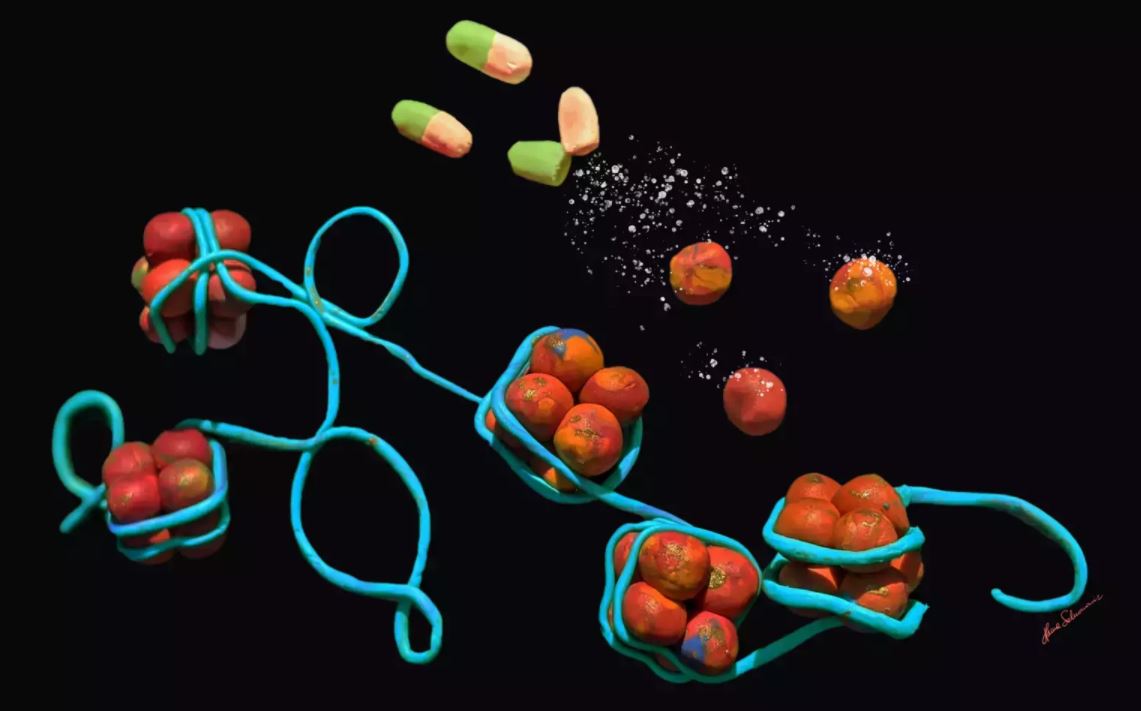
Researchers discover an unexpected link between DNA winding and metabolism in the gut to ameliorate aging. Our genetic material is stored in our cells in a specific way to make the meter-long DNA molecule fit into the tiny cell nucleus of each body cell...
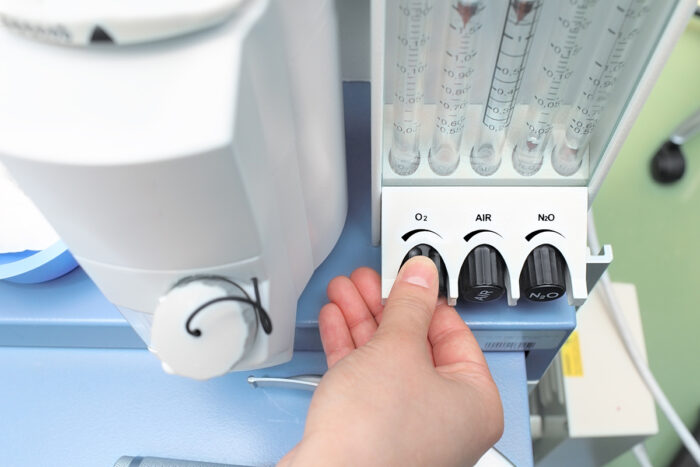
Researchers at Washington University School of Medicine in St. Louis and the University of Chicago have found that a single, one-hour treatment that involves breathing in a mixture of oxygen and the anesthetic drug nitrous oxide — otherwise known as laughing gas — can significantly improve symptoms in people with treatment-resistant depression.
Single treatment provides patients with rapid, lasting antidepressant effects. A single, one-hour treatment that involves breathing in a mixture of oxygen and nitrous oxide — otherwise known as laughing gas — significantly improved symptoms in people with treatment-resistant depression, according to new data from researchers at Washington University School of Medicine in St. Louis and the University of Chicago.
Gel-coated (red) mesenchymal stromal cells (yellow) can degrade collagen (green) over a distance in the presence of tumor necrosis factor-alpha. (Image: Jae-Won Shin and Sing-Wan Wong/UIC)
Single cell encapsulation in gel can optimize cell-based therapy. Researchers at the University of Illinois Chicago have shown that even after lung tissue has been damaged, it may be possible to reverse fibrosis and promote tissue repair through treatment with microgel-coated mesenchymal stromal cells.
Pulmonary fibrosis is a chronic disease caused by environmental toxins, medications or medical conditions like pneumonia and rheumatoid arthritis...
A UMass Amherst research team has developed an electronic microsystem made from protein nanowires, a “green” electronic material that is renewably produced from microbes without producing “e-waste.”
A research team from the University of Massachusetts Amherst has created an electronic microsystem that can intelligently respond to information inputs without any external energy input, much like a self-autonomous living organism. The microsystem is constructed from a novel type of electronics that can process ultralow electronic signals and incorporates a device that can generate electricity “out of thin air” from the ambient environment.
The groundbreaking research was published June 7 in the journal Nature Communications.
Jun Yao, an assistant professor in the electrical and compu...






Recent Comments