In young adult mice (left), TET1 is active in oligodendroglial cells especially after injury and this leads to new myelin formation and healthy brain function. In old mice (right), the age-related decline of TET1 levels impairs the ability of oligodendroglial cells to form functional new myelin. The authors are currently investigating whether increasing TET1 levels in older mice could rejuvenate the oligodendroglial cells and restore their regenerative functions.
The discovery could have important implications for the health of aging brains and development of therapies for neurodegenerative diseases. Recent studies suggest that new brain cells are being formed every day in response to injury, physical exercise, and mental stimulation...
Scientists have demonstrated that conolidine, a natural painkiller derived from the pinwheel flower and traditionally used in Chinese medicine, interacts with the newly identified opioid receptor ACKR3/ CXCR7 that regulates opioid peptides naturally produced in the brain. The researchers also developed a synthetic analogue of conolidine, RTI-5152-12, which displays an even greater activity on the receptor.
These findings, which were published on June 3rd in the international journal Signal Transduction and Targeted Therapy (Nature publishing group), further advance the understanding of pain regulation and open alternative therapeutic avenues for the treatment of chronic pain.
Opioid peptides are small proteins that mediate pain relief and emotions, in...
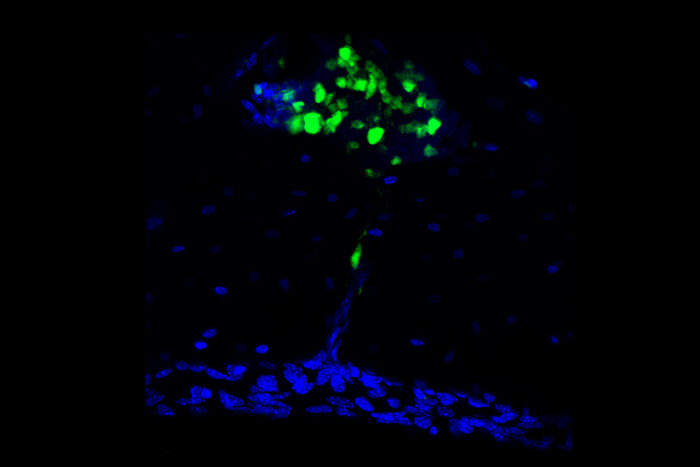
A newly developed B cell (green in middle of image) migrates from the bone marrow of the skull, where a cluster of other new B cells remain, then through the skull bone, to the protective tissue that covers the brain, which is populated mainly by other cells (blue). Researchers at Washington University School of Medicine in St. Louis have discovered that the immune cells stationed in the protective tissue known as the meninges come primarily from the skull. The finding opens up the possibility of developing therapies to target such cells as a way to prevent or treat brain conditions.
Immune cells from skull bone marrow guard the brain, spinal cord. Researchers have discovered that the immune cells that protect the brain and spinal cord come primarily from the skull...
Research links fruit but not fruit juice to lower type 2 diabetes risk. A new study finds people who consume two servings of fruit per day have 36 percent lower odds of developing type 2 diabetes than those who consume less than half a serving. The research was published in the Endocrine Society’s Journal of Clinical Endocrinology & Metabolism.
Diabetes is a disease where people have too much sugar in their bloodstream, and it is a huge public health burden. Approximately 463 million adults worldwide were living with diabetes in 2019, and by 2045 this number is expected to rise to 700 million. An estimated 374 million people are at increased risk of developing type 2 diabetes, the most common form of the disease...







Recent Comments