Category Biology/Biotechnology

Gum disease-causing Bacteria borrow Growth Molecules from neighbors to thrive

A cross-species interaction with a symbiotic commensal enables  cell-density-dependent growth and in vivo virulence of an oral pathogen |  The ISME Journal
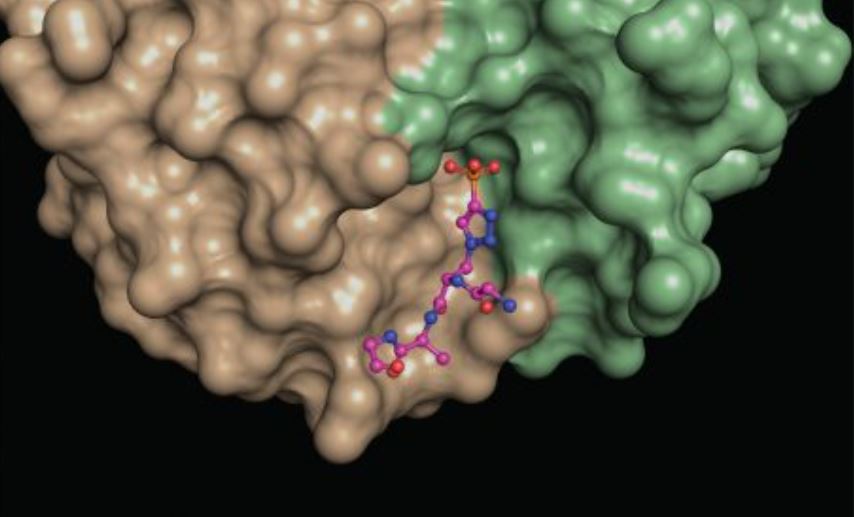
Model depicting V. parvula (Vp)-P. gingivalis (Pg) interaction during dental biofilm community development.

The human body is filled with friendly bacteria. However, some of these microorganisms, such as Veillonella parvula, may be too nice. These peaceful bacteria engage in a one-sided relationship with pathogen Porphyromonas gingivalis, helping the germ multiply and cause gum disease, according to a new University at Buffalo-led study.

The research sought to understand how P. gingivalis colonizes the mouth. The pathogen is unable to produce its own growth molecules until it achieves a large population in the oral microbiome (the community of microorganisms that live on and inside the body).

The answer: It borrows growth molecules from V...

Read More

Research shows a few Beneficial Organisms could play key role in treating type 2 -Diabetes

Lactobacillus johnsonii, SEM image by Kathryn Cross, IFR

Researchers at Oregon State University have found that a few organisms in the gut microbiome play a key role in type 2 diabetes, opening the door to possible probiotic treatments for a serious metabolic disease affecting roughly one in 10 Americans.

“Type 2 diabetes is in fact a global pandemic and the number of diagnoses is expected to keep rising over the next decade,” said study co-leader Andrey Morgun, associate professor of pharmaceutical sciences in the OSU College of Pharmacy. “The so-called ‘western diet’ — high in saturated fats and refined sugars — is one of the primary factors. But gut bacteria have an important role to play in modulating the effects of diet.”

Formerly known as adult-onset diabetes, type 2 diabet...

Read More

Polysaccharides from Red Algae affect Mice Immune systems, say scientists

After adding carrageenans to the diet of lab mice for one week, the activity of their congenital immunity cells reduced and leukocyte count dropped. Image is in the public domain

Carrageenans, biologically active polysaccharides isolated from red algae and widely used in the food industry as stabilizers, thickeners, or jelly agents, have an express effect on the immune systems of mice, according to a new study. The research was carried out by scientists from the School of Biomedicine of Far Eastern Federal University (FEFU), Far Eastern Branch of the Russian Academy of Sciences, and Vilnius University. A related article appears in the Journal of Biomedical Materials Research.

“The fact that carrageenan demonstrates immunosuppressive properties in a particular case does not make it g...

Read More

Blood Vessel cells implicated in Chronic Inflammation of Obesity

A UTSW study identified a type of blood vessel cell that triggers inflammation in fat tissue. Above, inflammatory immune cells (green) surround fat cells (red) in obesity and contribute to the development of metabolic disease.

When fat cells in the body are stuffed with excess fat, the surrounding tissue becomes inflamed. That chronic, low-level inflammation is one of the driving factors behind many of the diseases associated with obesity. Now, UT Southwestern scientists have discovered a type of cell responsible, at least in mice, for triggering this inflammation in fat tissue. Their findings, published in Nature Metabolism, could eventually lead to new ways to treat obesity.

“The inflammation of fat cells in obese individuals is linked to many of the comorbidities we associate wit...

Read More