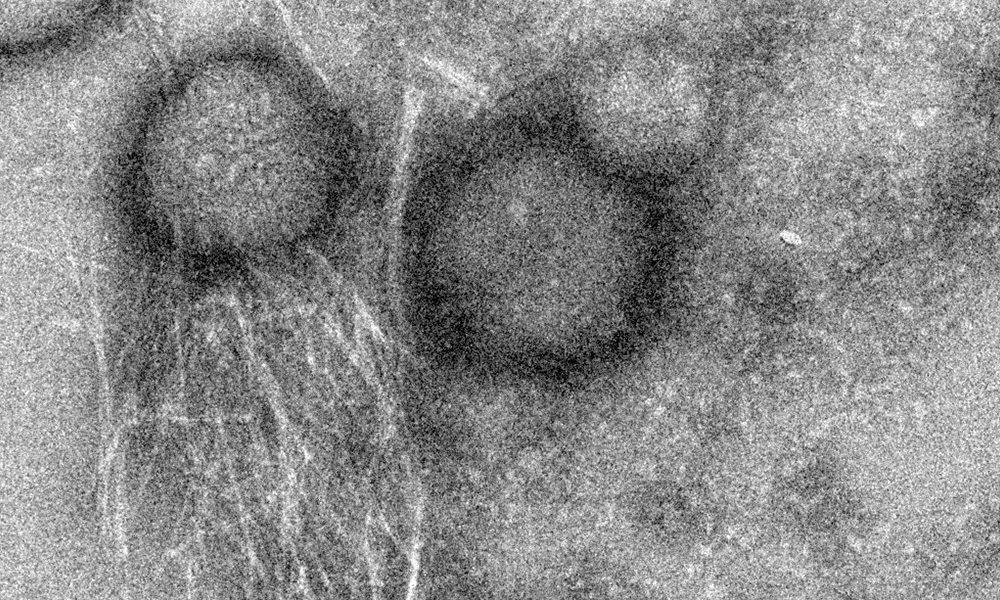
The peptide uperin 3.5 is secreted by the Australian toadlet’s skin. When exposed to bacterial membranes, it rapidly changes its structure and transforms into a deadly antimicrobial weapon. The pictures were taken using a transmission electron microscope (TEM) in the Electron Microscopy Centers in the Technion Department of Materials Science and Engineering and in the Department of Chemical Engineering. The cross-α atomic structure was determined by data collected at the ESRF synchrotron. Credit: Nir Salinas/Technion
Researchers have discovered remarkable molecular properties of an antimicrobial peptide from the skin of the Australian toadlet. The discovery could inspire the development of novel synthetic drugs to combat bacterial infections.
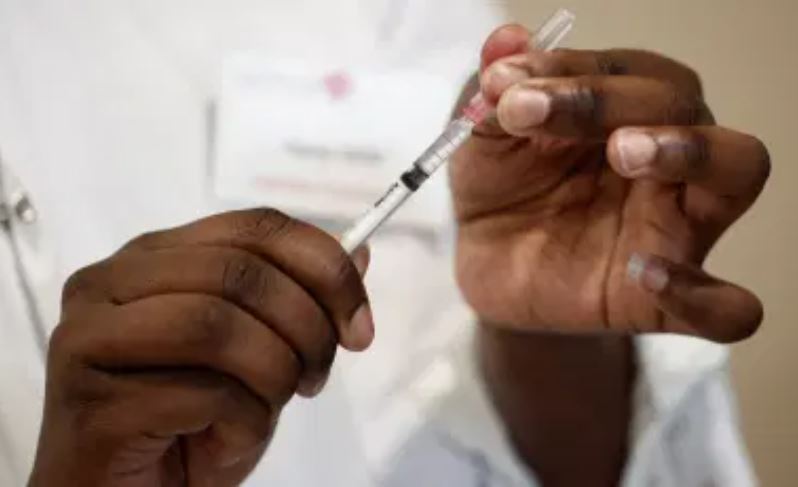
We know that the vaccines now available across the world will protect their recipients from getting sick with Covid-19. But while each vaccine authorized for public use can prevent well over 50% of cases (in Pfizer-BioNTech and Moderna‘s case, more than 90%), what we don’t know is whether they’ll also curb transmission of the SARS-CoV-2 virus.
That question is answerable, though—and understanding vaccines’ effect on transmission will help determine when things can go back to whatever our new normal looks like.
The reason we don’t know if the vaccine can prevent transmission is twofold. One reason is practical...
Antiviral protein MDA-5 senses viral replication and governs immune response to SARS-CoV-2. Scientists at Sanford Burnham Prebys Medical Discovery Institute have identified the sensor in human lungs that detects SARS-CoV-2 and signals that it’s time to mount an antiviral response. The study, published today in Cell Reports, provides insights into the molecular basis of severe disease and may enable new strategies for the treatment and prevention of COVID-19.
“Our research has shown that MDA-5 is the immune cop that’s tasked to keep an eye out for SARS-CoV-2 and call for back-up,” says Sumit Chanda, Ph.D., director of the Immunity and Pathogenesis Program at Sanford Burnham Prebys and senior author of the study...
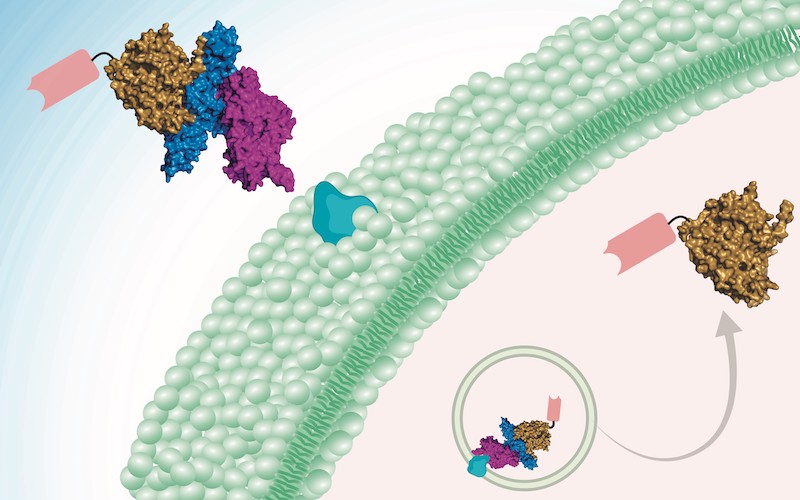
The toxin-based delivery platform consists of the modified botulinum toxin at upper left (protease domain in gold, translocation domain in blue, and receptor-binding domain in purple) and the nanobody (the pink tag). When this nanobody-toxin fusion protein binds to the receptor (cyan) on the neuron surface, the cell takes it in through the process of endocytosis, corralling the fusion protein inside a vesicle (light green circle). The toxin’s protease domain, carrying the nanobody, then crosses into the interior of the cell. (Image: Sicai Zhang/Dong Lab, Boston Children’s Hospital)
Treatment reverses paralysis in mice; offers a general delivery platform for neurologic drugs. Currently there’s no treatment for botulism once the toxin gets into neurons...






Recent Comments