Category Biology/Biotechnology

Researchers Print, Tune Graphene Sensors to Monitor Food Freshness, Safety

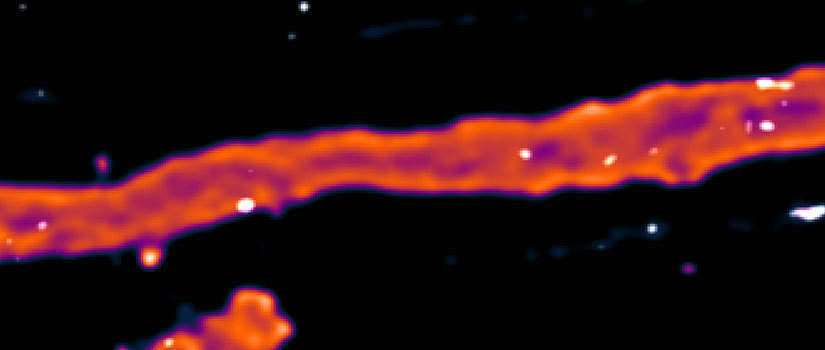
Researchers are using aerosol-jet-printing technology to create these graphene biosensors that can detect histamine, an allergen and indicator of spoiled fish and meat. Image courtesy of Jonathan Claussen.

Researchers are using high-resolution printing technology and the unique properties of graphene to make low-cost biosensors to monitor food safety and livestock health.

It turned out the sensors — printed with high-resolution aerosol jet printers on a flexible polymer film and tuned to test for histamine, an allergen and indicator of spoiled fish and meat — can detect histamine down to 3.41 parts per million.

The U.S...

Read More

One-time Treatment Generates New Neurons, Eliminates Parkinson’s disease in mice

Left: mouse astrocytes (green) before reprogramming; Right: neurons (red) induced from mouse astrocytes after reprogramming with PTB antisense oligonucleotide treatment.

Researchers have discovered that a single treatment to inhibit a gene called PTB in mice converts native astrocytes, brain support cells, into neurons that produce the neurotransmitter dopamine. As a result, the mice’s Parkinson’s disease symptoms disappear.

Xiang-Dong Fu, PhD, has never been more excited about something in his entire career. He has long studied the basic biology of RNA, a genetic cousin of DNA, and the proteins that bind it. But a single discovery has launched Fu into a completely new field: neuroscience.

For decades, Fu and his team at University of California San Diego School of Medicine studied a pr...

Read More

Protein in Mitochondria appears to Regulate Halth and Longevity

Having greater amounts of the peptide humanin is closely correlated with longer lives and better health in both animals and humans, including lower risk for Alzheimer’s.

A new study led by researchers at the USC Leonard Davis School of Gerontology is the first to demonstrate that a tiny protein has a big impact on health and longevity in both animals and humans.

The researchers examined humanin, a peptide encoded in the small genome of mitochondria — the powerhouses of the cell. From experiments in laboratory animals to measurements in human patients, the multi-site collaboration demonstrates how higher levels of humanin in the body are connected to longer lifespans and better health. It is linked to a lower risk for diseases such as Alzheimer’s.

“Humanin has long been known to...

Read More

Far-UVC Light Safely Kills Airborne Coronaviruses, study finds

Equipment used to test the effect of far-UVC light on airborne coronaviruses. Photo: Center for Radiological Research at Columbia University.

More than 99.9% of seasonal coronaviruses present in airborne droplets were killed when exposed to a particular wavelength of ultraviolet light that is safe to use around humans, a new study at Columbia University Irving Medical Center has found.

“Based on our results, continuous airborne disinfection with far-UVC light at the current regulatory limit could greatly reduce the level of airborne virus in indoor environments occupied by people,” says the study’s lead author David Brenner, PhD, Higgins Professor of Radiation Biophysics at Columbia University Vagelos College of Physicians and Surgeons and director of the Center for Radiological Res...

Read More