Category Biology/Biotechnology

How Silver Ions Kill Bacteria

 Silver Ions Caused Faster Diffusive Dynamics of Histone-Like Nucleoid-Structuring Proteins in Live BacteriaApplied and Environmental Microbiology, 2020; 86 (6) DOI: 10.1128/AEM.02479-19

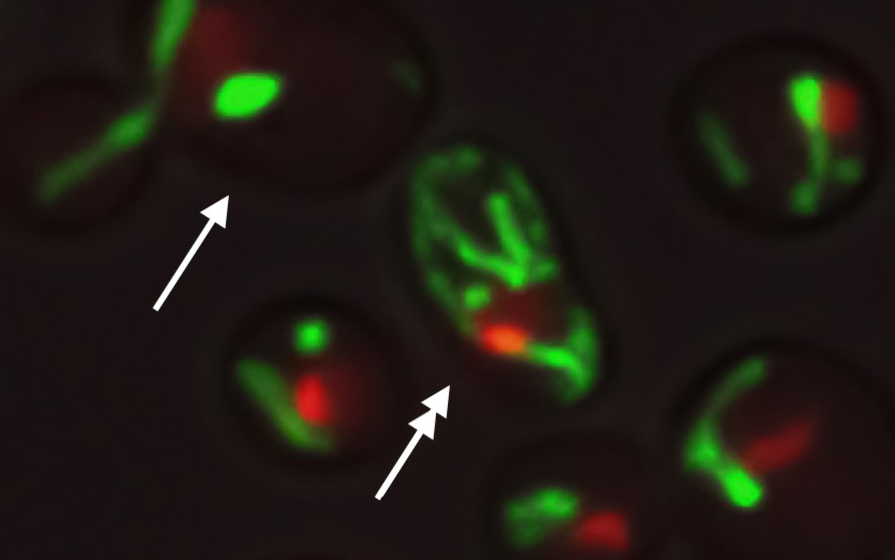
The antimicrobial properties of silver have been known for centuries. While it is still a mystery as to exactly how silver kills bacteria, University of Arkansas researchers have taken a step toward better understanding the process by looking at dynamics of proteins in live bacteria at the molecular level.

Traditionally, the antimicrobial effects of silver have been measured through bioassays, which compare the effect of a substance on a test organism against a standard, untreated preparation...

Read More

Where in the Brain does Creativity come from? Evidence from Jazz Musicians

Brain activity maps showing areas associated with high-creativity performances compared with lower-creativity performances. Each map shows a top view of the head.

A new brain-imaging study has studied the brain activity of jazz guitarists during improvisation to show that creativity is, in fact, driven primarily by the right hemisphere in musicians who are comparatively inexperienced at improvisation. However, musicians who are highly experienced at improvisation rely primarily on their left hemisphere.

This suggests that creativity is a “right-brain ability” when a person deals with an unfamiliar situation but that creativity draws on well-learned, left-hemisphere routines when a person is experienced at the task.

By taking into consideration how brain activity changes with expe...

Read More

Repairing Stroke-Damaged Rat Brains

Researchers at Lund University in Sweden have succeeded in restoring mobility and sensation of touch in stroke-afflicted rats by reprogramming human skin cells to become nerve cells, which were then transplanted into the rats’ brains. The study has now been published in the Proceedings of the National Academy of Sciences (PNAS).

“Six months after the transplantation, we could see how the new cells had repaired the damage that a stroke had caused in the rats’ brains,” says Professor Zaal Kokaia, who together with senior professor Olle Lindvall and researcher Sara Palma-Tortosa at the Division of Neurology is behind the study.

Several previous studies from the Lund team and others have shown that it is possible to transplant nerve cells derived from human stem cells or from reprog...

Read More

Researchers use Nanotechnology to develop new Treatment for Endometriosis

Credit: CC0 Public Domain

Scientists have developed a precise, nanotechnology-based treatment to alleviate the pain and fertility problems associated with endometriosis, a common gynecological condition in women of childbearing age.

Research led by Oleh Taratula of the Oregon State University College of Pharmacy and Ov Slayden of the Oregon National Primate Research Center at Oregon Health & Science University used photo-responsive nanoparticles loaded with dye to find and remove the lesions associated with the disorder.

The endometrium is the innermost layer of the uterus, and endometriosis occurs when endometrium-like tissue forms lesions outside of the uterine cavity—usually involving the ovaries, the fallopian tubes and the tissue lining the pelvis.

On rare occasions, en...

Read More