47-year-old Chinese man with 2-day history of fever, chills, productive cough, sneezing, and fatigue who presented to emergency department. (Courtesy of Liu M, China-Japan Friendship Hospital, Beijing, China) B, Initial CT images obtained show small round areas of mixed ground-glass opacity and consolidation (rectangles) at level of aortic arch (A) and ventricles (B) in right and left lower lobe posterior zones.
COVID-19’s imaging features are variable and nonspecific, but the imaging findings reported thus far do show...
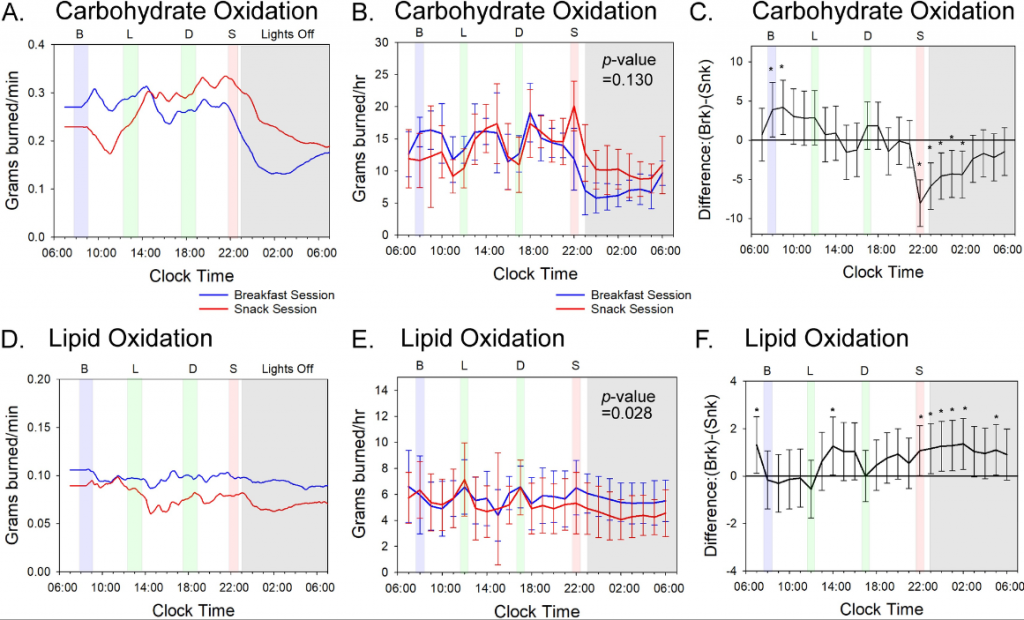
The balance between weight gain and weight gain loss is predominantly determined by what you eat, how much you eat, and by how much exercise you get. But another important factor is often neglected… Published February 27 in the open-access journal PLOS Biology, research conducted by Kevin Kelly, Owen McGuinness, Carl Johnson and colleagues of Vanderbilt University, USA shows that it’s not just how many calories you eat, but WHEN you eat them that will determine how well you burn those calories.
Your daily biological clock and sleep regulate how the food you eat is metabolized; thus the choice of burning fats or carbohydrates changes depending on the time of day or night...
Effects of Germline VHL Deficiency on Growth, Metabolism, and Mitochondria. New England Journal of Medicine, 2020; 382 (9): 835 DOI: 10.1056/NEJMoa1907362
A team of researchers have discovered a genetic mutation that reduces a patient’s ability to exercise efficiently.
In a study published in The New England Journal of Medicine, a team including researchers from King’s College London have found a link between a genetic mutation that affects cellular oxygen sensing and a patient’s limited exercise capacity.
The team identified a patient who had a reduced rate of growth, persistent low blood sugar, a limited exercise capacity and a very high number of red blood cells.
The team carried out genetic and protein analysis of the patient, examined their respiratory physiolog...
Robert Quinn, assistant professor of biochemistry and molecular biology and Global Impact researcher.
Forget what you know about bile because that’s about to change, thanks to a new discovery made by Michigan State University and published in the current issue of Nature.
Much of our knowledge about bile hasn’t changed in many decades. It’s produced in the liver, stored in our gall bladder and injected into our intestine when we eat, where it breaks down fats in our gut. In fact, the first bile acid was discovered in 1848, and the scientists who revealed the structure of bile acids in 1928 won the Nobel Prize. That’s a long time ago.
“Since then, our understanding of the chemistry of bile production in the liver was that the cholesterol backbone of the bile acid structure is lin...







Recent Comments