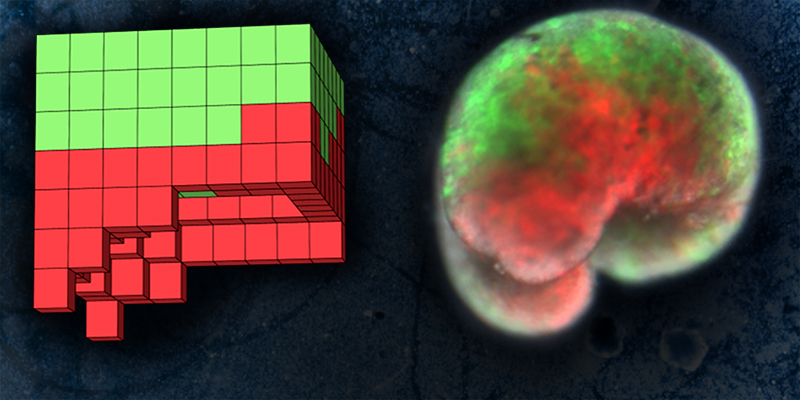
On the left, the anatomical blueprint for a computer-designed organism, discovered on a UVM supercomputer. On the right, the living organism, built entirely from frog skin (green) and heart muscle (red) cells. The background displays traces carved by a swarm of these new-to-nature organisms as they move through a field of particulate matter. (Credit: Sam Kriegman, UVM)
Tiny ‘xenobots’ assembled from cells promise advances from drug delivery to toxic waste clean-up. Scientists repurposed living frog cells – and assembled them into entirely new life-forms. These tiny ‘xenobots’ can move toward a target and heal themselves after being cut. These novel living machines are neither a traditional robot nor a known species of animal...
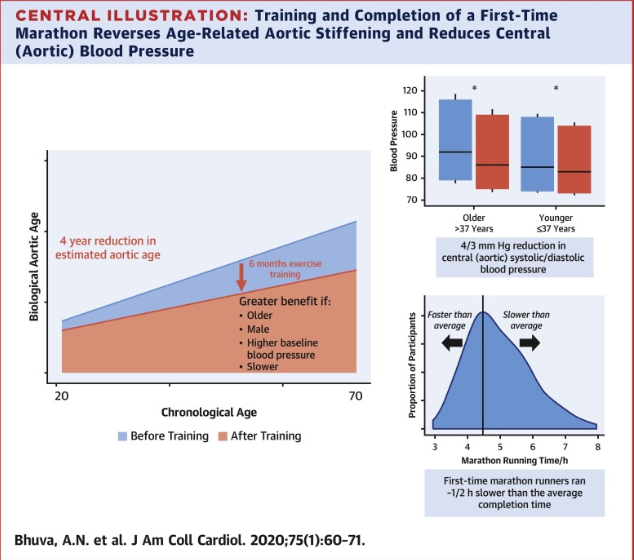
New marathon runners reduced blood pressure, arterial stiffness equivalent to a 4-year reduction in vascular age. The new year means it’s time to set resolutions for 2020 and new research from the Journal of the American College of Cardiology suggests running a marathon for the first time could have several health benefits. The study found that for first-time marathon runners, training and completion of the marathon was associated with reductions in blood pressure and aortic stiffening in healthy participants that were equivalent to a four-year reduction in vascular age, with the greatest benefits seen in older, slower male marathon runners with higher baseline blood pressure.
“As clinicians are meeting with patients in the new year, making a goal-oriented exercise training recomme...
A molecular switch has the ability to turn on a substance in animals that repairs neurological damage in disorders such as multiple sclerosis (MS), Mayo Clinic researchers discovered. The early research in animal models could advance an already approved Food and Drug Administration therapy and also could lead to new strategies for treating diseases of the central nervous system.
A molecular switch has the ability to turn on a substance in animals that repairs neurological damage in disorders such as multiple sclerosis (MS), Mayo Clinic researchers discovered. The early research in animal models could advance an already approved Food and Drug Administration therapy and also could lead to new strategies for treating diseases of the central nervous system.
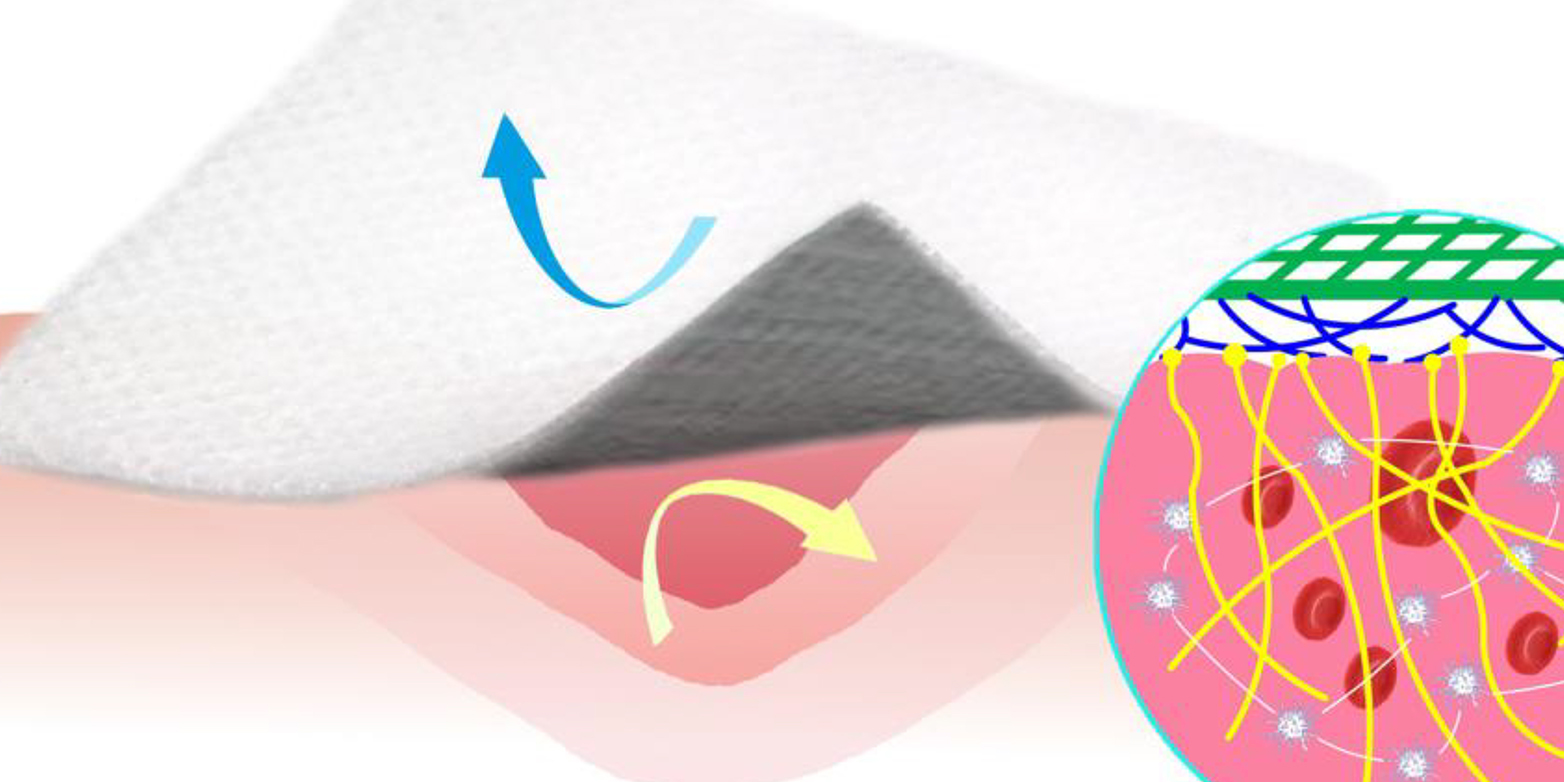
Promotes healing and can subsequently be easliy removed: a new kind of bandage coated with silicone and carbon nanofibres. (Visualisations: Li Z et al. Nature Communications 2019)
Researchers from ETH Zurich and the National University of Singapore have developed a new kind of bandage that helps blood to clot and doesn’t stick to the wound. This marks the first time that scientists have combined both properties in one material.
“We did not actually plan this, but that is just how science works sometimes: you start researching one thing and end up somewhere else,” says ETH Professor Dimos Poulikakos...






Recent Comments