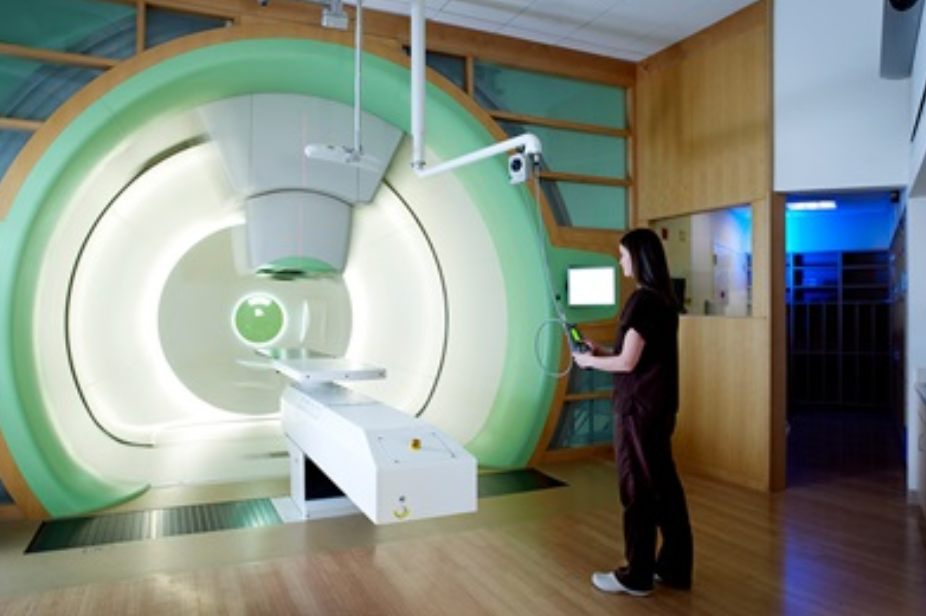
Penn researchers have demonstrated that proton therapy reduces the likelihood of adverse affects among cancer patients also being treated with chemotherapy. The study compared proton therapy patients to those receiving traditional photon radiation. SOURCE/PERELMAN SCHOOL OF MEDICINE
Study found protons led to two-thirds reduction in unplanned hospitalizations. Proton therapy leads to significantly lower risk of side effects severe enough to lead to unplanned hospitalizations for cancer patients when compared with traditional radiation, while cure rates between the two groups are almost identical...
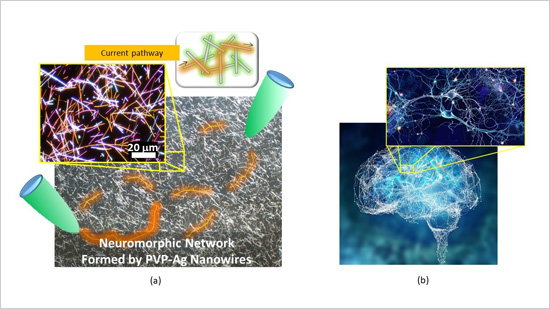
(a) Micrograph of the neuromorphic network fabricated by this research team. The network contains of numerous junctions between nanowires, which operate as synaptic elements. (b) A Human brain and one of its neuronal networks.
Emerging fluctuation-based functionalities are expected to open a way to novel memory device technology. An international joint research team led by NIMS succeeded in fabricating a neuromorphic network composed of numerous metallic nanowires. Using this network, the team was able to generate electrical characteristics similar to those associated with higher order brain functions unique to humans, such as memorization, learning, forgetting, becoming alert and returning to calm. The team then clarified the mechanisms that induced these electrical characteristics.
Does scientific evidence support the claims made for these diets? In a review article published in the Dec. 26 issue of The New England Journal of Medicine, Johns Hopkins Medicine neuroscientist Mark Mattson, Ph.D., concludes that intermittent fasting does.
Mattson, who has studied the health impact of intermittent fasting for 25 years, and adopted it himself about 20 years ago, writes that “intermittent fasting could be part of a healthy lifestyle.” A professor of neuroscience at the Johns Hopkins University School of Medicine, Mattson says his new article is intended to help clarify the science and clinical applications of intermittent fasting in ways that may help physicians guide patients who want to try it.
Intermittent fasting diets, he says, fall generally into two catego...
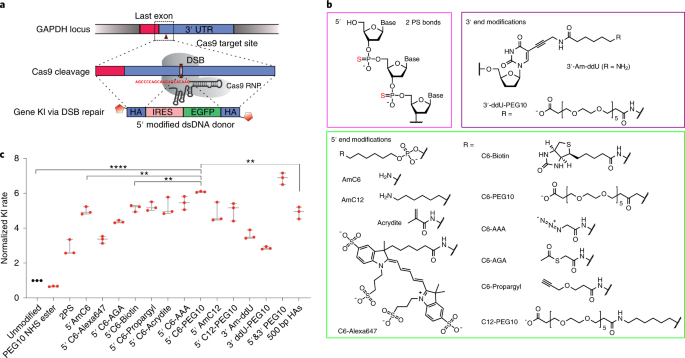
Gene KI strategy using Cas9 RNP and end-modified dsDNA donors.
University of Illinois researchers achieved the highest reported rates of inserting genes into human cells with the CRISPR-Cas9 gene-editing system, a necessary step for harnessing CRISPR for clinical gene-therapy applications.
By chemically tweaking the ends of the DNA to be inserted, the new technique is up to five times more efficient than current approaches. The researchers saw improvements at various genetic locations tested in a human kidney cell line, even seeing 65% insertion at one site where the previous high had been 15%.
Led by chemical and biomolecular engineering professor Huimin Zhao, the researchers published their work in the journal Nature Chemical Biology...






Recent Comments