
Category Biology/Biotechnology

X-ray Crystal Structure Lethal Factor in Stonefish Venom Solved

Stonefish

The stonefish is one of the world’s ugliest and deadliest fish. You’ll know if you step on one; the fish protects itself using 13 razor sharp venom filled spines capable of slicing through reef shoes. The resulting pain is crippling, can last for days and may result in amputation of a limb or death.

Structural Insights of the Stonefish toxin may help combat Transplant Rejection, ie the unexpected insight into a crucial human immune response that is responsible for the failure of up to 30% of bone marrow transplant therapies for treating leukaemia. The knowledge has been used to develop immunosuppressants to improve the success rate of transplant therapies.

The work reveals that the lethal component, a protein, Stonustoxin, is an ancient relative of the human immune protein perforin...

Read More
A Gene that, when working properly Reduces Heart Failure Risk and Improve Rx outcomes

Euan Ashley

Euan Ashley and his colleagues discovered an association between heart failure and a pathway linked to narcolepsy. Mark Tuschman

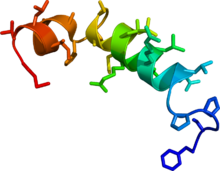
The gene identified by Stanford researchers codes for a protein first identified when a mutated form was shown to cause narcolepsy.
Caring for patients with heart failure costs the US $40 billion a year. Few new treatments have been developed, and those that exist produce varied responses among patients. One major challenge to the development of new treatments has been the lack of genes that can be confidently associated with heart failure. Prof. Euan Ashley is hopeful that the new finding will open doors to evaluating possible treatments.

orexin (hypocretin) neuropeptide precursor

orexin (hypocretin) neuropeptide precursor

Perez wondered if there were genetic reasons for discrepancies in treatment outcom...

Read More

Genes for a Longer, Healthier Life found

Transcriptional control of bcat-1-mediated regulation of lifespan.

Transcriptional control of bcat-1-mediated regulation of lifespan.

Out of a ‘haystack’ of 40,000 genes from 3 different organisms, scientists have found genes involved in physical aging. If you influence only 1 of these genes, the healthy lifespan of lab animals is extended – and possibly that of humans, too.

Until now, this was mostly limited to genes of individual model organisms such as the C. elegans nematode, which revealed that ~1% of its genes could influence life expectancy. However, researchers have long assumed that such genes arose in the course of evolution and in all living beings whose cells have a preserved a nucleus – from yeast to humans.

Researchers at ETH Zurich and JenAge consortium from Jena have now systematically gone through genomes of 3 different organisms in searc...

Read More

DNA Repair protein BRCA1 implicated in Cognitive Function and Dementia

This image shows reduced levels of BRCA1 (red) in neurons (blue). Amyloid-beta plaques in the brain can deplete neurons of BRCA1, potentially contributing to cognitive deficits in Alzheimer's disease. Credit: Elsa Suberbielle

This image shows reduced levels of BRCA1 (red) in neurons (blue). Amyloid-beta plaques in the brain can deplete neurons of BRCA1, potentially contributing to cognitive deficits in Alzheimer’s disease. Credit: Elsa Suberbielle

Researchers from the Gladstone Institutes have shown for the first time that the protein BRCA1 is required for normal learning and memory and is depleted by Alzheimer’s disease. BRCA1 is a key protein involved in DNA repair, and mutations that impair its function increase the risk for breast and ovarian cancer. The new study shows Alzheimer’s disease is associated with a depletion of BRCA1 in neurons and that BRCA1 depletion can cause cognitive deficits.

“BRCA1 has so far been studied primarily in dividing (multiplying) cells and in cancer, which is characterized by a...

Read More