Category Chemistry/Nanotechnology

Scientists produce World’s First Carbon-14 Diamond Battery with Potential Lifespan of Thousands of Years

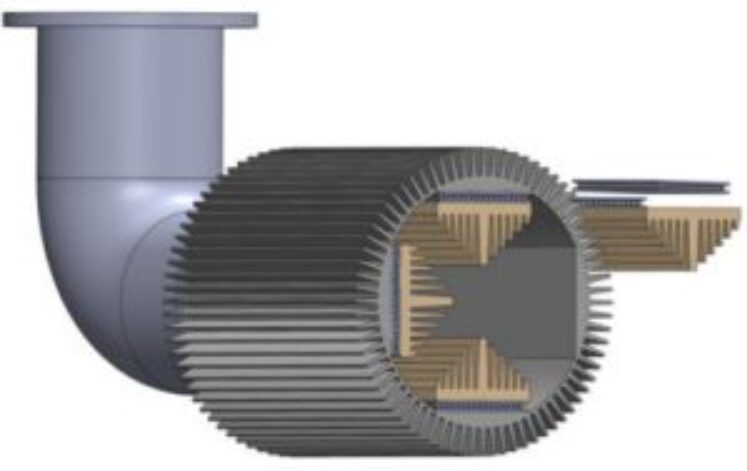
Scientists and engineers from the University of Bristol and the UK Atomic Energy Authority (UKAEA) have successfully created the world’s first carbon-14 diamond battery.

This new type of battery has the potential to power devices for thousands of years, making it an incredibly long-lasting energy source. The battery leverages the radioactive isotope, carbon-14, known for its use in radiocarbon dating, to produce a diamond battery.

Several game-changing applications are possible. Bio-compatible diamond batteries can be used in medical devices such as ocular implants, hearing aids, and pacemakers, minimizing the need for replacements and distress to patients.

Diamond batteries could also be used in extreme environments—both in space and on earth—where it is not practical to rep...

Read More

Scientists discover Molecules that Store Much of the Carbon in Space

Gabi Wenzel and Brett McGuire stand in the lab full of equipment on racks.
The findings suggest pyrene may have been the source of much of the carbon in our solar system. “It’s an almost unbelievable sink of carbon,” says Brett McGuire, right, standing with lead author of the study Gabi Wenzel.
Credits:Photo: Bryce Vickmark

A team led by researchers at MIT has discovered that a distant interstellar cloud contains an abundance of pyrene, a type of large, carbon-containing molecule known as a polycyclic aromatic hydrocarbon (PAH).

The discovery of pyrene in this far-off cloud, which is similar to the collection of dust and gas that eventually became our own solar system, suggests that pyrene may have been the source of much of the carbon in our solar system...

Read More

Holographic 3D Printing has the potential to Revolutionize Multiple Industries

Holographic 3D printing has the potential to revolutionize multiple industries, says researchers
HDSP concept and printed objects. Credit: Nature Communications (2024). DOI: 10.1038/s41467-024-50923-8

A pioneering technique shows how sound can be used to create entire objects quickly and at once. Researchers at Concordia have developed a novel method of 3D printing that uses acoustic holograms. And they say it’s quicker than existing methods and capable of making more complex objects.

The process, called holographic direct sound printing (HDSP), is described in a recent article in the journal Nature Communications. It builds on a method introduced in 2022 that described how sonochemical reactions in microscopic cavitations regions — tiny bubbles — create extremely high temperatures and pressure for trillionths of a second to harden resin into complex patterns.

Now, by embe...

Read More

A Novel Method to Split Water to Create Hydrogen – a Clean Source of Fuel

Researchers have developed a novel method using facet-selective, ultrafine cocatalysts to efficiently split water to create hydrogen – a clean source of fuel. Scientists are urgently searching for clean fuel sources – such as hydrogen – to move towards carbon neutrality. A breakthrough for improving the efficiency of the photocatalytic reaction that splits water into hydrogen has been made by a team of researchers from Tohoku University, Tokyo University of Science and Mitsubishi Materials Corporation.

“Water-splitting photocatalysts can produce hydrogen (H2) from only sunlight and water,” explains Professor Yuichi Negishi, the lead researcher of this project (Tohoku University), “However, the process hasn’t been optimized sufficiently for practical applications...

Read More