Category Chemistry/Nanotechnology

Farewell to ‘forever’: Destroying PFAS by Grinding it up with a new Additive

Abstract Image
Solvent-Free Nonthermal Destruction of PFAS Chemicals and PFAS in Sediment by Piezoelectric Ball Milling

Per- and polyfluoroalkyl substances (PFAS) are potentially harmful substances known as “forever chemicals” because they are so difficult to destroy. One emerging technique to degrade PFAS involves forcefully grinding them with metal balls in a moving container, but this technique can require corrosive additives. Now, in Environmental Science & Technology Letters, researchers report a new type of additive for “ball milling” that completely breaks down PFAS at ambient temperature and pressure.

Solid PFAS contamination is an ongoing issue for soil near waste sites, manufacturing sites, and facilities that frequently use firefighting foam. Currently, the U.S...

Read More

Chance Discovery could Extend Battery Life by Replacing Tape that Causes Self‑discharge

Chance discovery could extend battery life by replacing tape that causes self‑discharge
Commercial battery cells contain tape—like Scotch tape—that holds electrodes together and chemical decomposition of it creates a molecule leading to self-discharge. Credit: Bram Van Oost/Unsplash

It happens far too often: you plug your laptop in and walk away only to return hours or days later to find it has lost some of its charge despite sitting idle and unused.

The phenomenon—called self-discharge—has frustrated users and industry alike, and puzzled manufacturers trying to determine why lithium-ion battery cells tend to lose some of their charge over time.

A researcher at Dalhousie has identified a surprisingly common culprit that, if replaced, could address an enduring problem for the industry.

“In commercial battery cells there is tape—like Scotch tape—that holds ...

Read More

Converting Temperature Fluctuations into Clean Energy with Novel Nanoparticles and Heating Strategy

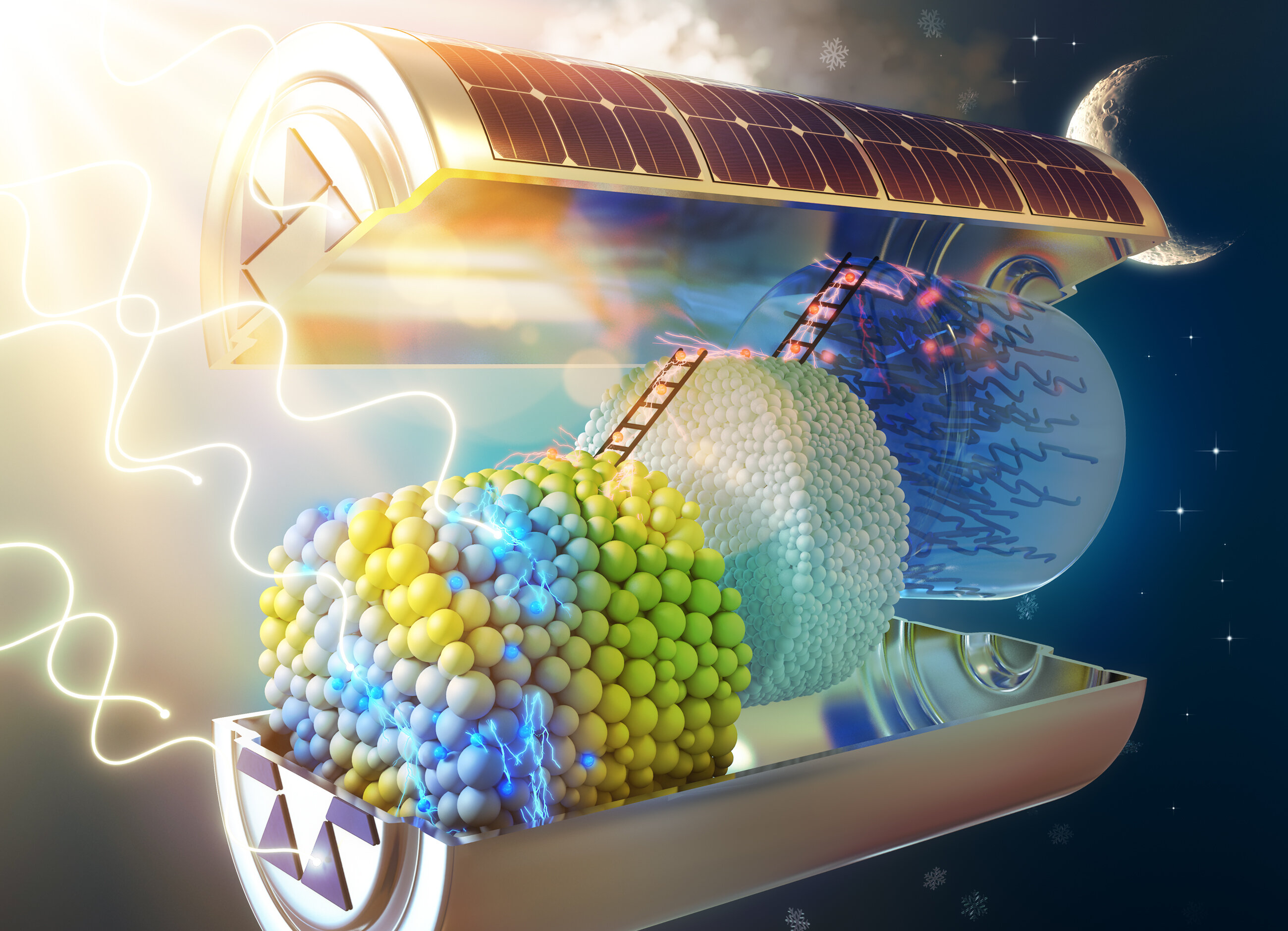
Illustration of potential applications of combining pyroelectric materials and the localized thermo-plasmonic effect of noble metal nanomaterials. Photo credit: Dr Lei Dangyuan’s group / City University of Hong Kong

Pyroelectric catalysis (pyro-catalysis) can convert environmental temperature fluctuations into clean chemical energy, like hydrogen. However, compared with the more common catalysis strategy, such as photocatalysis, pyro-catalysis is inefficient due to slow temperature changes in the ambient environment...

Read More

The Optical Fiber that Keeps Data Safe even after being Twisted or Bent

A collection of optical fibres with light running through them
Optical fibres developed by physicists at Bath will make communications networks more robust

An optical fiber that uses the mathematical concept of topology to remain robust, thereby guaranteeing the high-speed transfer of information, has been created by physicists.

Optical fibres are the backbone of our modern information networks. From long-range communication over the internet to high-speed information transfer within data centres and stock exchanges, optical fibre remains critical in our globalised world.

Fibre networks are not, however, structurally perfect, and information transfer can be compromised when things go wrong...

Read More