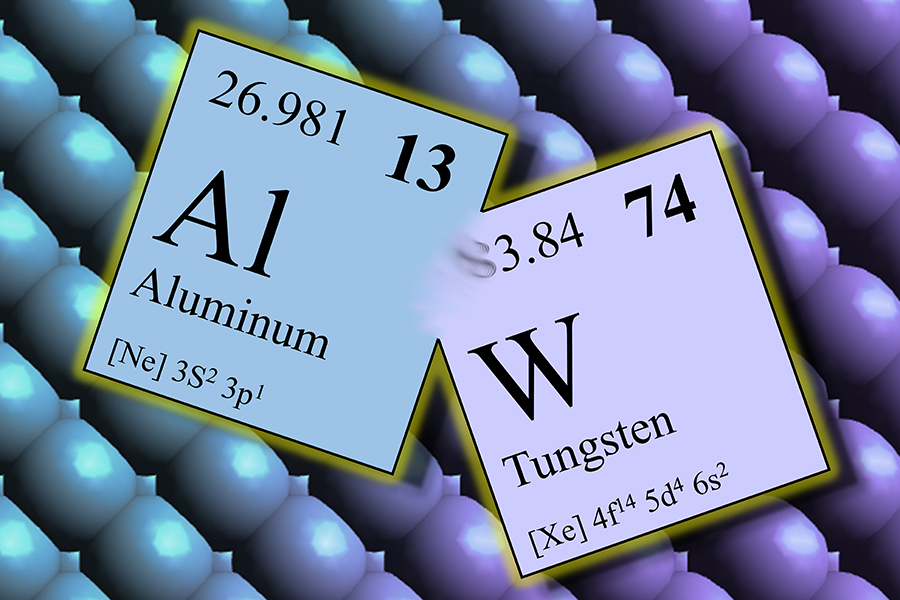
University of Minnesota researchers have invented a “catalytic condenser” that opens the door for new catalytic technologies using non-precious metal catalysts for important applications such as storing renewable energy, making renewable fuels, and manufacturing sustainable materials. Credit: Dauenhauer Group, University of Minnesota
Research could improve efficiency for storing renewable energy, making carbon-free fuels, and manufacturing sustainable materials. A team of energy researchers led by the University of Minnesota Twin Cities has invented a groundbreaking device that electronically converts one metal into behaving like another to use as a catalyst for speeding chemical reactions...
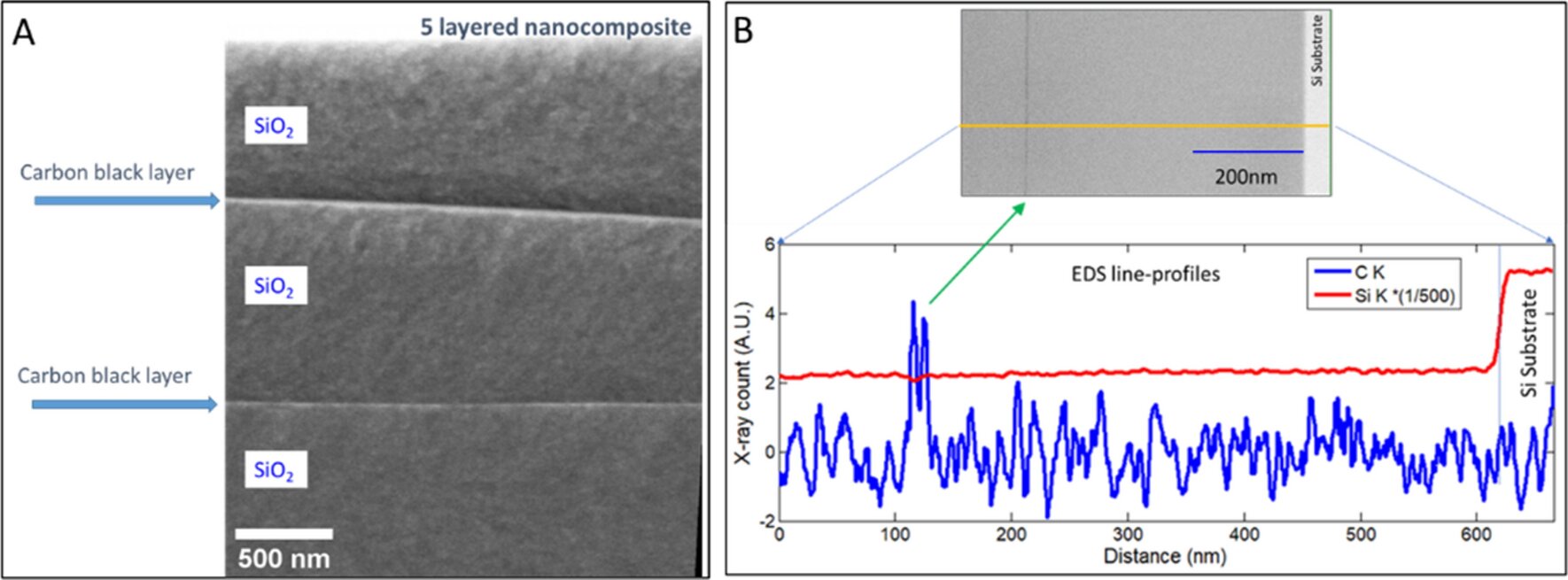
SEM A and STEM B cross sectional image showing the 5-layered nanocomposite structure with alternate silica and carbon black layers after heating treatment at more than 800 °C. B HAADF image and intensity profiles for carbon and silicon show the interfaces between substrate and coated silica layers on the right and the sugar-derived carbon layer between two silica layers on the left. The thickness of the carbon layer is estimated to be ~ 10–20 nm based on the spike of carbon signal. Credit: MRS Advances (2022). DOI: 10.1557/s43580-022-00245-y
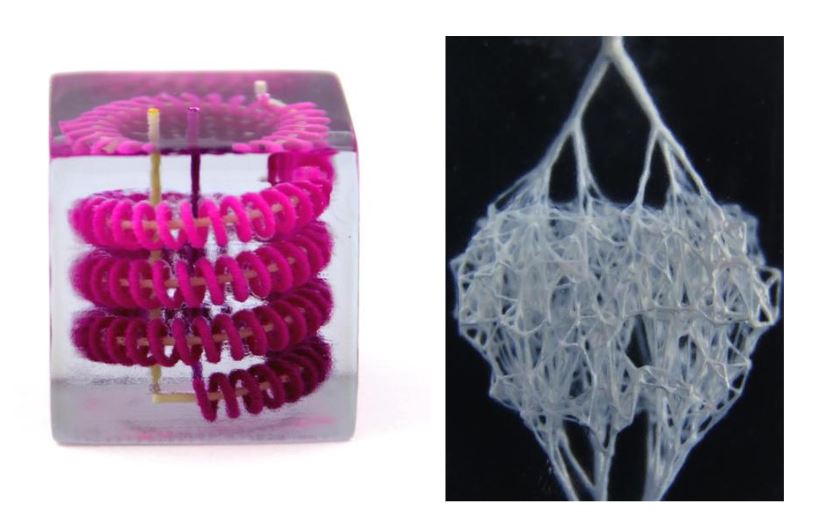
a) A spiraling pattern created by mixing solid and liquid 3D-printed materials. (Credit: Hayes et al. 2022, Advanced Materials) b) A network of capillaries 3D-printed using a newly developed technique. (Credit: Hayes et al. 2022, Advanced Materials)
Imagine a future in which you could 3D-print an entire robot or stretchy, electronic medical device with the press of a button – no tedious hours spent assembling parts by hand.
That possibility may be closer than ever thanks to a recent advancement in 3D-printing technology led by engineers at the University of Colorado Boulder. In a new study, the team lays out a strategy for using currently-available printers to create materials that meld solid and liquid components – a tricky feat if you don’t want your robot to collapse.
In this illustration, the green fuel (alcohol) is represented by the green-colored droplets at the top of the image, which upon interacting with curcumin enveloped gold nanoparticles, efficiently yield energy (the sparks at the bottom of the image). Credit: Lakshman Ventrapragada and Sri Sai Prasad Nayak
Turmeric, a spice found in most kitchens, has an extract that could lead to safer, more efficient fuel cells.
Researchers at the Clemson Nanomaterials Institute (CNI) and their collaborators from the Sri Sathya Sai Institute of Higher Learning (SSSIHL) in India discovered a novel way to combine curcumin—the substance in turmeric—and gold nanoparticles to create an electrode that requires 100 times less energy to efficiently convert ethanol into electricity.






Recent Comments