Regenerative fuel cells, with high round-trip efficiencies like that produced with a catalyst developed in the lab of Vijay Ramani, are well suited for submersibles, drones, and spacecraft, as well as for off-grid energy storage. (Submersible rendering image: Shutterstock)
The key is the ‘bifunctionality index’ A team has developed a catalyst that can be used to both generate fuel and provide power. A single device that both generates fuel and oxidant from water and, when a switch is flipped, converts the fuel and oxygen into electricity and water, has a host of benefits for terrestrial, space and military applications...
A gas station on Mars? Chemical engineers envision the possibilities.
Engineers at the University of Cincinnati are developing new ways to convert greenhouse gases to fuel to address climate change and get astronauts home from Mars.
UC College of Engineering and Applied Science assistant professor Jingjie Wu and his students used a carbon catalyst in a reactor to convert carbon dioxide into methane. Known as the “Sabatier reaction” from the late French chemist Paul Sabatier, it’s a process the International Space Station uses to scrub the carbon dioxide from air the astronauts breathe and generate rocket fuel to keep the station in high orbit.
But Wu is thinking much bigger.
The Martian atmosphere is composed almost entirely of carbon dioxide...
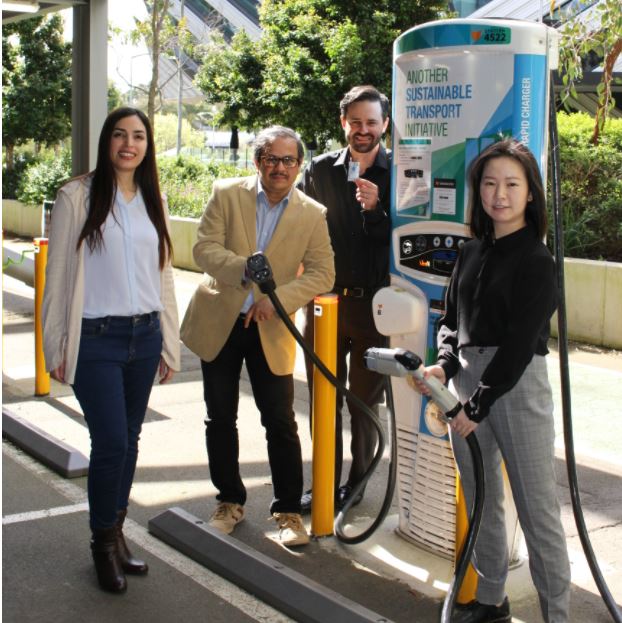
Melbourne to Sydney on one charge: the new lithium-sulfur battery technology could store two to five times more energy. The Monash Energy Institute team (L-R): Mahdokht Shaibani, Mainak Majumder, Matthew Hill, Yingyi Huang
Simply by adding sugar, researchers from the Monash Energy Institute have created a longer-lasting, lighter, more sustainable rival to the lithium-ion batteries that are essential for aviation, electric vehicles and submarines.
The Monash team, assisted by CSIRO, report in today’s edition of Nature Communications that using a glucose-based additive on the positive electrode they have managed to stabilise lithium-sulfur battery technology, long touted as the basis for the next generation of batteries.
“In less than a decade, this technology could lead to vehicle...
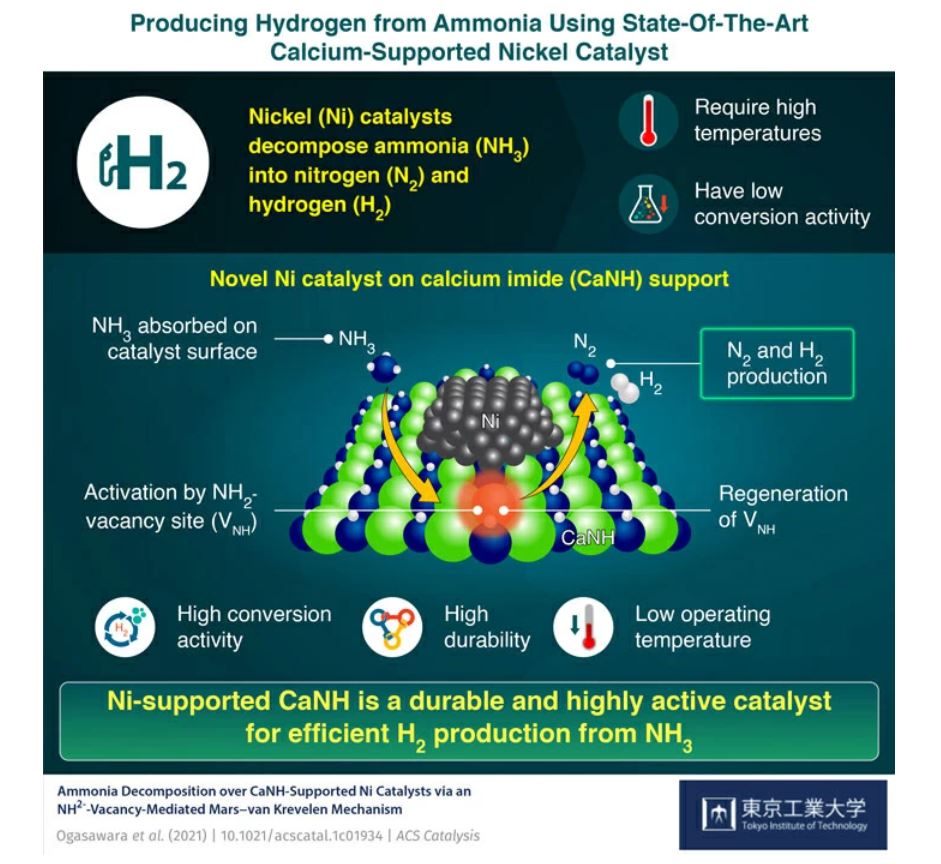
Ammonia, a carbon-free resource can be split into nitrogen and hydrogen gas with the help of metal catalysts like Nickel (Ni). However, these reactions often require very high operating temperatures. Now scientists have developed a highly efficient calcium imide (CaNH)-supported Ni catalyst that can decompose ammonia at temperatures 100°C lower than what conventional Ni catalysts require. This promising new catalyst can get us closer to sustainably producing hydrogen fuel.
The current global climate emergency and our rapidly receding energy resources have people looking out for cleaner alternatives like hydrogen fuel. When burnt in the presence of oxygen, hydrogen gas generates huge amounts of energy but none of the harmful greenhouse gases, unlike fossil fuels...





Recent Comments