Category Chemistry/Nanotechnology

Researchers Create New Zinc-Air Pouch Cells

Researchers create new zinc-air pouch cells
Credit: Shinde et al

Zinc-air batteries (ZABs) are among the most promising next-generation battery technologies due to their many advantageous characteristics. Most notably, these batteries have unique half-open structures, a significant theoretical energy density (1,086 and 1,370 Wh kg−1 when including and excluding oxygen, respectively), flexible electrodes and an inherently aqueous electrolyte. Moreover, in contrast with other materials used in batteries, Zinc (Zn) is less harmful for the environment and more abundant.

Researchers at Hanyang University in South Korea recently designed a new type of zinc-air pouch cell that can outperform other commercially available battery technologies...

Read More

Graphene Key for Novel Hardware Security

A team of Penn State researchers has developed a new hardware security device that takes advantage of microstructure variations to generate secure keys.
 IMAGE: JENNIFER MCCANN/PENN STATE

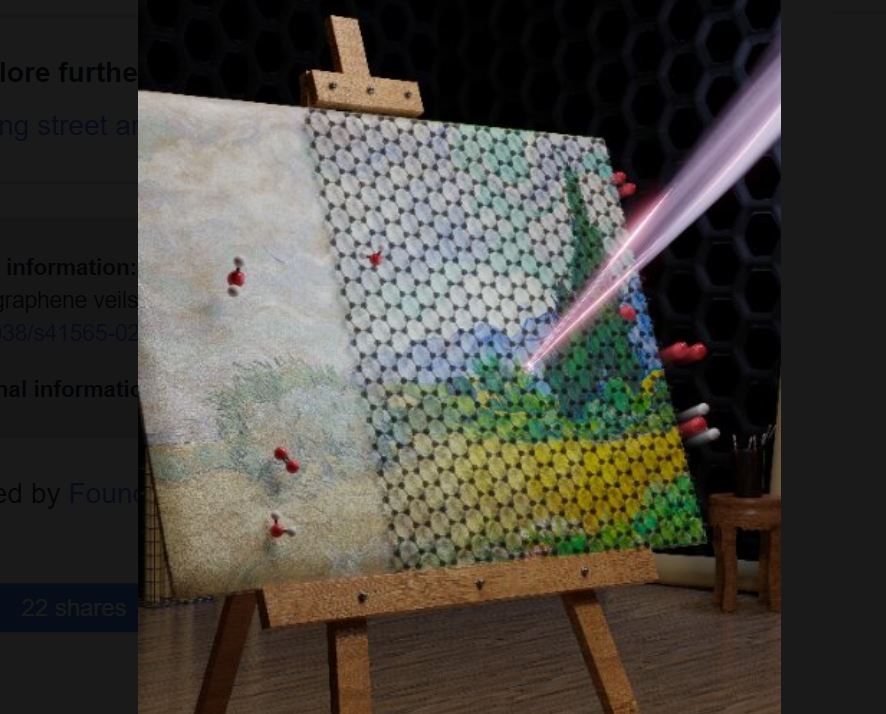
As more private data is stored and shared digitally, researchers are exploring new ways to protect data against attacks from bad actors. Current silicon technology exploits microscopic differences between computing components to create secure keys, but artificial intelligence (AI) techniques can be used to predict these keys and gain access to data. Now, Penn State researchers have designed a way to make the encrypted keys harder to crack.

Led by Saptarshi Das, assistant professor of engineering science and mechanics, the researchers used graphene — a layer of carbon one atom thick — to develop a no...

Read More

3D-Printed Material to Replace Ivory

On the right: The new material Digory, ivory on the left

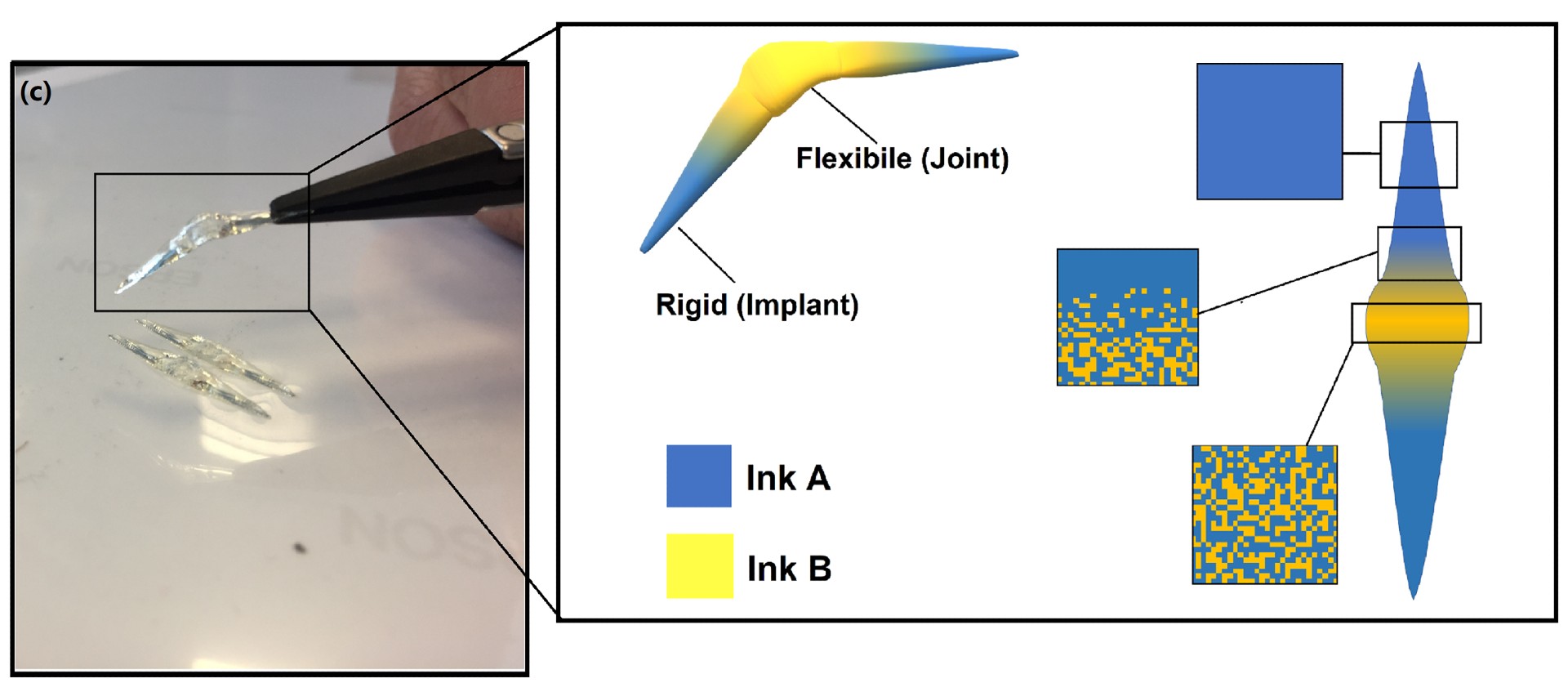
A new material called ‘Digory’ has been developed, which can be processed in 3D printers and is extremely similar to ivory. It can be used to restore old ivory artefacts. For centuries, ivory was often used to make art objects. But to protect elephant populations, the ivory trade was banned internationally in 1989. To restore ivory parts of old art objects, one must therefore resort to substitute materials — such as bones, shells or plastic. However, there has not been a really satisfactory solution so far.

TU Wien (Vienna) and the 3D printing company Cubicure GmbH, created as a spin-off of TU Wien, have now developed a high-tech substitute in cooperation with the Archdiocese of Vienna’s Department for the Care of Art and Monu...

Read More

No batteries? No sweat! Wearable Biofuel Cells now produce Electricity from Lactate

No batteries? No sweat! Wearable biofuel cells now produce electricity from  lactate | EurekAlert! Science News

Scientists develop biofuel cells that can power wearable electronics purely by using human sweat. Wearable electronic devices and biosensors are great tools for health monitoring, but it has been difficult to find convenient power sources for them. Now, a group of scientists has successfully developed and tested a wearable biofuel cell array that generates electric power from the lactate in the wearer’s sweat, opening doors to electronic health monitoring powered by nothing but bodily fluids.

It cannot be denied that, over the past few decades, the miniaturization of electronic devices has taken huge strides...

Read More