Category Health/Medical

Found: A Protective Probiotic for ALS

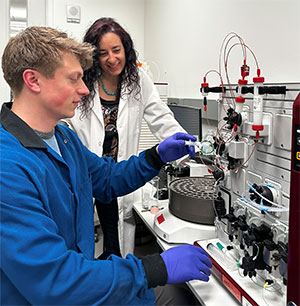
Audrey Labarre et Alex Parker
Audrey Labarre and Alex Parker

A probiotic bacterium called Lacticaseibacillus rhamnosus HA-114 prevents neurodegeneration in the C. elegans worm, an animal model used to study amyotrophic lateral sclerosis (ALS). That’s the finding of a new study at Canada’s CHUM Research Centre (CRCHUM) led by Université de Montréal neuroscience professor Alex Parker and published in the journal Communications Biology.

He and his team suggest that the disruption of lipid metabolism contributes to this cerebral degeneration, and show that the neuroprotection provided by HA-114, a non-commercial probiotic, is unique compared to other strains of the same bacterial family tested.

“When we add it to the diet of our animal model, we notice that it suppresses the progression of motor neuron degenera...

Read More

Immune Surprise: Recently Evolved Alarm Molecule drives Inflammation

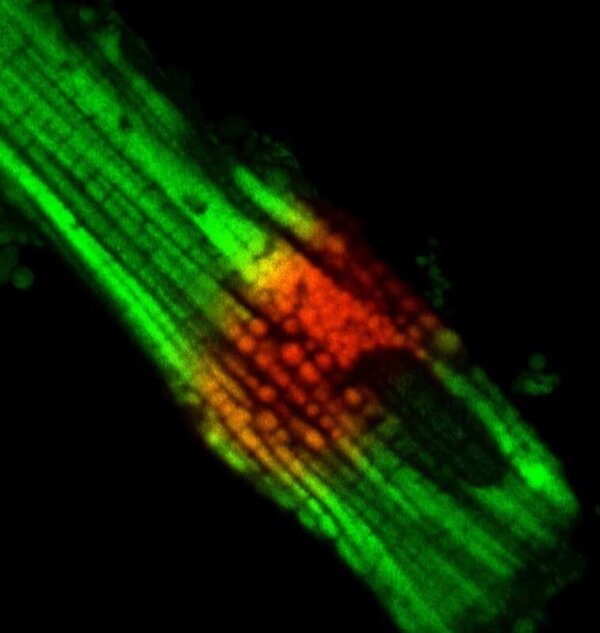
Cells expressing inflammatory cytokines stained green
Cells expressing inflammatory cytokines, stained green. Image: Martin Laboratory, Trinity College Dublin.

Scientists from Trinity College Dublin have made an important breakthrough in understanding how inflammation is regulated. They have just discovered that a key immune alarm protein previously believed to calm down the immune response actually does the opposite.

Their work has numerous potential impacts, especially in the context of understanding and responding to autoimmune disorders and inflammation.

While our immune system serves a very important function protecting us from infection and injury, when immune responses become too aggressive this can lead to damaging inflammation, which occurs in conditions such as rheumatoid arthritis and psoriasis...

Read More

Wearable Skin Patch Monitors Hemoglobin in Deep Tissues

The new, flexible, low form-factor wearable patch comfortably attaches to the skin, allowing for noninvasive long-term monitoring.
The new, flexible, low form-factor wearable patch comfortably attaches to the skin, allowing for noninvasive long-term monitoring. Photo by Xiaoxiang Gao for the Jacobs School of Engineering at UC San Diego.

A photoacoustic sensor could help clinicians diagnose tumors, organ malfunction and more. A team of engineers at the University of California San Diego has developed an electronic patch that can monitor biomolecules in deep tissues, including hemoglobin. This gives medical professionals unprecedented access to crucial information that could help spot life-threatening conditions such as malignant tumors, organ dysfunction, cerebral or gut hemorrhages and more.

“The amount and location of hemoglobin in the body provide critical information about blood perfusion or accumulation in ...

Read More

New Immune Target to Treat Cardiovascular Disease discovered

supar cells blood vessels plaque
Justine Ross, Michigan Medicine

The protein, suPAR, has been found to cause atherosclerosis and kidney disease. Investigators say it’s the first immune target to treat cardiovascular disease, which affects over 1 billion people worldwide. Researchers believe treatment could be developed within five years.

For the longest time, clinicians have treated cardiovascular disease by focusing on diabetes and blood pressure control, reducing cholesterol using medications like aspirin and statins.

Despite these measures, heart disease remains the number one cause of death in the United States, with many patients having heart attacks even after their risk factors are controlled, says Salim Hayek, M.D...

Read More