Category Health/Medical

Artificial Intelligence-based Technology quickly Identifies Genetic Causes of Serious Disease

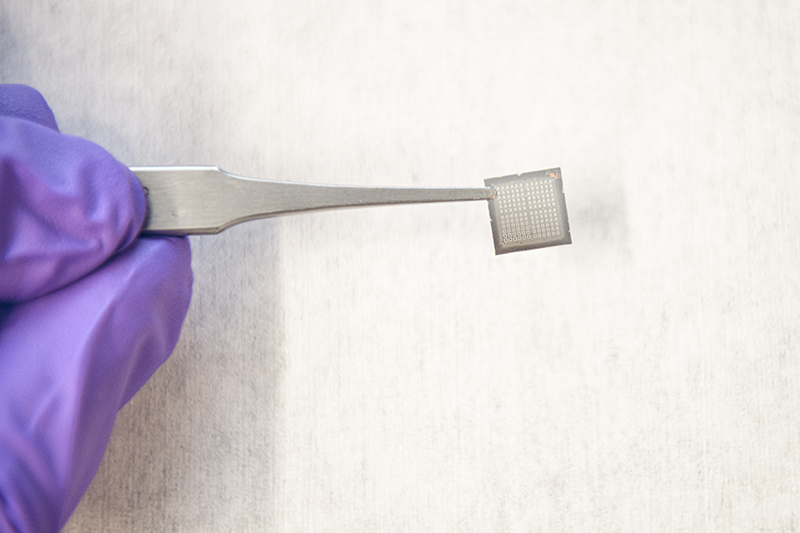
The AI-based technology GEM diagnosis genetic disease in critically-ill children with high accuracy. Photo credit: Charlie Ehlert

An artificial intelligence (AI)-based technology rapidly diagnoses rare disorders in critically ill children with high accuracy, according to a report by scientists from University of Utah Health and Fabric Genomics, collaborators on a study led by Rady Children’s Hospital in San Diego. The benchmark finding, published in Genomic Medicine, foreshadows the next phase of medicine, where technology helps clinicians quickly determine the root cause of disease so they can give patients the right treatment sooner.

“This study is an exciting milestone demonstrating how rapid insights from AI-powered decision support technologies have the potential to significant...

Read More

How the Brain Ignores Distracting Information to Coordinate Movements

Inhibitory neuron cell bodies (red) in the brainstem with their axonal projections (green) onto the cuneate cells (blue) that transmit touch information. This circuit regulates information conveyed by touch receptors in the hands as it enters the brain.
Credit: Salk Institute

The latest research has implications for understanding sensory disorders and building better prosthetics and robots that can fine-tune their movements based on what they touch. Researchers have discovered how neurons in a small area of the mammalian brain help filter distracting or disruptive signals — specifically from the hands — to coordinate dexterous movements. Their results may hold lessons in how the brain filters other sensory information as well.

As you read this article, touch receptors in your skin ar...

Read More

Molecular Mixing Creates Super Stable Glass

Bild som visar arbetet med ett nytt glasmaterial och en illustration av molekylerna i materialet
Sandra Hultmark works with a sample of the new glass material using a FSC (Fast Scanning Calorimetry) machine. The illustration on the left shows the eight different perylene molecules that were investigated in the study.   
​​​​​ â€‹Chalmers 

Researchers at Chalmers University of Technology, Sweden, have succeeded in creating a new type of super-stable, durable glass with potential applications ranging from medicines, advanced digital screens, and solar cell technology. The study shows how mixing multiple molecules – up to eight at a time – can result in a material that performs as well as the best currently known glass formers.

A glass, also known as an ‘amorphous solid’, is a material that does not have a long-range ordered structure — it does not form a crystal...

Read More

How many people get ‘Long COVID’? More than Half, researchers find

More than half of the millions of people who have been diagnosed with COVID-19 worldwide since December 2019 will experience post-COVID symptoms up to six months after recovering, according to a study by Penn State College of Medicine researchers. 
 IMAGE: GETTY IMAGES | ECLIPSE_IMAGES

Half of COVID survivors experience lingering symptoms six months after recovery. More than half of the 236 million people who have been diagnosed with COVID-19 worldwide since December 2019 will experience post-COVID symptoms — more commonly known as “long COVID” — up to six months after recovering, according to Penn State College of Medicine researchers...

Read More