Category Health/Medical

Polysaccharides from Red Algae affect Mice Immune systems, say scientists

After adding carrageenans to the diet of lab mice for one week, the activity of their congenital immunity cells reduced and leukocyte count dropped. Image is in the public domain

Carrageenans, biologically active polysaccharides isolated from red algae and widely used in the food industry as stabilizers, thickeners, or jelly agents, have an express effect on the immune systems of mice, according to a new study. The research was carried out by scientists from the School of Biomedicine of Far Eastern Federal University (FEFU), Far Eastern Branch of the Russian Academy of Sciences, and Vilnius University. A related article appears in the Journal of Biomedical Materials Research.

“The fact that carrageenan demonstrates immunosuppressive properties in a particular case does not make it g...

Read More

Blood Vessel cells implicated in Chronic Inflammation of Obesity

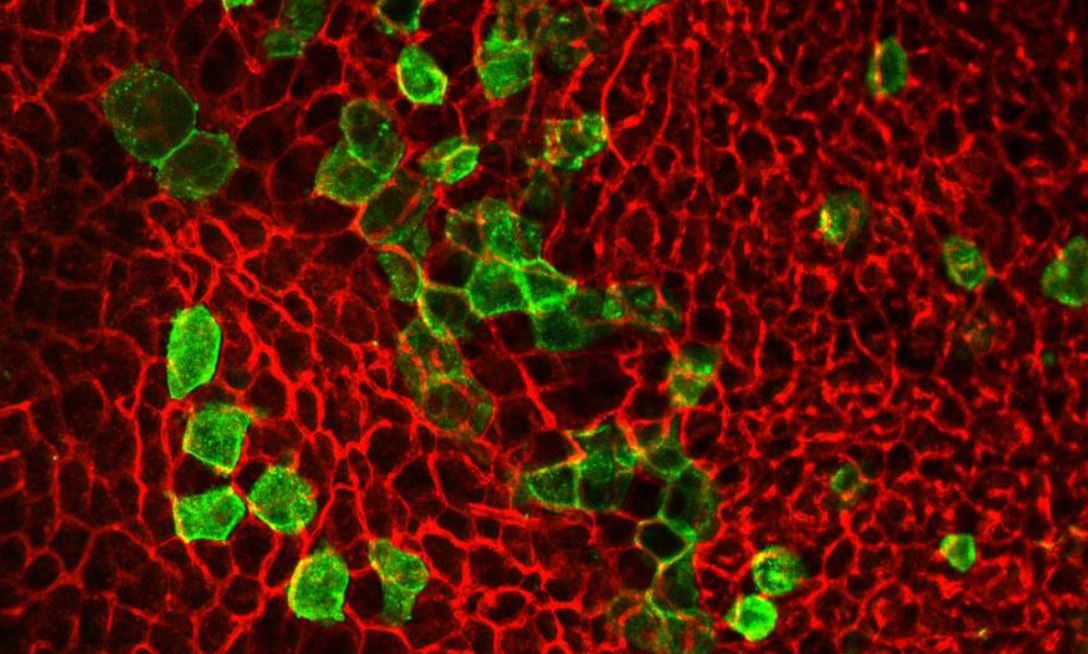
A UTSW study identified a type of blood vessel cell that triggers inflammation in fat tissue. Above, inflammatory immune cells (green) surround fat cells (red) in obesity and contribute to the development of metabolic disease.

When fat cells in the body are stuffed with excess fat, the surrounding tissue becomes inflamed. That chronic, low-level inflammation is one of the driving factors behind many of the diseases associated with obesity. Now, UT Southwestern scientists have discovered a type of cell responsible, at least in mice, for triggering this inflammation in fat tissue. Their findings, published in Nature Metabolism, could eventually lead to new ways to treat obesity.

“The inflammation of fat cells in obese individuals is linked to many of the comorbidities we associate wit...

Read More

LSU Health New Orleans Discovers Potential New Rx Strategy for Stroke

Αmyloid β peptide–mediated damage

Research conducted at LSU Health New Orleans Neuroscience Center of Excellence reports that a combination of LSU Health-patented drug and selected DHA derivatives is more effective in protecting brain cells and increasing recovery after stroke than a single drug. The findings are published in Brain Circulation, available here.

Nicolas Bazan, MD, PhD, Boyd Professor, Professor of Neurology and Director of the Neuroscience Center of Excellence at LSU Health New Orleans School of Medicine, and Ludmila Belayev, MD, LSU Health New Orleans Professor of Neuroscience, Neurology, and Neurosurgery, discovered this novel therapeutic strategy for ischemic stroke using an experimental model

During an ischemic stroke, signals are produced from arriving blood white cells and primary brain immu...

Read More

Brain Imaging predicts PTSD after brain injury

This shows the outline of a brain in a woman's head
Together, the findings suggest that a “brain reserve,” or higher cortical volumes, may provide some resilience against PTSD. Image is in the public domain

Brain volume measurement may provide early biomarker. Posttraumatic stress disorder (PTSD) is a complex psychiatric disorder brought on by physical and/or psychological trauma. How its symptoms, including anxiety, depression and cognitive disturbances arise remains incompletely understood and unpredictable. Treatments and outcomes could potentially be improved if doctors could better predict who would develop PTSD. Now, researchers using magnetic resonance imaging (MRI) have found potential brain biomarkers of PTSD in people with traumatic brain injury (TBI).

The study appears in Biological Psychiatry: Cognitive Neuroscience a...

Read More