Category Health/Medical

Fungi in the Gut prime Immunity against Infection

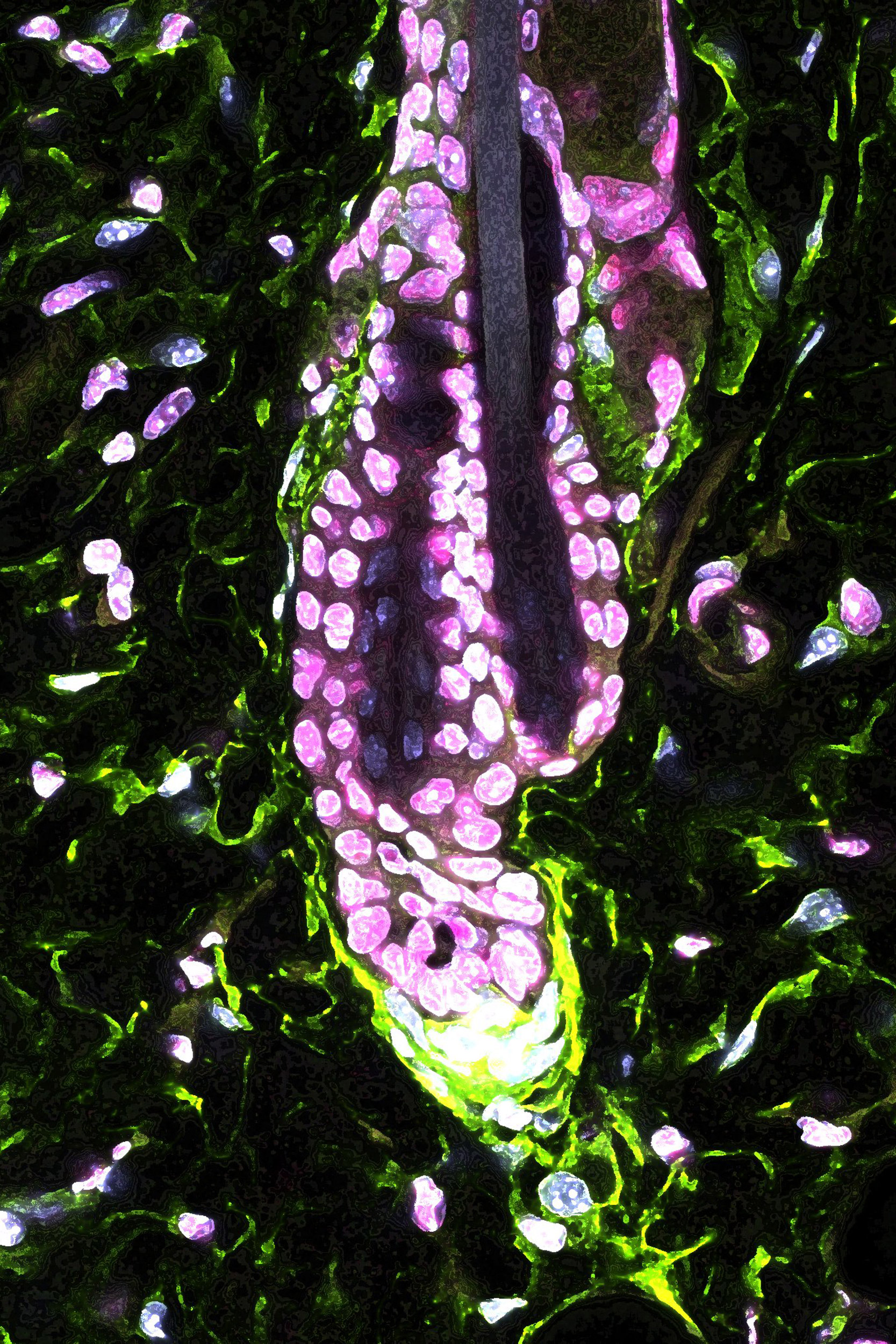
Graphic depicting relationship between fungi in gut, antibody levels and CARD gene
Relationship between gut fungi, anti-fungal antibodies, CARD9 gene, and fungal immunity. Image courtesy of the Iliev lab.

Common fungi, often present in the gut, teach the immune system how to respond to their more dangerous relatives, according to new research from scientists at Weill Cornell Medicine. Breakdowns in this process can leave people susceptible to deadly fungal infections.

The study, published Feb. 5 in Cell, reveals a new twist in the complex relationship between humans and their associated microbes, and points the way toward novel therapies that could help combat a rising tide of drug-resistant pathogens.

The new discovery stemmed from work on inflammatory bowel disease, which often causes patients to carry larger than normal populations of fungi in their guts...

Read More

An Origami-inspired Medical Patch for Sealing Internal Injuries

paper-like shapes next to surgical stapler

Caption:MIT engineers have design paper-like medical tapes (shown here) that can fold around surgical tools and transform into soft, strong adhesives when pressed against tissues.
Credit: Felice Frankel

The patch, which can be folded around surgical tools, may someday be used in robotic surgery to repair tissues and organs. Many surgeries today are performed via minimally invasive procedures, in which a small incision is made and miniature cameras and surgical tools are threaded through the body to remove tumors and repair damaged tissues and organs. The process results in less pain and shorter recovery times compared to open surgery.

While many procedures can be performed in this way, surgeons can face challenges at an important step in the process: the sealing of internal wounds an...

Read More

Injection to treat Skin Cancer developed

Bioadhesive nanoparticles.
Bioadhesive nanoparticles (white) after being taken up by skin cancer tumor cells during in virtro culture. (Image credit: Julia Lewis)

Yale researchers are developing a skin cancer treatment that involves injecting nanoparticles into the tumor, killing cancer cells with a two-pronged approach, as a potential alternative to surgery.

The results are published in the Proceedings of the National Academy of Sciences. “For a lot of patients, treating skin cancer is much more involved than it would be if there was a way to effectively treat them with a simple procedure like an injection,” said Dr. Michael Girardi, professor and vice chair of dermatology at Yale School of Medicine and senior author of the study...

Read More

Prostate Drug associated with Lower Risk of Parkinson’s disease

Parkinson's disease
Immunohistochemistry for alpha-synuclein showing positive staining (brown) of an intraneural Lewy-body in the Substantia nigra in Parkinson’s disease. Credit: Wikipedia

Taking a particular type of medication to treat enlarged prostate is associated with a reduced risk of developing Parkinson’s disease, according to a large observational study led by researchers at the University of Iowa, with colleagues in Denmark and China.

The findings, published Feb. 1 in JAMA Neurology, provide compelling evidence that terazosin, and similar medications, might have the potential to prevent or delay the development of Parkinson’s disease.

The new study used data on almost 300,000 older men from two large, independent patient datasets — the Truven Health Analytics MarketScan database in the Uni...

Read More