Category Health/Medical

Novel Communication between Intestinal Microbes and developing Immune Cells in the Thymus

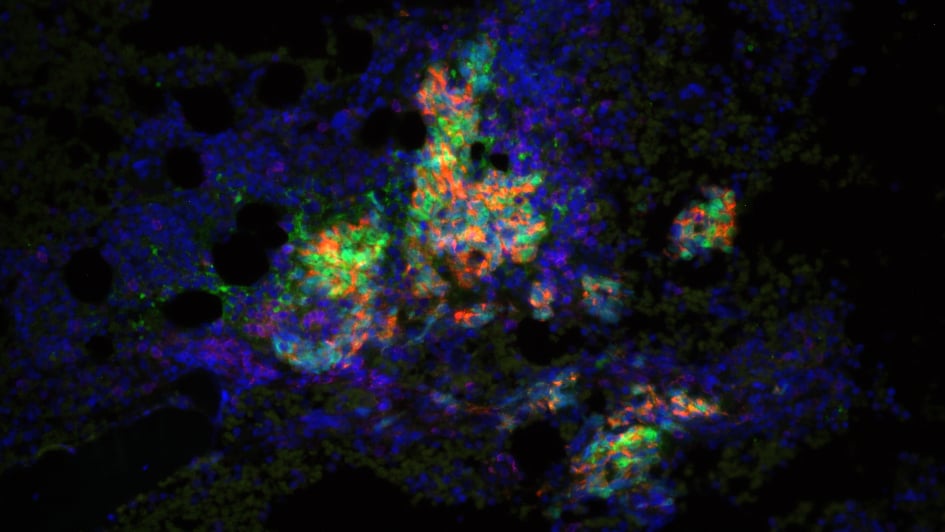
Early life entero-thymic communication: Complex interplay between intestinal microbes, host TLR2, pDCs and developing cells in the thymus 

Regulation of thymic immune development by intestinal microbes in early life. Researchers discover microbes regulate the development of specialized immune cells in the thymus that play a critical role in mucosal tolerance.

Newborns face unique immunological challenges immediately after birth. As they depart a relatively sterile fetal environment, they are abruptly exposed to a multitude of foreign antigens, the major burden of which is in the form of the microbiota newly colonizing the gastrointestinal tract...

Read More

‘Jumping Genes’ help Stabilize DNA Folding Patterns

Fig. 2
Contribution of TEs to the conservation landscape of human and mouse loops. a Flowchart describing the methodology used to annotate loop orthology. b Venn diagram representing the various classes of chromatin loops based on their orthology and bar plots showing the contribution of REs to anchor CTCFs of each class of loops. c Age distribution and age of individual TEs that contribute loop anchor CTCF sites (black dots for orthologous loops; gold dots for non-orthologous loops) (left), total contribution to loop anchor CTCF sites (middle), distribution of orthologous and non-orthologous loops (right) derived from the top 13 TE subfamilies in mouse and d humans. Estimated primate/rodent divergence time (82 million years ago) is from Meredith et al. [47]. e Contact maps representing a conse...
Read More

Researchers Regrow Damaged Nerves with Polymer and Protein

We’re the first to show a nerve guide without any cells was able to bridge a large, 2-inch gap between the nerve stump and its target muscle,” said senior author Kacey Marra, Ph.D., professor of plastic surgery at Pitt and core faculty at the McGowan Institute for Regenerative Medicine. “Our guide was comparable to, and in some ways better than, a nerve graft.” 

University of Pittsburgh School of Medicine researchers have created a biodegradable nerve guide – a polymer tube – filled with growth-promoting protein that can regenerate long sections of damaged nerves, without the need for transplanting stem cells or a donor nerve.

So far, the technology has been tested in monkeys, and the results of those experiments appeared today in Science Translational Medicine.

“We’...

Read More

Integrating Micro Chips for Electronic Skin

Flexible electronic skin equipped with an array of giant magneto resistance sensors and complex electronics circuit designed and developed for sensing distribution of magnetic field. Photo: Masaya Kondo

Researchers present the first fully integrated flexible electronics made of magnetic sensors and organic circuits which opens the path towards the development of electronic skin. Human skin is a fascinating and multifunctional organ with unique properties originating from its flexible and compliant nature. It allows for interfacing with external physical environment through numerous receptors interconnected with the nervous system. Scientists have been trying to transfer these features to artificial skin for a long time, aiming at robotic applications...

Read More