Category Health/Medical

Diagnosing diabetes may soon be as easy as breathing into a bag

New sensor is a breath of fresh air for diagnosing diabetes | Penn State University
A team led by a researcher at Penn State has developed a sensor that can help diagnose diabetes and prediabetes on-site in a few minutes using just a breath sample. Credit: Larry Cheng

In the U.S., one in five of the 37 million adults who has diabetes doesn’t know it. Current methods of diagnosing diabetes and prediabetes usually require a visit to a doctor’s office or lab work, both of which can be expensive and time-consuming. Now, diagnosing diabetes and prediabetes may be as simple as breathing.

A research team led by Huanyu “Larry” Cheng, James L. Henderson, Jr. Memorial Associate Professor of Engineering Science and Mechanics at Penn State, has developed a sensor that can help diagnose diabetes and prediabetes on-site in a few minutes using just a breath sample...

Read More

SARS-CoV-2 infects testicular cells and uses cellular machinery to replicate, study finds

SARS-CoV-2 infects testicular cells and uses cellular machinery to replicate and form
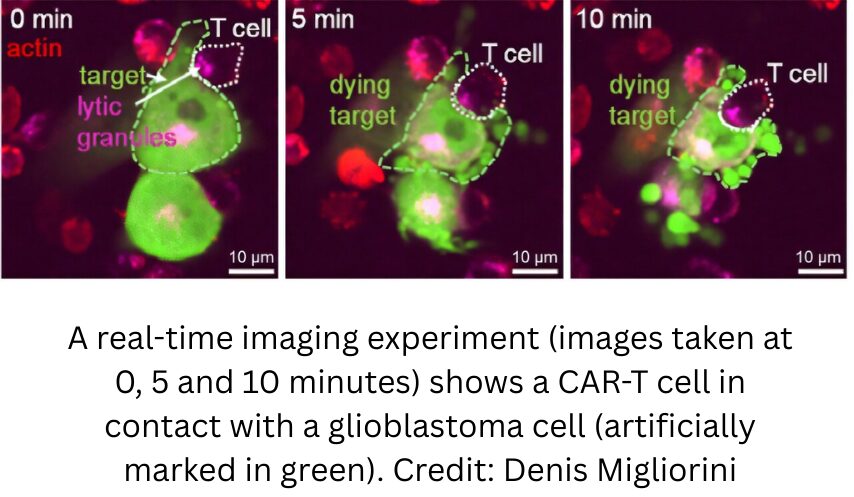
(A–D) Photomicrographs of testicular sections of animals from CG and IG submitted to CD68 (A, B) and CD163 (C, D) immunohistochemistry. Nuclear staining with hematoxylin. In (A) the interstitial tissue shows a few CD68+ macrophages (arrows) in comparison to the high incidence of these cells observed in IG (B). In (C, D), CD163-immunolabeled macrophages are seen (arrows); however, in (D), note the high incidence of these macrophages (arrows) in comparison to CG. (E, F) The number of CD68 and CD163-immunolabeled macrophages per µm2 of interstitial tissue is higher in IG in comparison to CG. (G) Western blot analysis of MIF levels in testicular extracts shows strong bands at 9KDa in IG in comparison to CG. β-tubulin signal is observed in both groups...
Read More

Why do some people age faster than others? Study identifies genes at play

Why do some people age faster than others? Study IDs genes at play

It’s a fact of life: Some people age better than others. Some ease into their 90s with mind and body intact, while others battle diabetes, Alzheimer’s or mobility issues decades earlier. Some can withstand a bad fall or bout of the flu with ease, while others never leave the hospital again.

New University of Colorado Boulder-led research, published in Nature Genetics, sheds light on why that is.

In it, an international team of co-authors identifies more than 400 genes associated with accelerated aging across seven different sub-types. The study reveals that different groups of genes underlie different kinds of disordered aging, a.k.a. frailty, ranging from cognitive decline to mobility issues to social isolation.

The findings lend support to what is known as the “geroscience ...

Read More

RNA editing tool can take some of the risk out of gene therapy

Risk management: Making gene therapy safer and more effective
Graphical abstract. Credit: Cell (2025). DOI: 10.1016/j.cell.2025.07.032

The ability to correct disease-causing genetic mistakes using genome editors holds great promise in medicine, but it is not without risk. When this type of “genetic surgery” is performed on DNA, for instance, there is always the danger of leaving permanent genetic scars that may even be heritable.

To alleviate this risk, researchers have experimented with gene editing processes on messenger RNA (mRNA), a central link between DNA and proteins that doesn’t carry the same risks because it doesn’t involve permanent changes to the DNA. But existing RNA editing tools have proven either too cumbersome to use or too toxic to human cells.

Yale researchers have developed a new—and safe—family of RNA-editing tools th...

Read More