Category Health/Medical

New Protein ‘Switch’ could be key to Controlling Blood-Poisoning and Preventing Death from Sepsis

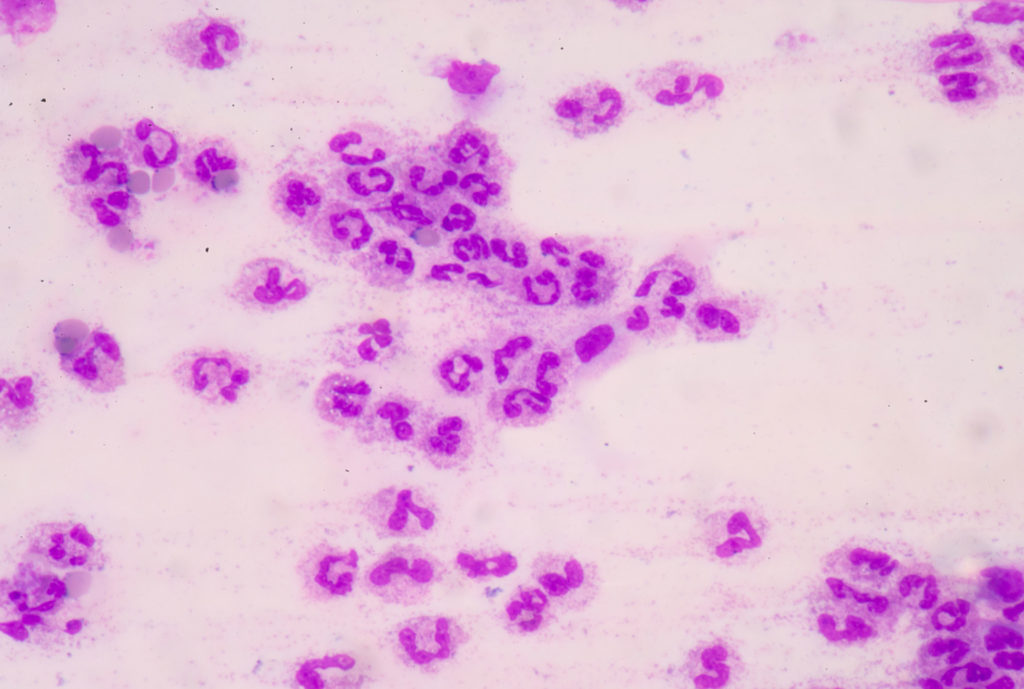
Sepsis or septicaemia.

Scientists at the University of British Columbia have discovered a new protein “switch” that could stop the progression of blood-poisoning, or sepsis, and increase the chances of surviving the life-threatening disease.

Sepsis, an inflammatory disease that arises when the body’s response to an infection injures its own tissues and organs, causes an estimated 14 million deaths every year. In a study published recently in Immunity, researchers examined the role of a protein called ABCF1 in regulating the progression of sepsis.

“Sepsis triggers an uncontrolled chain-reaction of inflammation in the body, leading to tissue damage, organ failure, and death,” said Hitesh Arora, co-lead author of the study who conducted this research as a PhD student at the Michael Smith...

Read More

Young Bone Marrow Rejuvenates Aging Mouse Brains

Microglia in brains of old mice have larger cell bodies with fewer and shorter branches than those in young mice. But microglia of old mice who received bone marrow transplants (BMT) from young mice resembled those of young mice; transplants from older mice didn’t have that effect. Microglia play an important role in brain health.
Credit: Cedars-Sinai / Communications Biology

Transplanting marrow from young lab mice to old mice preserves memory and learning skills. The findings support an emerging model that attributes cognitive decline, in part, to aging of blood cells, which are produced in bone marrow.

“While prior studies have shown that introducing blood from young mice can reverse cognitive decline in old mice, it is not well understood how this happens,” said Helen Goodridge, Ph...

Read More

Gene Therapy durably Reverse Congenital Deafness in mice

The left panel is a schematic representation of the human ear. Sound waves are collected by the outer ear made up of the pinna and ear canal. The middle ear, composed of the eardrum and ossicles, transmits sound waves to the inner ear, which features the cochlea – the hearing organ responsible for transmitting auditory messages to the central nervous system. The right panel shows an immunofluorescence image of the auditory sensory epithelium within an injected cochlea. The inner hair cells have been stained for otoferlin in green. Otoferlin is detected in almost all of these cells. The inset is a high magnification area showing an inner hair cell that has not been transduced.
Credit: © Institut Pasteur

In collaboration with the universities of Miami, Columbia and San Francisco, scient...

Read More

Scientists uncover how High-Fat diet drives Colorectal Cancer growth

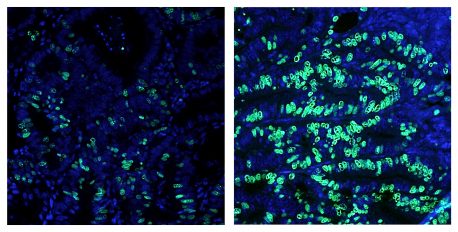
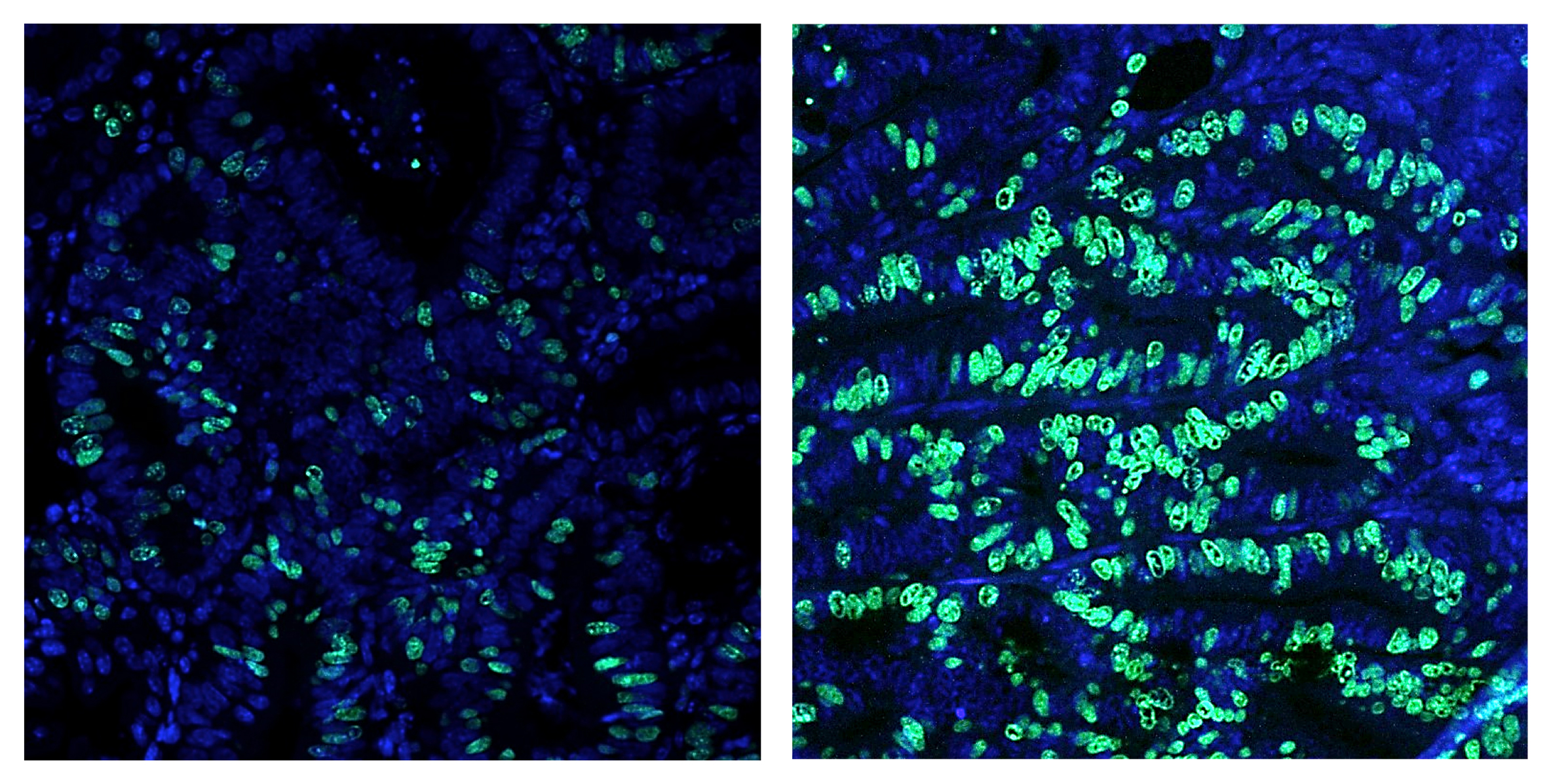
Colon cancer growth, as measured by the number of dividing cells shown in green, is dramatically increased when the FXR-regulated gene network is disrupted by specific bile acids or a high-fat diet.
Click here for a high-resolution image.
Credit: Salk Institute

Experimental drug candidate slows cancer progression in mouse model. A new study suggests that high-fat diets fuel colorectal cancer growth by upsetting the balance of bile acids in the intestine and triggering a hormonal signal that lets potentially cancerous cells thrive. The findings could explain why colorectal cancer, which can take decades to develop, is being seen in younger people growing up at a time when higher-fat diets are common.

As cancer death rates drop overall, doctors have noted a frightening anomaly: deaths fro...

Read More