
Category Health/Medical

Age-old Malaria Treatment found to improve Nanoparticle Delivery to Tumors

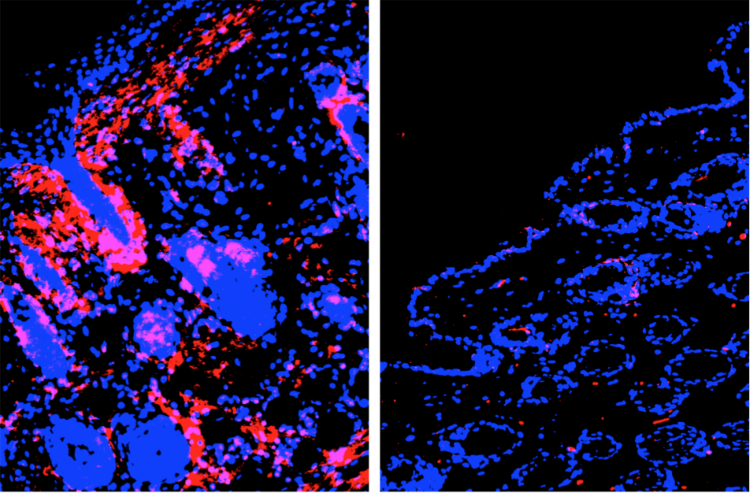
Chloroquine is used to overcome the liver, a major problem in nanomedicine. Credit: Houston Methodist

Chloroquine is used to overcome the liver, a major problem in nanomedicine. Credit: Houston Methodist

A new study shows that a 70-year-old malaria drug can block immune cells in the liver so nanoparticles can arrive at their intended tumor site, overcoming a significant hurdle of targeted drug delivery, according to a team of researchers led by Houston Methodist. Many cancer patients do not respond to chemotherapies because the drugs never reach the cancer cells. Even in nanomedicine, which is one of the best new methods for delivering drugs to a tumor, only about 1% of a dose of nanoparticles will successfully arrive at the intended tumor site, while the rest are filtered out by the immune cells of the liver and spleen.

Using chloroquine, the researchers not only increased the circulation...

Read More

Cells driving Gecko’s ability to Re-Grow its Tail Identified

This is a Leopard gecko. Credit: Vickaryous Lab

This is a Leopard gecko. Credit: Vickaryous Lab

Discovery of which cells are behind the gecko’s ability to re-grow its tail has implications for spinal cord treatment in humans. A U of G researcher is the first to discover the type of stem cell that is behind the gecko’s ability to re-grow its tail, a finding that has implications for spinal cord treatment in humans. Many lizards can detach a portion of their tail to avoid a predator and then regenerate a new one. Unlike mammals, the lizard tail includes a spinal cord.

Prof. Matthew Vickaryous found that the spinal cord of the tail contained a large number of stem cells and proteins known to support stem cell growth...

Read More

Precise DNA Editing made easy: New Enzyme to Rewrite the Genome

A newly created DNA base editor contains an atom-rearranging enzyme (red) that can change adenine into inosine (read and copied as guanine), guide RNA (green) which directs the molecule to the right spot, and Cas9 nickase (blue), which snips the opposing strand of DNA and tricks the cell into swapping the complementary base. Credit: Gaudelli et al./ Nature 2017

A newly created DNA base editor contains an atom-rearranging enzyme (red) that can change adenine into inosine (read and copied as guanine), guide RNA (green) which directs the molecule to the right spot, and Cas9 nickase (blue), which snips the opposing strand of DNA and tricks the cell into swapping the complementary base. Credit: Gaudelli et al./ Nature 2017

Researchers have built an enzyme that can perform a previously impossible DNA swap, directly changing the DNA base pair from an A●T to a G●C. The new enzyme, known as a base editor, may one day enable genome surgery that erases harmful mutations and writes in helpful ones, Howard Hughes Medical Institute (HHMI) Investigator David Liu and colleagues report October 25, 2017, in Nature.

Some genome editing tools eg CRISPR/Cas9, cut...

Read More

IBD: Synthetic Hydrogels Deliver Cells to Repair Intestinal Injuries

Human intestinal organoids (HIOs) generated in the hydrogel matrix differentiate into mature intestinal tissue and present specialized human intestinal cell types, such as enteroendocrine cells (CHGA; red), after transplantation into an animal. Credit: Ricardo Cruz-Acuña, Georgia Tech

Human intestinal organoids (HIOs) generated in the hydrogel matrix differentiate into mature intestinal tissue and present specialized human intestinal cell types, such as enteroendocrine cells (CHGA; red), after transplantation into an animal. Credit: Ricardo Cruz-Acuña, Georgia Tech

By combining engineered polymeric materials known as hydrogels with complex intestinal tissue known as organoids – made from human pluripotent stem cells – researchers have taken an important step toward creating a new technology for controlling the growth of these organoids and using them for treating wounds in the gut that can be caused by disorders such as inflammatory bowel disease (IBD)...

Read More