Category Physics

Researchers achieve the First Silicon Integrated ECRAM for a Practical AI Accelerator

Illinois researchers achieve the first silicon integrated ECRAM for a practical AI accelerator
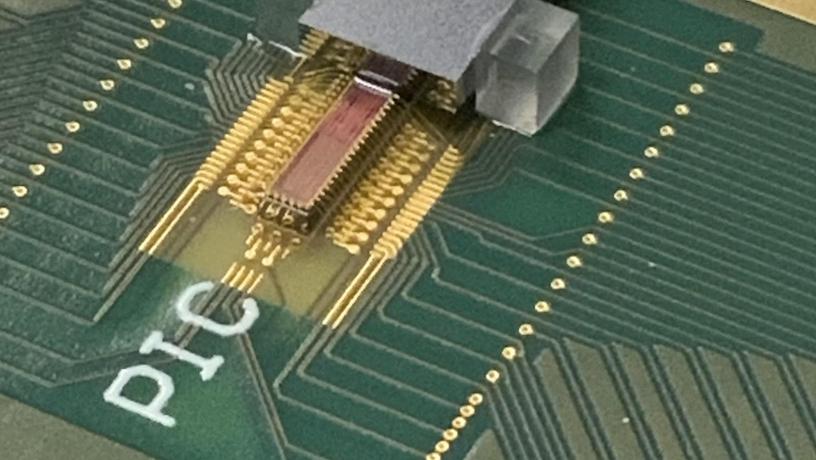
ECRAM array. Credit: The Grainger College of Engineering at University of Illinois Urbana-Champaign

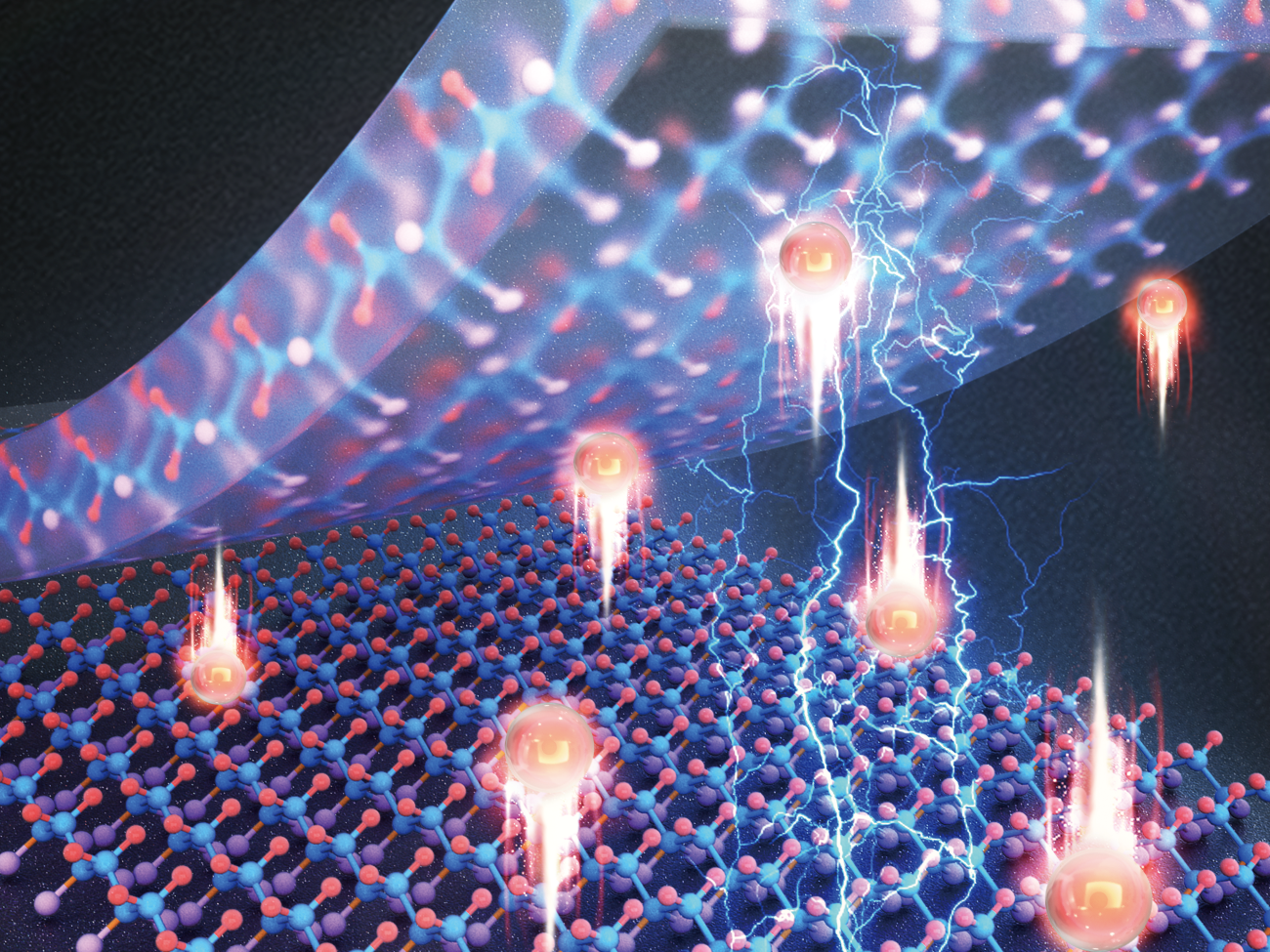
The transformative changes brought by deep learning and artificial intelligence are accompanied by immense costs. For example, OpenAI’s ChatGPT algorithm costs at least $100,000 every day to operate. This could be reduced with accelerators, or computer hardware designed to efficiently perform the specific operations of deep learning. However, such a device is only viable if it can be integrated with mainstream silicon-based computing hardware on the material level.

This was preventing the implementation of one highly promising deep learning accelerator—arrays of electrochemical random-access memory, or ECRAM—until a research team at the University of Illinois Urbana-Champaign achieved...

Read More

Colorful Films could Help Buildings, Cars keep their Cool

The cold blast of an air conditioner can be a welcome relief as temperatures soar, but “A/C” units require large amounts of energy and can leak potent greenhouse gases. Today, scientists report an eco-friendly alternative — a plant-based film that gets cooler when exposed to sunlight and comes in a variety of textures and bright, iridescent colors. The material could someday keep buildings, cars and other structures cool without requiring external power.

The researchers will present their results at the spring meeting of the American Chemical Society (ACS).

“To make materials that remain cooler than the air around them during the day, you need something that reflects a lot of solar light and doesn’t absorb it, which would transform energy from the light into heat,” says Silvia V...

Read More

Looking from different perspectives! Proper Electronic Structure of Near-Infrared Absorbing Functional Dyes discovered

A big step toward the development of dyes with long-wavelength near-infrared absorption. A research group has discovered that near-infrared absorbing dyes, which had previously been considered to have closed-shell electronic structures, have an intermediate electronic structure, between closed- and open-shell structures. They also found that as the wavelength of near-infrared light that can be absorbed becomes longer the contribution of open-shell forms increases within the dye. These newly discovered characteristics are expected to be utilized to develop new near-infrared absorbing dyes that can absorb longer wavelength near-infrared light.

Near-infrared light, whose wavelength is longer than visible light, is invisible and can pass through many substances...

Read More

Artificial Intelligence discovers Secret Equation for ‘Weighing’ Galaxy Clusters

Astrophysicists at the Institute for Advanced Study, the Flatiron Institute and their colleagues have leveraged artificial intelligence to uncover a better way to estimate the mass of colossal clusters of galaxies. The AI discovered that by just adding a simple term to an existing equation, scientists can produce far better mass estimates than they previously had.

The improved estimates will enable scientists to calculate the fundamental properties of the universe more accurately, the astrophysicists reported March 17, 2023, in the Proceedings of the National Academy of Sciences.

“It’s such a simple thing; that’s the beauty of this,” says study co-author Francisco Villaescusa-Navarro, a research scientist at the Flatiron Institute’s Center for Computational Astrophysics (CCA) in...

Read More