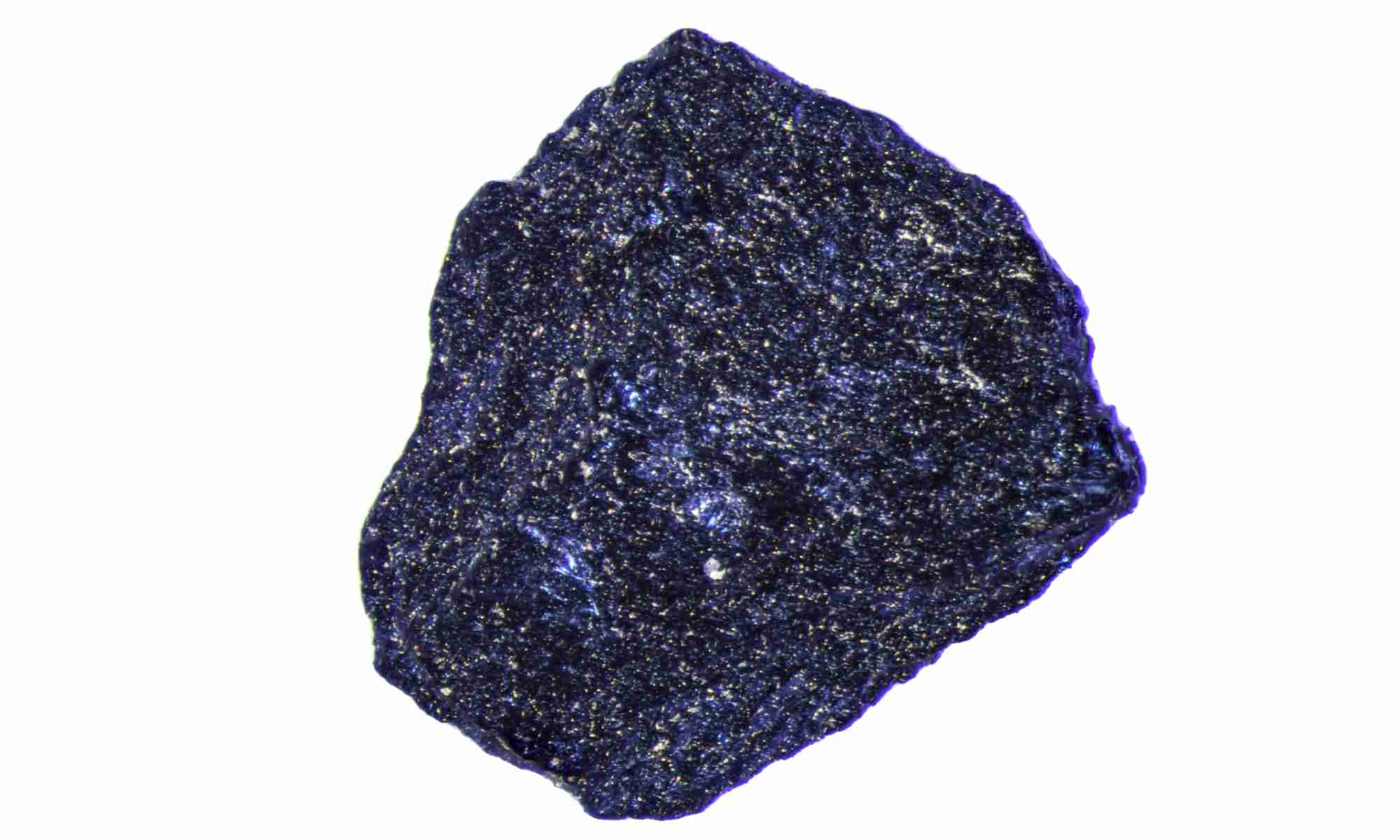
An approximately one millimeter diameter sample of lutetium hydride, a superconducting material created in the lab of Rochester scientist Ranga Dias, seen though a microscope. This composite image is the result of focus stacking and color-enhancing several images. (University of Rochester photo / J. Adam Fenster)
In a historic achievement, University of Rochester researchers have created a superconducting material at both a temperature and pressure low enough for practical applications.
“With this material, the dawn of ambient superconductivity and applied technologies has arrived,” according to a team led by Ranga Dias, an assistant professor of mechanical engineering and physics...
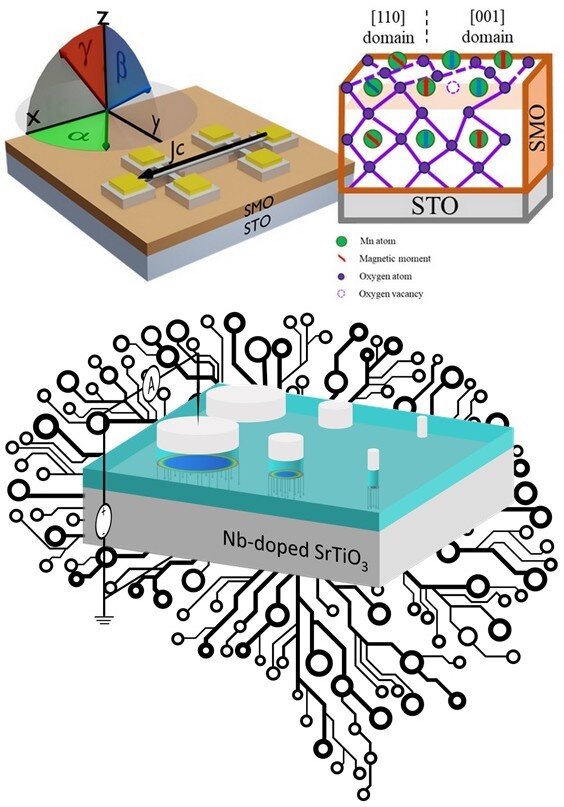
These are the devices for computer architectures ‘beyond CMOS’ created by Job van Rijn (upper panel) and Anouk Goossens (lower panel). Credit: Banerjee group, University of Groningen
As the evolution of standard microchips is coming to an end, scientists are looking for a revolution. The big challenges are to design chips that are more energy efficient and to design devices that combine memory and logic (memristors). Materials scientists from the University of Groningen, the Netherlands, describe in two papers how complex oxides can be used to create very energy-efficient magneto-electric spin-orbit (MESO) devices and memristive devices with reduced dimensions.
The development of classic silicon-based computers is approaching its limits...
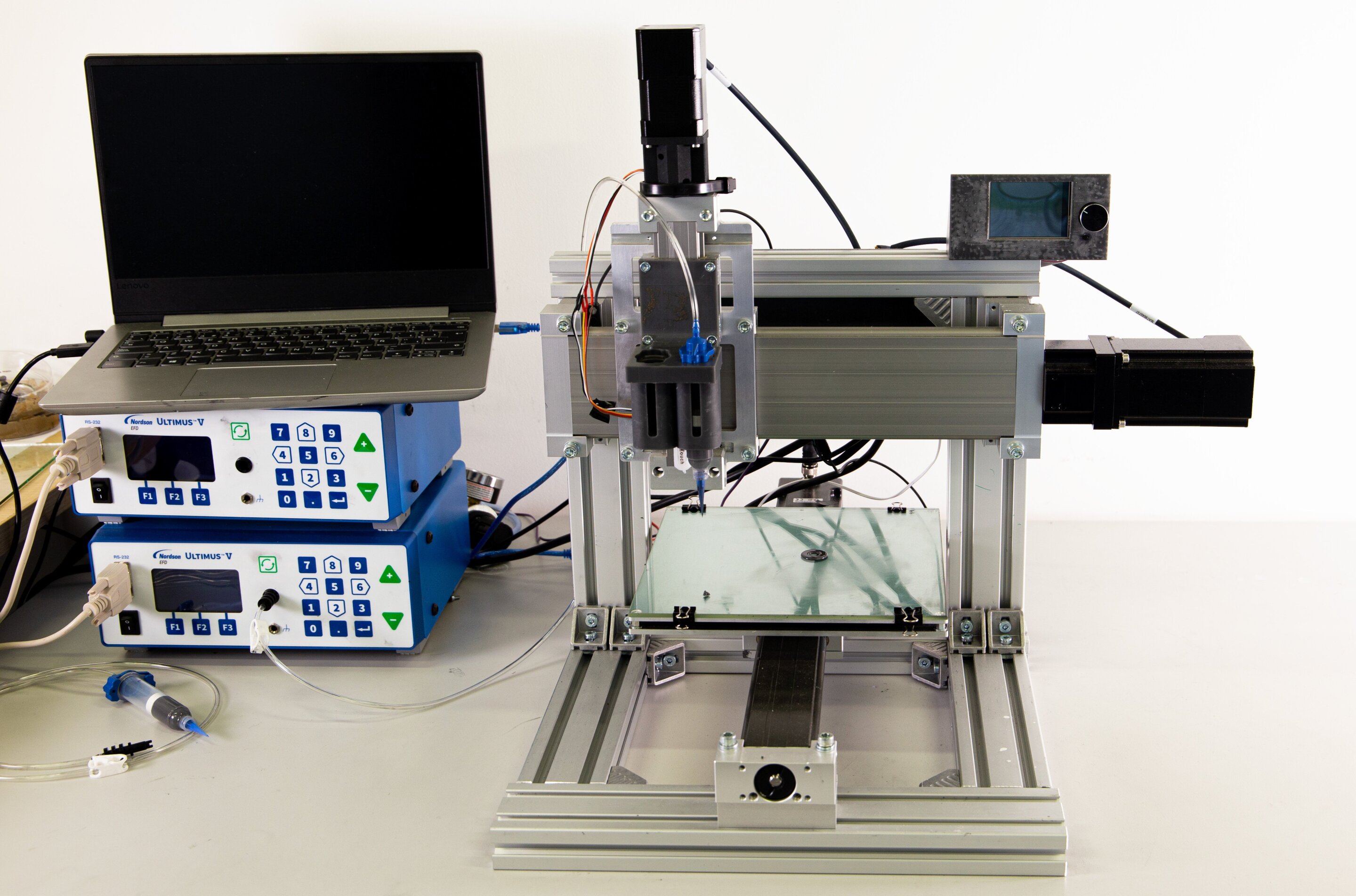
A new smart printer enables the manufacture of soft multifunctional materials by continuously adapting extrusion parameters. Combining experimental and computational methods, it prints conductive and magneto-active materials with mechanical properties that mimic biological tissues. Credit: UC3M
Researchers at Universidad Carlos III de Madrid (UC3M) have created software and hardware for a 4D printer with applications in the biomedical field. In addition to 3D printing, this machine allows for controlling extra functions: programming the material’s response so that shape-changing occurs under external magnetic field, or changes in its electric properties develops under mechanical deformation...
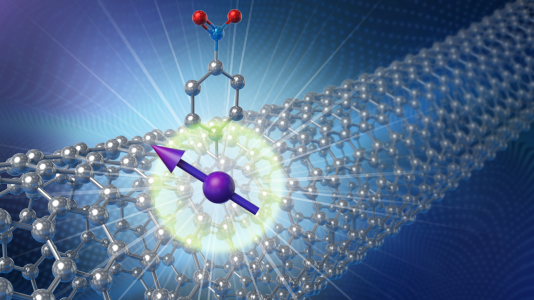
Artistic rendering of chemically modified carbon nanotube hosting a spinning electron as qubit. (Image by Argonne National Laboratory.)
Scientists find that a tubular nanomaterial of carbon makes for ideal host to keep quantum bits spinning in place for use in quantum information technologies.
Scientists are vigorously competing to transform the counterintuitive discoveries about the quantum realm from a century past into technologies of the future. The building block in these technologies is the quantum bit, or qubit. Several different kinds are under development, including ones that use defects within the symmetrical structures of diamond and silicon. They may one day transform computing, accelerate drug discovery, generate unhackable networks and more.





Recent Comments