



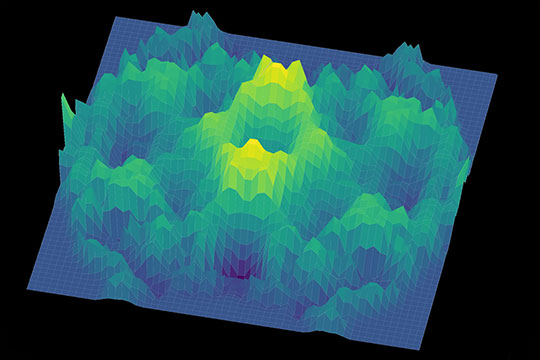
Numerical detective work verifies liquidlike magnetic order in prior experiments. Computational detective work by U.S. and German physicists has confirmed cerium zirconium pyrochlore is a 3D quantum spin liquid.
Despite the name, quantum spin liquids are solid materials in which quantum entanglement and the geometric arrangement of atoms frustrate the natural tendency of electrons to magnetically order themselves in relation to one another...
Read More

Recent Comments