Category Physics

Unlocking the Technology to produce Unbreakable Screens

Unlocking the technology to produce unbreakable screens
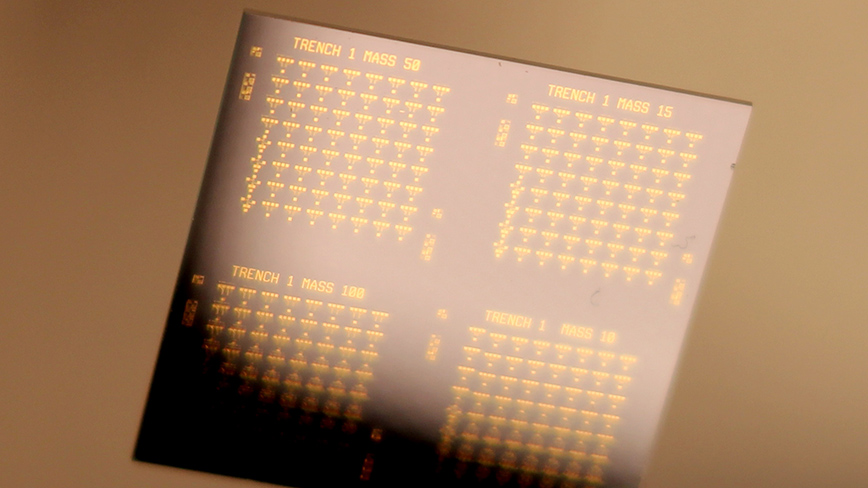
Luminating composite glass. Credit: The University of Queensland

Cracked phone screens could become a thing of the past thanks to breakthrough research conducted at The University of Queensland.

The global team of researchers, led by UQ’s Dr Jingwei Hou, Professor Lianzhou Wang and Professor Vicki Chen, have unlocked the technology to produce next-generation composite glass for lighting LEDs and smartphone, television and computer screens.

The findings will enable the manufacture of glass screens that are not only unbreakable but also deliver crystal clear image quality.

Dr Hou said the discovery was a huge step forward in perovskite nanocrystal technology as previously, researchers were only able to produce this technology in the bone-dry atmosphere of a laboratory setting.

...Read More

Making the Strange Metal State in High Temperature Superconductors even Stranger

Researchers from Chalmers University of Technology, Sweden, have uncovered a striking new behavior of the ‘strange metal’ state of high temperature superconductors. The discovery represents an important piece of the puzzle for understanding these materials, and the findings have been published in the journal Science.

Superconductivity, where an electric current is transported without any losses, holds enormous potential for green technologies. For example, if it could be made to work at high enough temperatures, it could allow for lossless transport of renewable energy over great distances. Investigating this phenomenon is the aim of the research field of high temperature superconductivity...

Read More

Making Martian Rocket Biofuel on Mars

Artist's conception of astronauts and human habitats on Mars. Courtesy: NASA
Artist’s conception of astronauts and human habitats on Mars. Courtesy: NASA

New study outlines biotechnology process to produce rocket fuel on red planet. Researchers at the Georgia Institute of Technology have developed a concept that would make Martian rocket fuel, on Mars, that could be used to launch future astronauts back to Earth.

The bioproduction process would use three resources native to the red planet: carbon dioxide, sunlight, and frozen water. It would also include transporting two microbes to Mars. The first would be cyanobacteria (algae), which would take CO2 from the Martian atmosphere and use sunlight to create sugars...

Read More

Topological Valley Hall Edge Solitons in Photonics

Experimental setup for observing nonlinear valley Hall edge states
Experimental setup for observing nonlinear valley Hall edge states. Credit: H. Zhong, S. Xia, et al., doi 10.1117/1.AP.3.5.056001

A novel topological edge soliton developed for nonlinear photorefractive lattices enables robust light beams is promising for photonic technology. Diffraction is a natural property of light beams. It allows light to bend around obstacles. Because light serves as a carrier of information, some of the distorting effects of diffraction must be mitigated for many technological applications. Topological insulators, first unveiled in condensed matter physics, have attracted interest for over a decade. A photonic topological insulator can help ensure consistent propagation of a light beam along its edges...

Read More