Category Physics

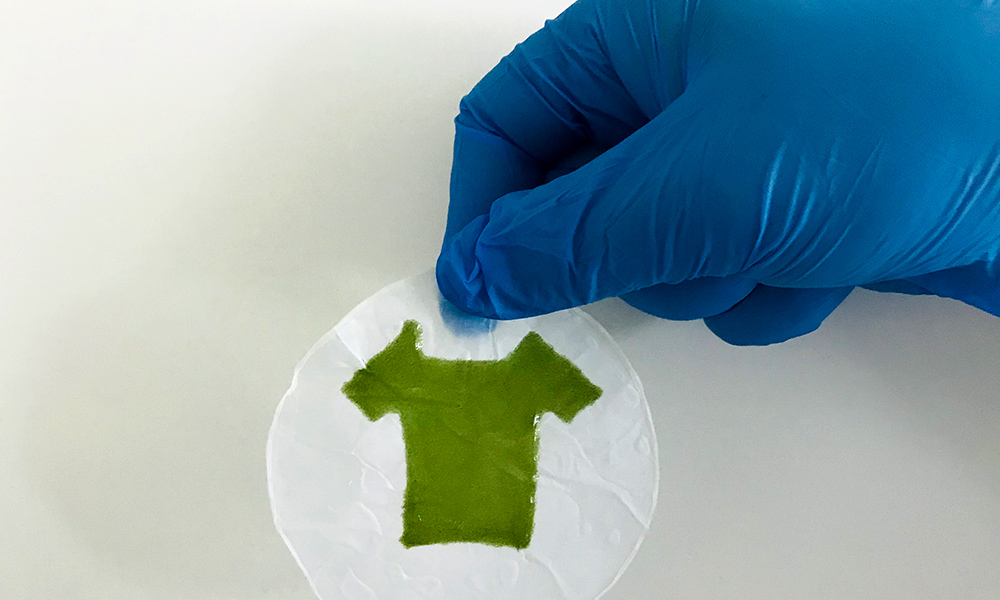
Could we Recycle Plastic Bags into Fabrics of the future?

Engineers have developed self-cooling fabrics from polyethylene, a material commonly used in plastic bags. They estimate that the new fabric may be more sustainable than cotton and other common textiles....Read More

Controlled by Light alone, new Smart Materials Twist, Bend and Move

A solar cell mounted on light activated material can track the source of light without wires, gears or motors. (Source: Fio Omenetto and Yu Wang, Tufts University.)

Technology paves way for intelligent solar cells, other highly efficient devices programmed at the macro and nano scale. Engineers created light-activated materials that execute precise movements and form complex shapes without the need for wires, motors or other energy sources. The research could lead to smart light-driven systems such as high-efficiency solar cells that automatically follow the sun’s direction.

Researchers at Tufts University School of Engineering have created light-activated composite devices...

Read More

Contactless High Performance Power Transmission

Einem Team um die Physiker Christoph Utschick und Prof. Dr. Rudolf Gross von der Technischen Universität München (TUM) ist es gelungen, eine Spule aus supraleitenden Drähten herzustellen, die Leistungen von mehr als fünf Kilowatt kontaktlos und ohne große Verluste übertragen kann.
A team led by the physicists Christoph Utschick and Prof. Dr. Rudolf Gross from the Technical University of Munich (TUM) has developed a coil made of superconducting wires that can contactlessly transmit power of more than five kilowatts without major losses.Image: C. Utschick / Würth Elektronik eiSos

Superconducting coils for contactless power transmission in the kilowatt range.
A team led by Christoph Utschick and Prof. Rudolf Gross, physicists at the Technical University of Munich (TUM), has developed a coil with superconducting wires capable of transmitting power in the range of more than five kilowatts contactless and with only small losses. The wide field of conceivable applications include autonomous industrial robots, medical equipment, vehicles and even aircraft.

Contactles...

Read More

Unique Ag-Hydrogel Composite for Soft Bioelectronics created

Source: Soft Machines Lab
Stingray-inspired soft swimmer

In the field of robotics, metals offer advantages like strength, durability, and electrical conductivity. But, they are heavy and rigid – properties that are undesirable in soft and flexible systems for wearable computing and human-machine interfaces.

Hydrogels, on the other hand, are lightweight, stretchable, and biocompatible, making them excellent materials for contact lenses and tissue engineering scaffolding. They are, however, poor at conducting electricity, which is needed for digital circuits and bioelectronics applications.

Researchers in Carnegie Mellon University’s Soft Machines Lab have developed a unique silver-hydrogel composite that has high electrical conductivity and is capable of delivering direct current w...

Read More