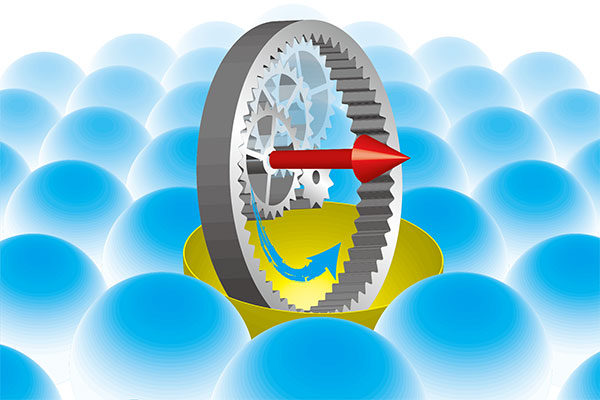
Conceptual art of the acceptor-based spin-orbit qubit. A boron atom (yellow) implanted in silicon crystal (blue) bounds a hole. Orbital motion of a hole in silicon is coupled to its spin degree of freedom. This coupling is reminiscent of gears where circular motion (blue arrow) and spinning (red arrow) are locked together. Quantum information is encoded to the combined motion and spin of a hole in the spin-orbit qubit. ⒸTakashi Kobayashi, Tohoku University
Quantum bits, or -qubits, can hold quantum information much longer now thanks to efforts by an international research team. The researchers have increased the retention time, or coherence time, to 10 milliseconds – 10,000 times longer than the previous record – by combining the orbital motion and spinning inside an atom...
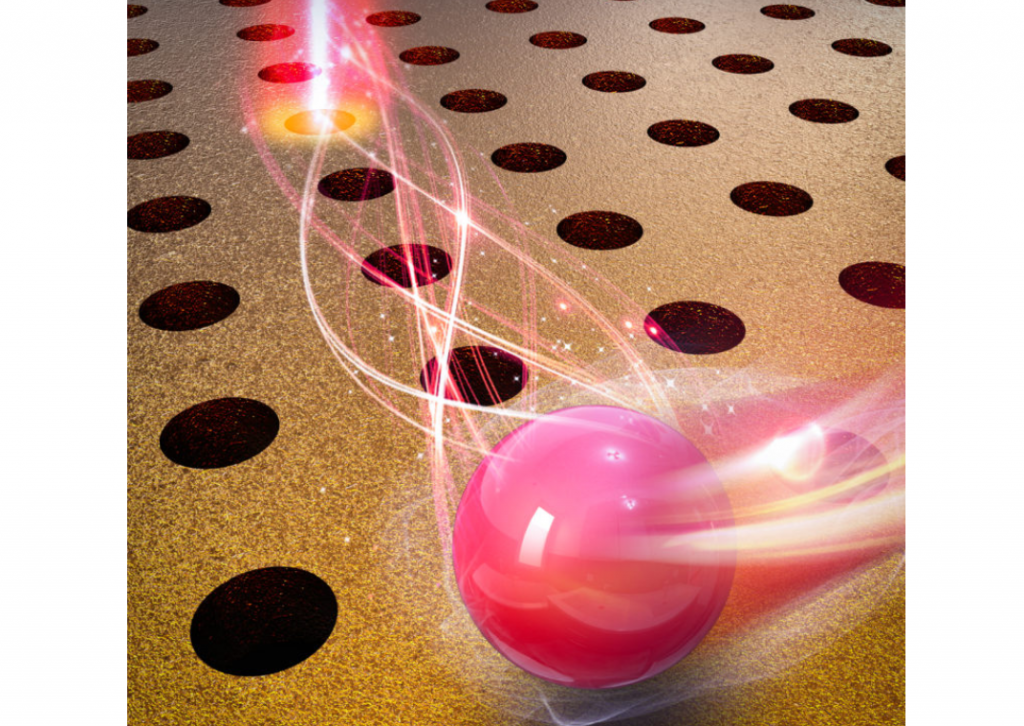
In 2018, one-half of the Nobel Prize was awarded to Arthur Ashkin, the physicist who developed optical tweezers, the use of a tightly focused laser beam to isolate and move micron-scale objects (the size of red blood cells). Now Justus Ndukaife, assistant professor of electrical engineering at Vanderbilt University, has developed the first-ever opto-thermo-electrohydrodynamic tweezers, optical nanotweezers that can trap and manipulate objects on an even smaller scale.
The article, “Stand-off trapping and manipulation of sub-10 nm objects and biomolecules using opto-thermo-electrohydrodynamic tweezers” was published online in the journal Nature Nanotechnology on August 31.
The article was authored by Ndukaife and graduate students Chuchuan Hong and Se...
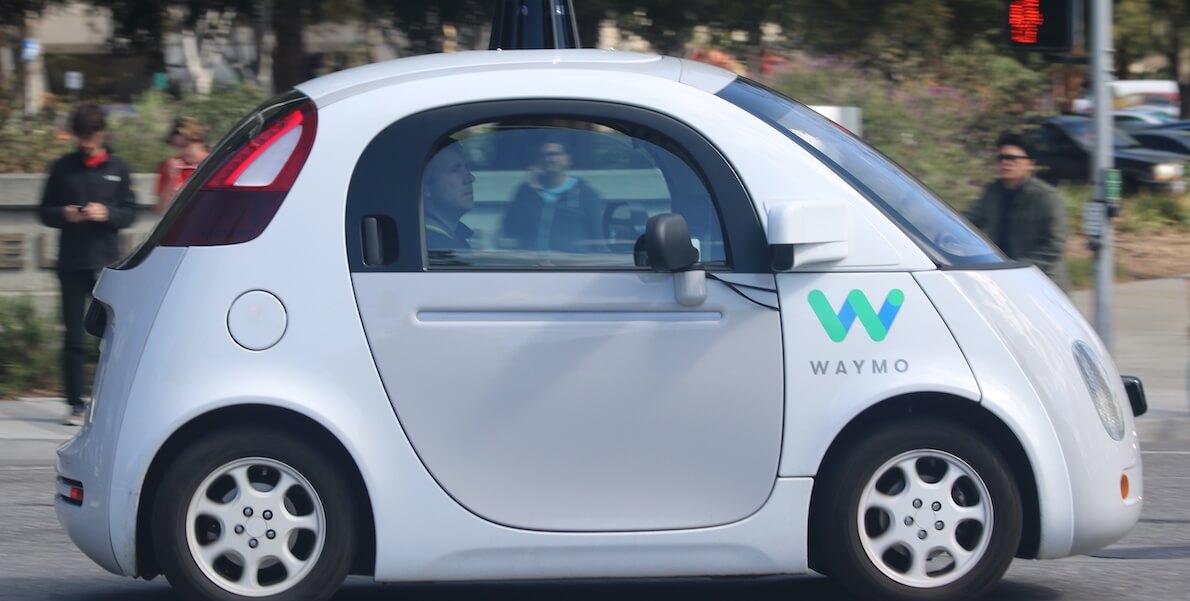
New tool might aid the adoption of technologies such as autonomous vehicles. One of the biggest impediments to adoption of new technologies is trust in AI.
Now, a new tool developed by USC Viterbi Engineering researchers generates automatic indicators if data and predictions generated by AI algorithms are trustworthy. Their research paper, “There Is Hope After All: Quantifying Opinion and Trustworthiness in Neural Networks” by Mingxi Cheng, Shahin Nazarian and Paul Bogdan of the USC Cyber Physical Systems Group, was featured in Frontiers in Artificial Intelligence.
Neural networks are a type of artificial intelligence that are modeled after the brain and generate predictions...
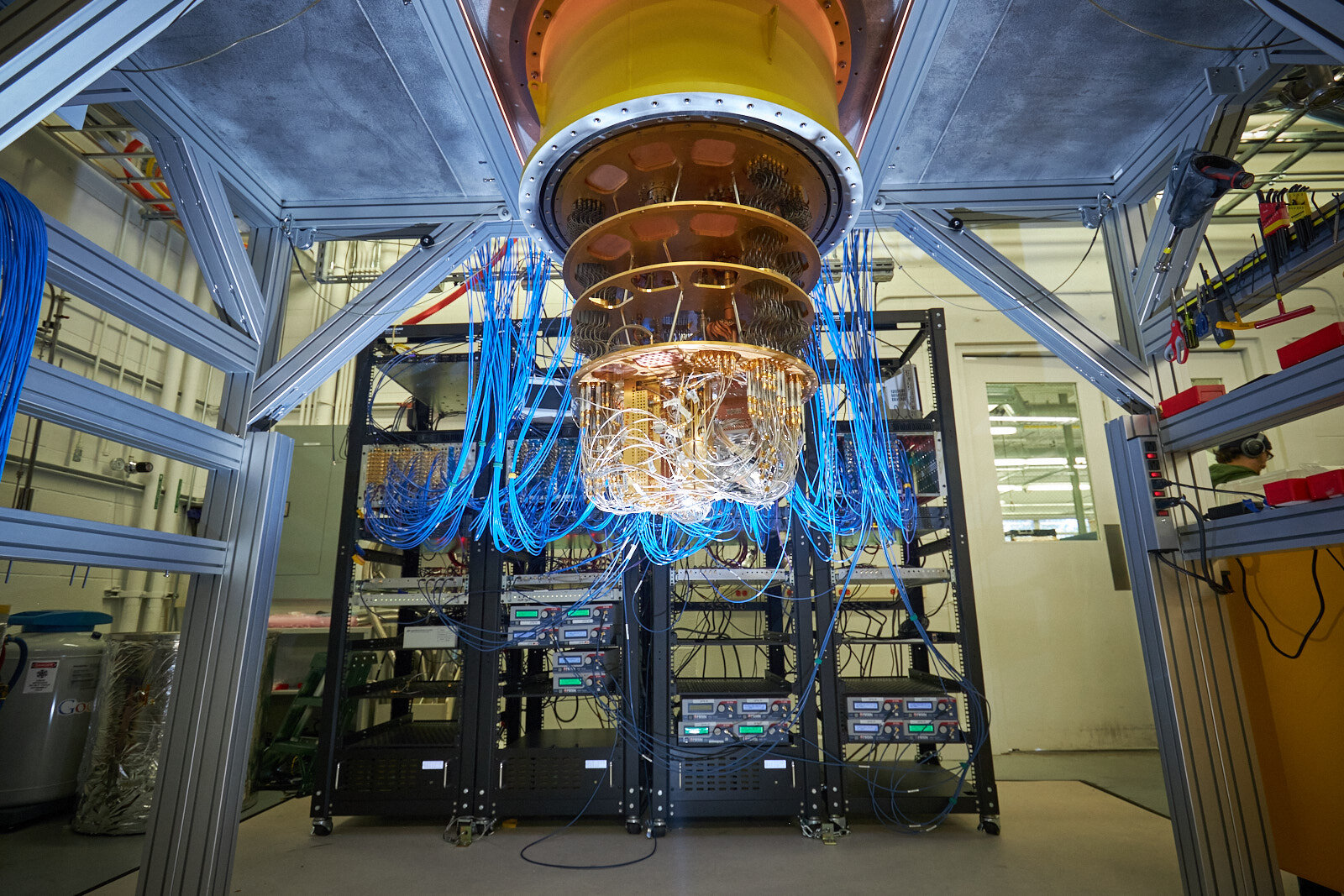
Google’s Sycamore processor mounted in a cryostat, recently used to demonstrate quantum supremacy and the largest quantum chemistry simulation on a quantum computer. Credit: Rocco Ceselin
A team of researchers with Google’s AI Quantum team (working with unspecified collaborators) has conducted the largest chemical simulation on a quantum computer to date. In their paper published in the journal Science, the group describes their work and why they believe it was a step forward in quantum computing. Xiao Yuan of Stanford University has written a Perspective piece outlining the potential benefits of quantum computer use to conduct chemical simulations and the work by the team at AI Quantum, published in the same journal issue.
Developing an ability to predict chemical processes by si...





Recent Comments