
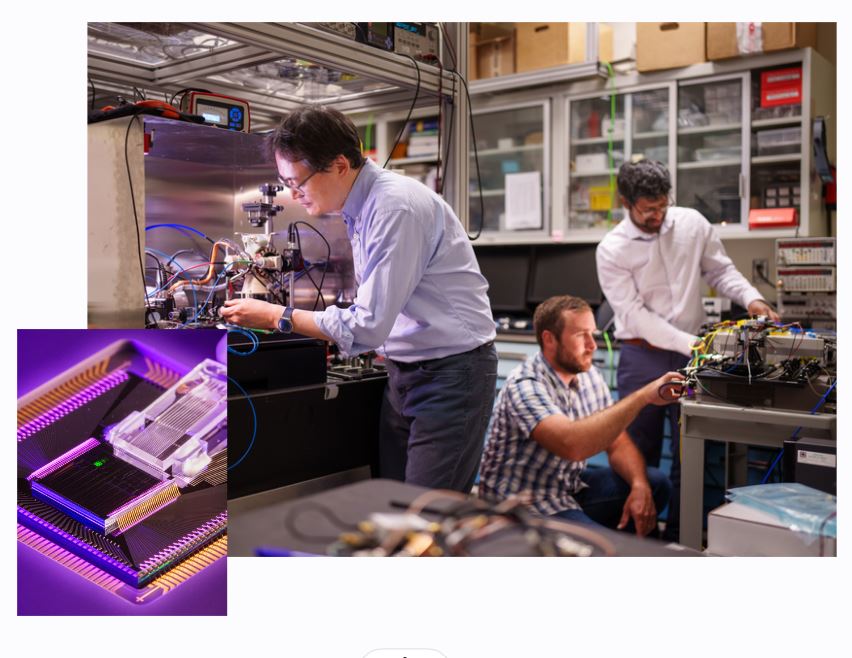
Quantum sensing milestone draws closer exquisitely accurate, GPS-free navigation...
Read More

August 15, 2024,
 Physics, Technology/Electronics
Quantum sensing milestone draws closer exquisitely accurate, GPS-free navigation...
Read More
August 13, 2024,
Technology/Electronics, Physics

A Yale School of Medicine team reports in a new study that an artificial intelligence (AI) model was able to reliably diagnose people living with Marfan syndrome from a simple facial photograph.
Marfan syndrome is a genetic disorder, affecting about 1 in 3,000 people, which impacts the body’s connective tissues. “Patients living with Marfan syndrome are usually very tall and thin,” said John Elefteriades, MD, professor of surgery at Yale School of Medicine and senior author of the study. “They have long faces and are prone to spine and joint issues. However, many are not diagnosed.”
Marfan syndrome increases the risk for aortic dissection, where the aorta splits suddenly after becoming enlarged...
Read More
August 12, 2024,
Technology/Electronics, Physics

Dr. Jin Gu, Kang and his team at the Nanophotonics Research Center at the Korea Institute of Science and Technology (KIST) have developed a colorful radiation-cooling liquid crystal material that can cool without external power while simultaneously emitting color. The work is published in the Chemical Engineering Journal.
Radiative cooling is a powerless cooling technology that releases infrared radiation as heat throug...
Read More
August 12, 2024,
Physics, Technology/Electronics

Unmanned aerial vehicles (UAVs), commonly known as drones, are now used to capture images and carry out a wide range of missions in outdoor environments. While there are now several UAV designs with different advantages and characteristics, most conventional aerial robots are underactuated, meaning that they have fewer independent actuators than their degrees of freedom (DoF).
Underactuated systems are often more cost-effective and can be controlled using simpler control strategies than overactuated systems (i.e., robots that have more independent actuators than their DoF). Nonetheless, they are often less reliable and not as capable of precisely controlling their position and orientation.
Researchers at Tec...
Read More
Recent Comments