Image recognition AIs are powerful but inflexible and cannot recognize images unless they are trained on specific data. In Raw Zero-Shot Learning, researchers give these image recognition AIs a variety of data and observe the patterns in their answers. The research team hopes that this methodology can help improve the robustness of future AI. Illustrated by Hiroko Uchida.
Researchers investigate ways to make AIs more robust by studying patterns in their answers when faced with the unknown. Current AIs are very accurate but inflexible at image recognition. Exactly why this is remains a mystery. Researchers have developed a method called ‘Raw Zero-Shot’ to assess how neural networks handle elements unknown to them...
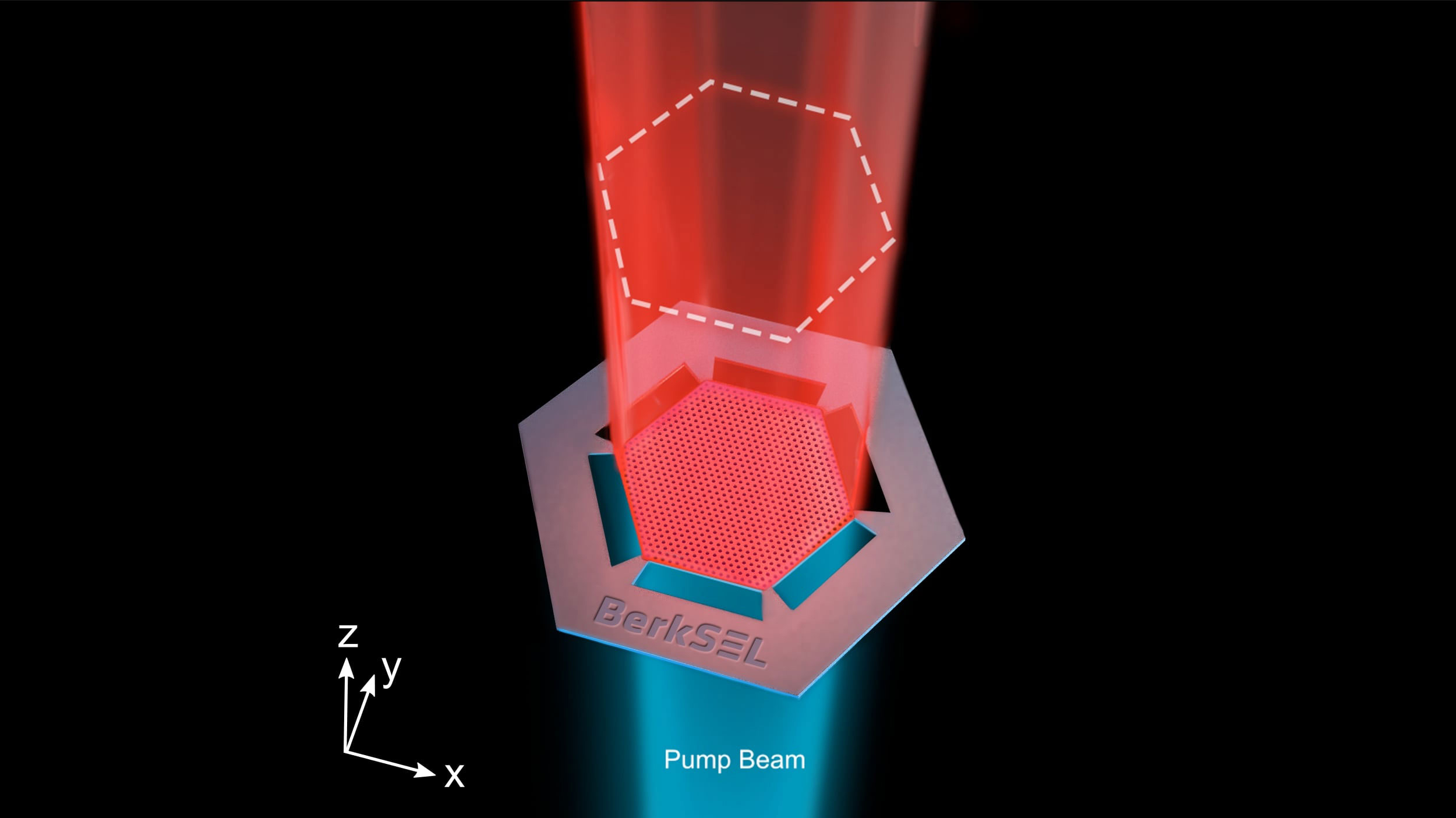
Schematic of the Berkeley Surface Emitting Laser (BerkSEL) illustrating the pump beam (blue) and the lasing beam (red). The unconventional design of the semiconductor membrane synchronizes all unit-cells (or resonators) in phase so that they are all participating in the lasing mode. (Image courtesy of the Kanté group)
Berkeley engineers have created a new type of semiconductor laser that accomplishes an elusive goal in the field of optics: the ability to maintain a single mode of emitted light while maintaining the ability to scale up in size and power. It is an achievement that means size does not have to come at the expense of coherence, enabling lasers to be more powerful and to cover longer distances for many applications.
A research team led by Boubacar Kanté, Chenming Hu Asso...
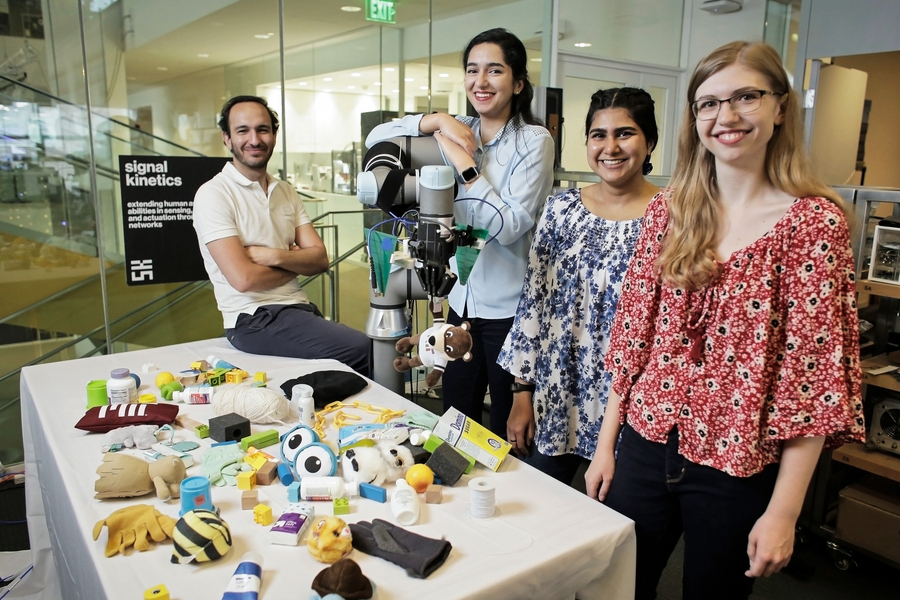
Caption:Fadel Adib, associate professor in the Department of Electrical Engineering and Computer Science and director of the Signal Kinetics group in the MIT Media Lab (far left) with (from left to right) Tara Boroushaki, Nazish Naeem, and Laura Dodds, research assistants in the Signal Kinetics group. Credits:Image: James Day, MIT Media Lab
FuseBot is a new robotic system that fuses visual information and radio-frequency signals to efficiently find hidden items buried under a pile of objects, whether or not the targeted item has an RFID tag.
For humans, finding a lost wallet buried under a pile of items is pretty straightforward — we simply remove things from the pile until we find the wallet...
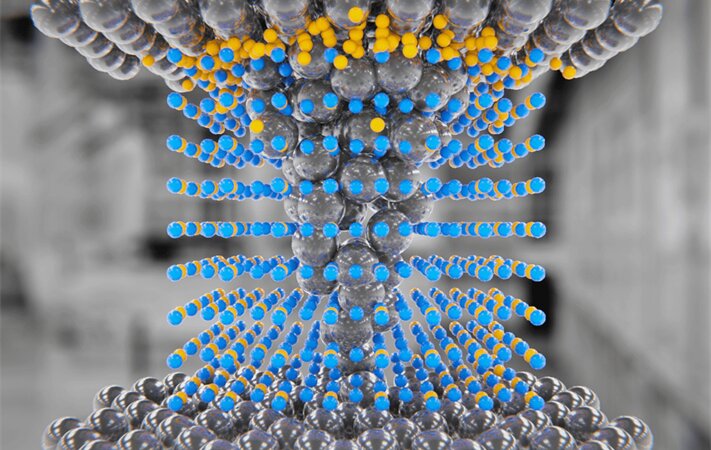
Three-dimensional schematic of a memristor made of multilayer hexagonal boron nitride. Credit: Mario Lanza / KAUST
The invention of the transistor by Bell Laboratory in 1947 ushered in an era of electronic devices that were smaller and ran cooler using far less power than their bulky and fragile vacuum tube counterparts. Transistors function as a binary switch to facilitate electrical current from off to on states. Radios, calculators and telephones were among the first wave of instruments to replace vacuum tubes with the new semiconductor technology...






Recent Comments