Category Technology/Electronics

Eco-friendly Micro-supercapacitors using Fallen Leaves?

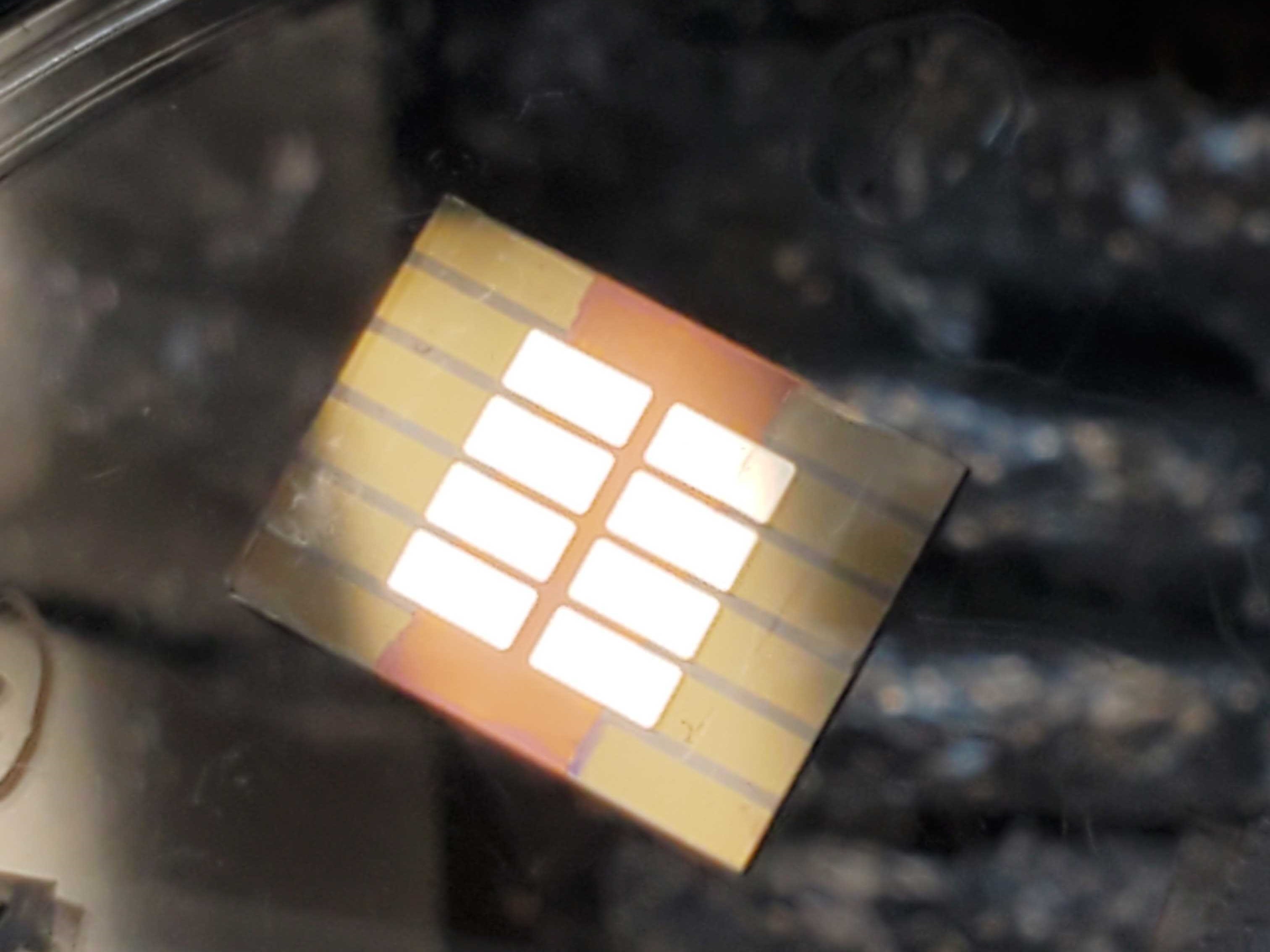
 Image: The schematic illustration of the production of femtosecond laser-induced graphene.

Femtosecond micro-supercapacitors on a single leaf could easily be applied to wearable electronics, smart houses, and IoTs. A KAIST research team has developed a graphene-inorganic-hybrid micro-supercapacitor made of leaves using femtosecond direct laser writing lithography. The advancement of wearable electronic devices is synonymous with innovations in flexible energy storage devices. Of the various energy storage devices, micro-supercapacitors have drawn a great deal of interest for their high electrical power density, long lifetimes, and short charging times.

However, there has been an increase in waste battery generation with the increases in the consumption and use of electronic equipme...

Read More

Robot Performs First Laparoscopic Surgery Without Human Help

A robot has performed laparoscopic surgery on the soft tissue of a pig without the guiding hand of a human — a significant step in robotics toward fully automated surgery on humans. Designed by a team of Johns Hopkins University researchers, the Smart Tissue Autonomous Robot (STAR) is described today in Science Robotics.

“Our findings show that we can automate one of the most intricate and delicate tasks in surgery: the reconnection of two ends of an intestine. The STAR performed the procedure in four animals and it produced significantly better results than humans performing the same procedure,” said senior author Axel Krieger, an assistant professor of mechanical engineering at Johns Hopkins’ Whiting School of Engineering.

The robot excelled at intestinal anastomosis, a proced...

Read More

Harnessing Noise in Optical Computing for AI

An illustration of the UW ECE-led research team’s integrated optical computing chip and “handwritten” numbers it generated. The chip contains an artificial neural network that can learn how to write like a human in its own, distinct style. This optical computing system uses “noise” (stray photons from lasers and thermal background radiation) to augment its creative capabilities. The system is also approximately 10 times faster than comparable conventional digital computers and more energy efficient, helping to put AI and machine learning on a path toward environmental sustainability. Illustration by Changming Wu

A research team has developed an optical computing system for AI and machine learning that not only mitigates the noise inherent to optical computing but actually use...

Read More

Scientists achieve key elements for Fault-Tolerant Quantum Computation in Silicon Spin Qubits

The silicon quantum computer chip used in this study

Researchers from RIKEN and QuTech — a collaboration between TU Delft and the Netherlands Organisation for Applied Scientific Research (TNO) — have achieved a key milestone toward the development of a fault-tolerant quantum computer. They were able to demonstrate a two-qubit gate fidelity of 99.5 percent — higher than the 99 percent considered to be the threshold for building fault-tolerant computers — using electron spin qubits in silicon, which are promising for large-scale quantum computers as the nanofabrication technology for building them already exists. This study was published in Nature.

The world is currently in a race to develop large-scale quantum computers that could vastly outperform classical computers in certain area...

Read More